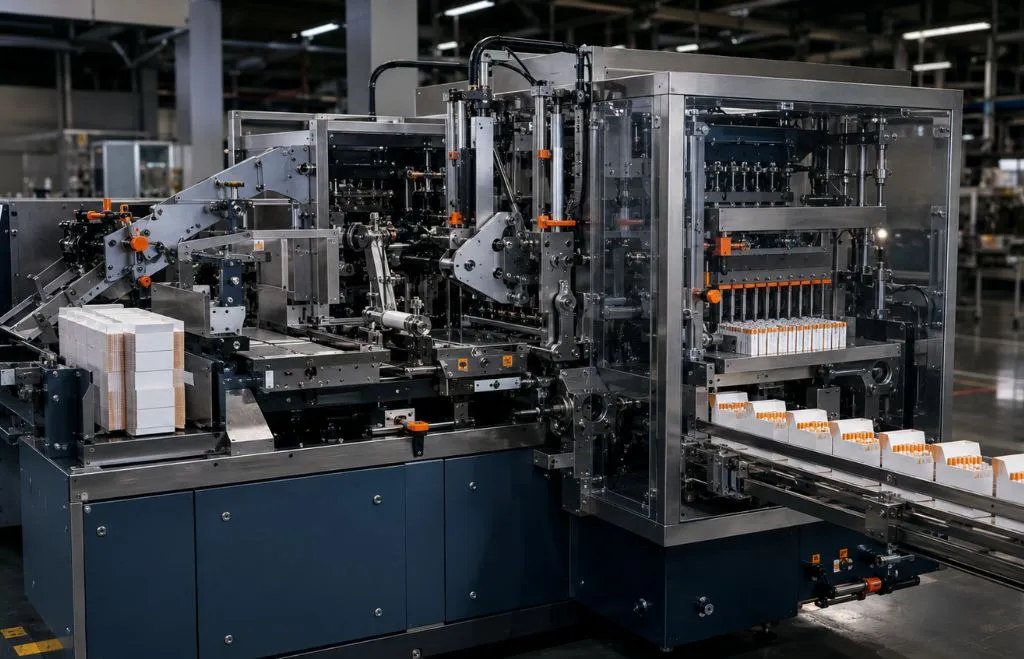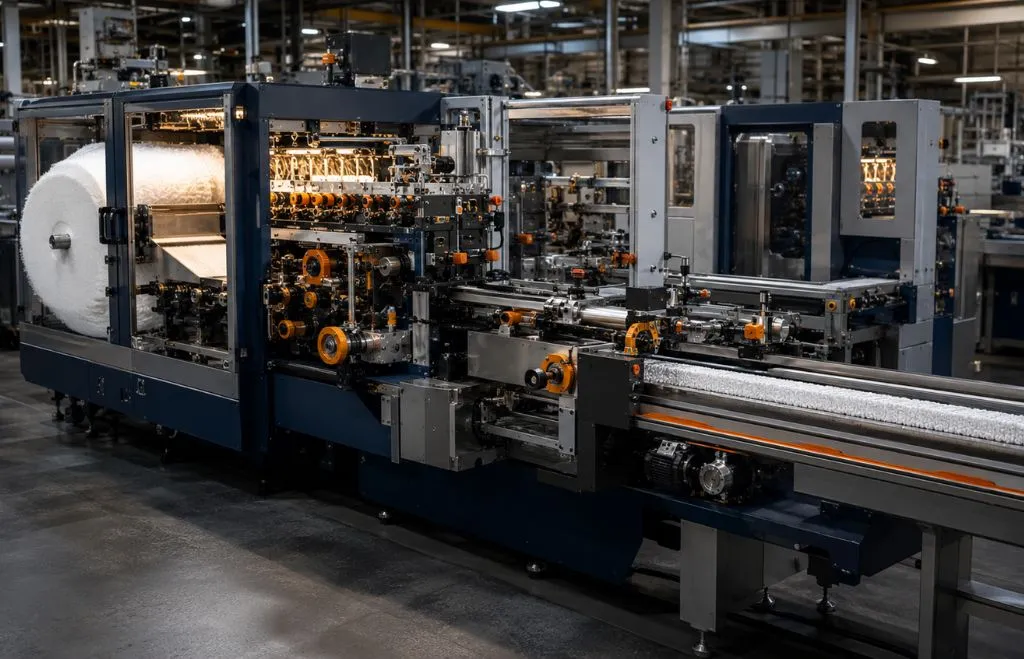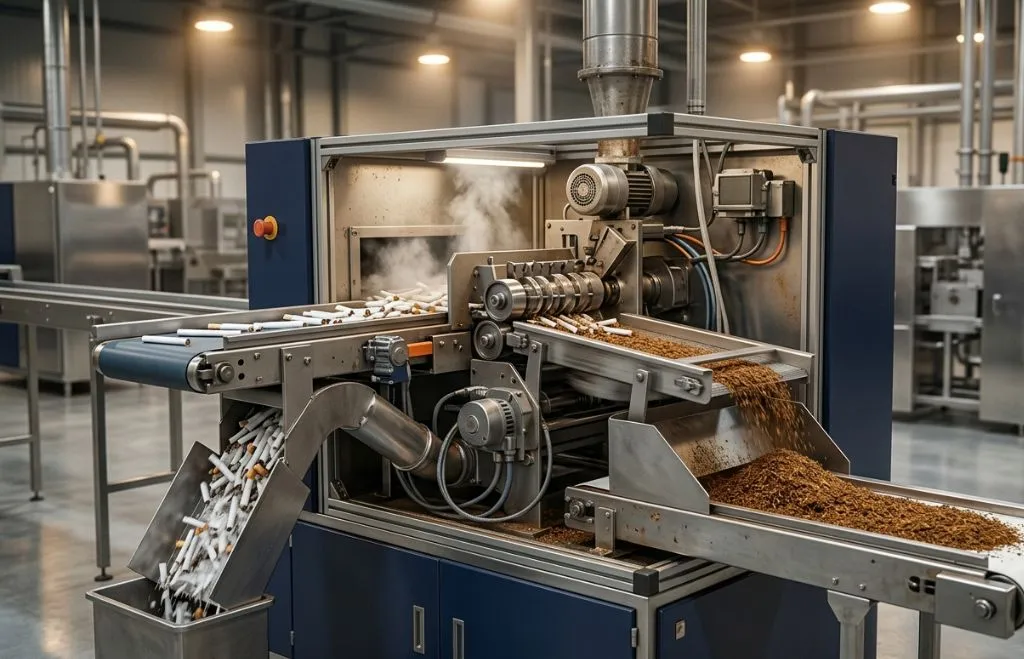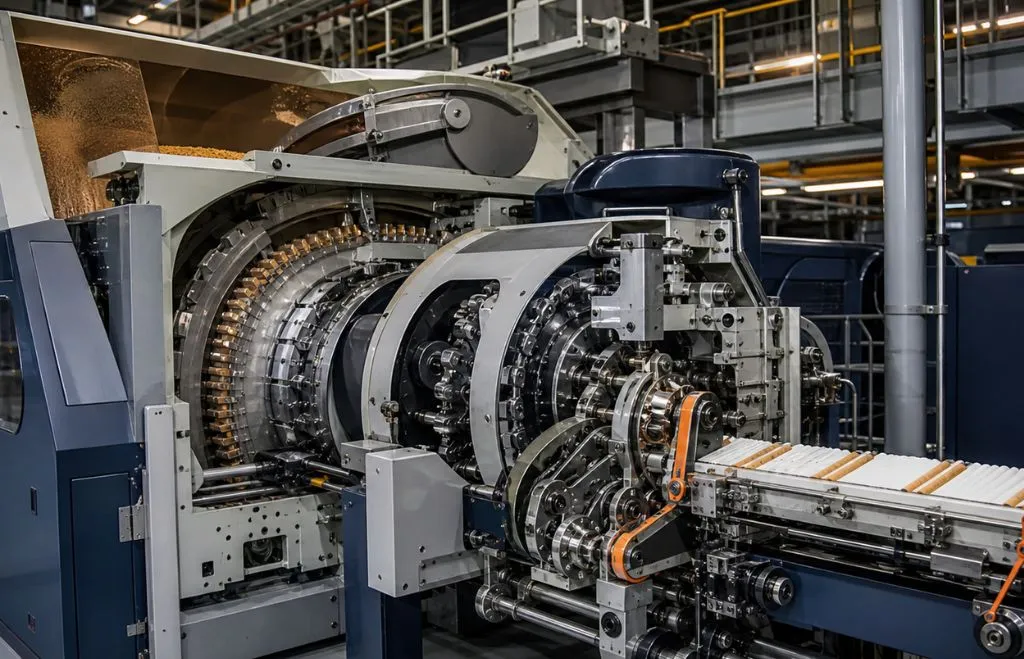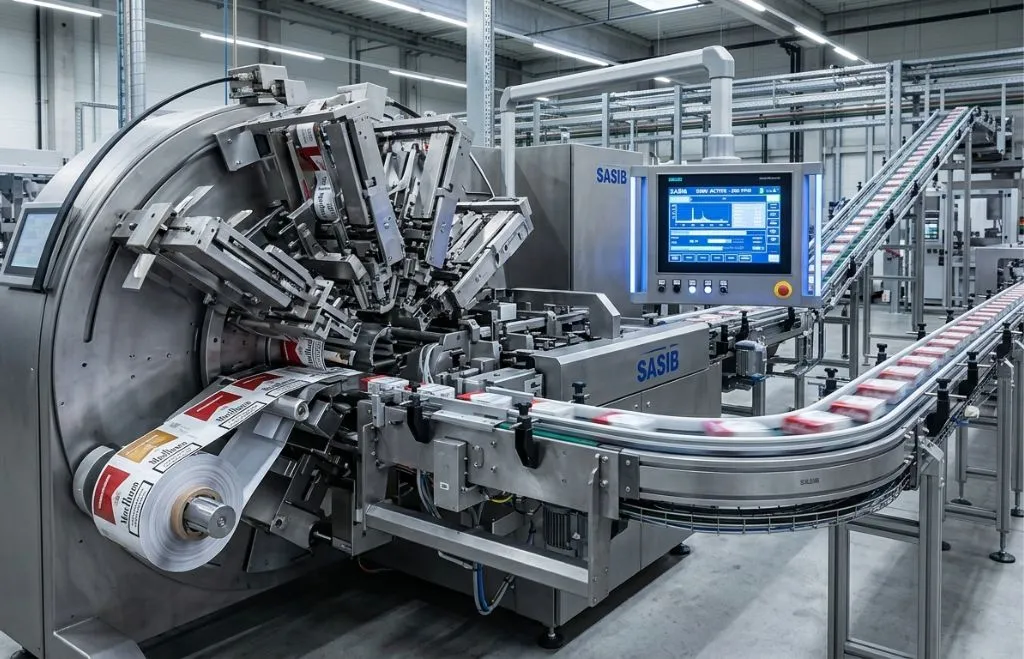
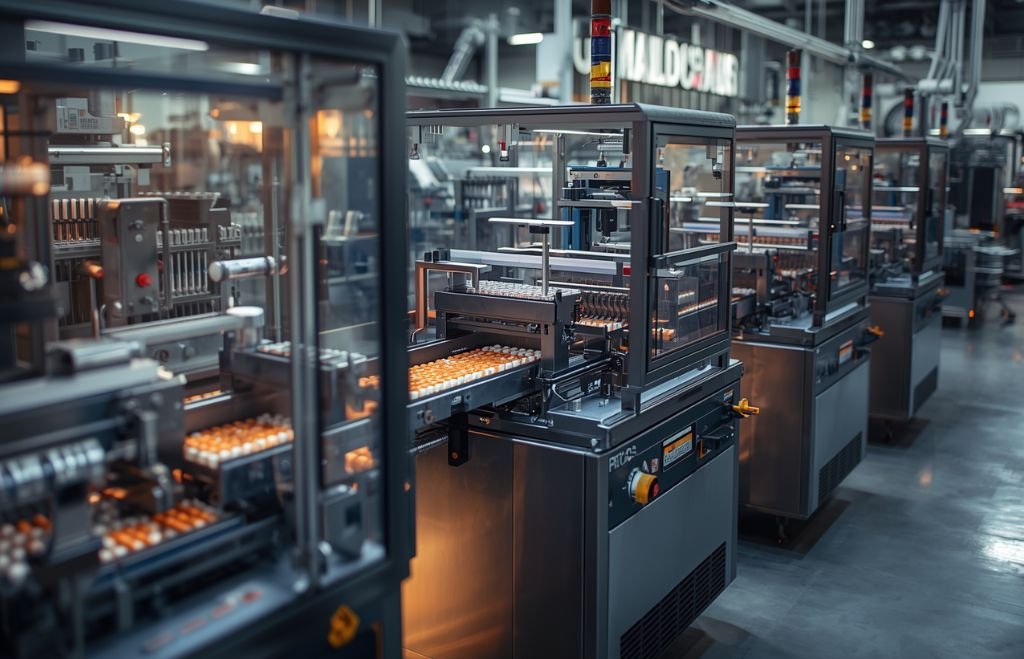
What the Protos 70 brings to high speed cigarette production is straightforward to define — 7,000 cigarettes per minute for standard formats, automatic quality control across seven defect parameters, the deepest global parts ecosystem of any high-speed cigarette maker, and a refurbished market active enough that quality rebuilt units are consistently available at accessible price points. For factories targeting 4 to 7 billion cigarettes per year, these four capabilities define why the Protos 70 has been the benchmark high-speed making platform for decades.
The Four Things the Protos 70 Brings to Production
- Speed: 7,000 cpm for regular diameter cigarettes and 6,000 cpm for slim and super slim formats. At 7,000 cpm on three shifts the Protos 70 produces approximately 3.7 billion cigarettes per year — the core capacity range for mid-to-large scale tobacco manufacturing operations.
- Quality control: Automatic detection and rejection across seven defect parameters — air leakage, loose end, missing filter, soft spots, hard spots, underweight, and overweight. Every defective cigarette is rejected before it reaches the packing line. No sampling, no periodic checks — continuous detection at full production speed.
- Format flexibility: The Protos 70 supports cigarette circumferences from 17mm to 28.3mm — covering standard king size, 100mm, slim, super slim, and kretek formats from a single machine platform. Factories can produce multiple cigarette formats without investing in separate making machines.
- Parts and service ecosystem: The Protos 70 has the deepest global parts ecosystem of any high-speed cigarette maker currently in production. This matters operationally — parts availability directly determines downtime duration when a component needs replacement. Körber maintains a direct North American service presence with parts depots and trained technicians covering the USA market.
Protos 70 Production Capabilities: Full Specifications
| Machine type | High-speed cigarette making machine — Hauni Protos series |
| Production speed — regular | 7,000 cigarettes per minute (cpm) |
| Production speed — slim/super slim | 6,000 cigarettes per minute (cpm) |
| Max rod forming speed | 490 meters per minute |
| Circumference range | 17mm to 28.3mm |
| Rod length range | 65mm to 110mm |
| Machine units | S7000 Rod Maker + M8000 Filter Tip + F80 Auto Tray Filler |
| Total machine weight | 10,800 kg |
| Power — S7000 | 50 kW |
| Power — M8000 | 20 kW |
| Power — F80 | 15 kW |
| Quality control | 7-parameter automatic detection and rejection |
| Refurbished price | $200,000 to $380,000 |
| New OEM price | $600,000 to $900,000 |
| Status | Current platform — widely available new and refurbished |
What the Protos 70 Delivers Operationally
Specifications tell you what the machine is rated to do. The table below translates those specifications into operational outcomes — what the Protos 70 actually brings to daily factory production.
| Capability | What the Protos 70 Delivers | Operational Impact |
| Speed — standard | 7,000 cpm | 4 to 7 billion cigarettes per year on three shifts |
| Speed — slim formats | 6,000 cpm | Slim and super slim production from the same machine |
| Format flexibility | 17mm to 28.3mm circumference | Standard, slim, super slim, kretek from one platform |
| Quality control | 7-parameter automatic detection | Rejects defective cigarettes before they reach packing |
| Tray filling | F80 automated — no manual handling | Eliminates manual tray errors and production stoppages |
| Parts ecosystem | Deepest globally of any high-speed maker | Lowest downtime risk from parts availability |
| Service coverage | Körber North America direct | Fastest response time for USA-based factories |
| Refurbished availability | Most active market of any high-speed maker | Widest range of condition and price options |
The Three Integrated Units and What Each Contributes
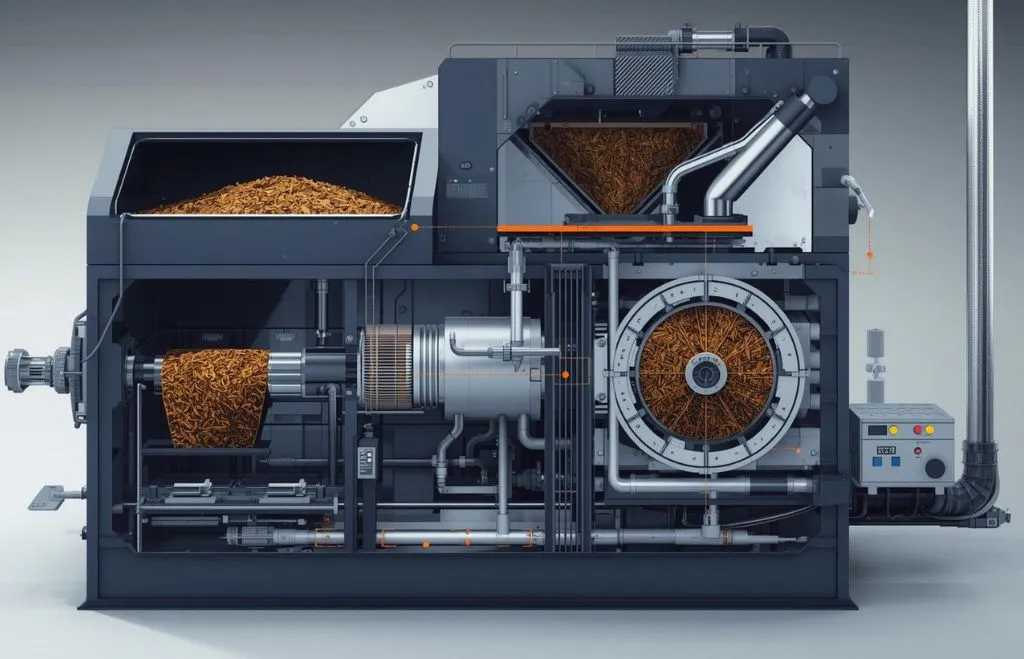
S7000 Cigarette Rod Maker: Forms tobacco into a continuous rod at 490 meters per minute, wraps it in cigarette paper, seals the seam, and cuts individual rods. This is where tobacco becomes a cigarette — everything downstream depends on the S7000 producing consistent, well-formed rods.
M8000 Filter Tip Attachment: Attaches filter rods to cigarette rods using tipping paper. Ventilation lasers create the perforations required for ventilated cigarette specifications. The M8000 operates synchronized to the S7000 — it processes exactly as many filter rods as the S7000 produces cigarette rods per minute.
F80 Auto Tray Filler: Deposits finished quality-checked filter cigarettes into standard output trays without stopping the making line for tray changes. The F80 brings automated tray handling — eliminating the manual errors and production interruptions that occur when tray filling is done by hand.
For a complete explanation of how the three Protos 70 units work together step by step, and how the machine connects to the full production line, see our guide to Cigarette Production Line Equipment.
What the Protos 70 Brings That Mid-Speed Makers Do Not
The most common comparison is between the Protos 70 at 7,000 cpm and mid-speed makers like the Molins Mark 9 at 5,500 cpm. The difference is not just speed — it is the level of automation and quality control integration. For a full comparison of high-speed vs mid-speed platforms and how to choose between them based on production volume, see our guide to High Speed vs Mid Speed Cigarette Machine.
- 27 percent more output per machine at rated speed — 7,000 cpm vs 5,500 cpm
- Seven-parameter automatic quality control vs simpler detection systems on older mid-speed platforms
- F80 automated tray filling — not standard on all mid-speed configurations
- 490 meters per minute rod forming speed — the fastest rod maker speed in the Protos 70’s class
Protos 70 in the Refurbished Market
Why the Protos 70 refurbished market is the deepest of any high-speed maker: The Protos 70 has been in production and widespread deployment for decades. As factories upgrade to the Protos 80 ER and M5, a continuous stream of quality Protos 70 units enters the refurbished market — creating consistent supply at accessible price points.
Refurbished price range: $200,000 to $380,000 depending on age, configuration, and reconditioning scope — compared to $600,000 to $900,000 for a new Protos 70 from Körber OEM channels.
What to verify before buying a refurbished Protos 70:
- S7000, M8000 and F80 serial numbers — verify configuration against Körber production records
- Digital control system version — confirm current and supported platform
- Garniture tape condition and replacement history — primary wearing component on rod makers
- M8000 tipping drum surfaces and cam wear — primary failure points on filter attachment
- All seven quality control sensors — functional and calibrated
- F80 tray filler tray handling mechanism condition
- Full-speed production test at 7,000 cpm on your format before accepting delivery
For a comprehensive pre-purchase inspection framework, see our guide to New vs Refurbished Cigarette Manufacturing Machines.
Protos 70 Availability in the USA
The Protos 70 is available in the USA through both new and refurbished channels. Körber Technologies maintains direct North American service offices, parts depots, and trained technicians covering the USA market. For the complete list of tobacco machinery suppliers in USA including Körber dealers and specialist Protos rebuilders, see our dedicated suppliers page. For guidance on sourcing and vetting suppliers, see our How to Source Cigarette Machinery Suppliers guide.
Frequently Asked Questions
What does the Protos 70 bring to high speed cigarette production?
The Protos 70 brings four key capabilities to high speed cigarette production: 7,000 cpm output for standard formats (6,000 cpm for slim), automatic quality control across seven defect parameters, format flexibility from 17mm to 28.3mm circumference, and the deepest global parts and service ecosystem of any high-speed cigarette maker. Together these capabilities make it the benchmark platform for factories targeting 4 to 7 billion cigarettes per year.
What production volume does the Protos 70 suit?
The Protos 70 at 7,000 cpm on a three-shift operation produces approximately 3.7 billion cigarettes per year. For factories targeting 4 to 7 billion cigarettes per year it is appropriately specified. For factories targeting above 7 billion the Protos 80 ER at 8,000 cpm or the M5 at 12,000 cpm become the correct platforms.
How does the Protos 70 quality control system work?
The Protos 70 quality control system automatically detects and rejects cigarettes with seven defect types: air leakage, loose end, missing filter, soft spots, hard spots, underweight, and overweight. Detection operates continuously at full production speed — not by periodic sampling. The fault system automatically identifies, displays, and logs each fault type for production analysis.
Why does the Protos 70 have the deepest parts ecosystem?
The Protos 70 has been in widespread global deployment for decades — creating a large installed base that supports both Körber OEM parts supply and an established aftermarket parts industry. This means that when a component needs replacement, parts are available from multiple sources, reducing both lead time and downtime. No other high-speed cigarette maker platform has an equivalent depth of parts availability globally.
What is the difference between Protos 70 and Protos 80 ER production capability?
The Protos 70 produces 7,000 cpm for standard formats and 6,000 cpm for slim formats. The Protos 80 ER produces 8,000 cpm for standard and 7,000 cpm for slim — approximately 14 percent more output. The Protos 80 ER also adds built-in microwave weight control as a standard feature and uses Siemens or Beckhoff IPC automation rather than the Protos 70’s digital control system. The Protos 80 ER commands a price premium of approximately $100,000 to $120,000 over the Protos 70 in the refurbished market.
Conclusion
What the Protos 70 brings to high speed cigarette production — 7,000 cpm, seven-parameter automatic quality control, broad format flexibility, and the deepest parts ecosystem in the market — explains why it has remained the global benchmark for high-speed making for decades. For factories where the Protos 70’s speed ceiling is sufficient and the Protos 80 ER’s premium is not justified, it remains the most defensible capital equipment decision in high-speed cigarette manufacturing. For the full Körber Protos range overview including Protos 80 ER and M5, see our Körber Protos Cigarette Maker guide. For cigarette manufacturing machine cost comparisons across all speed tiers, see our Cigarette Manufacturing Machine Cost guide.