Tobacco feeder accuracy matters because every variation in the feed rate translates directly into cigarette weight variation at the making machine. A feeder running 5 percent above setpoint produces overweight cigarettes. One running below produces underweight cigarettes that the quality control system rejects. At 5,000 cpm, even a 1 percent feed rate deviation produces 50 out-of-specification cigarettes per minute — 3,000 per hour — before anyone notices. This guide explains what causes tobacco feeder accuracy problems, how each factor affects cigarette weight, and how to fix the most common issues systematically.
Why Tobacco Feeder Accuracy Directly Affects Cigarette Quality
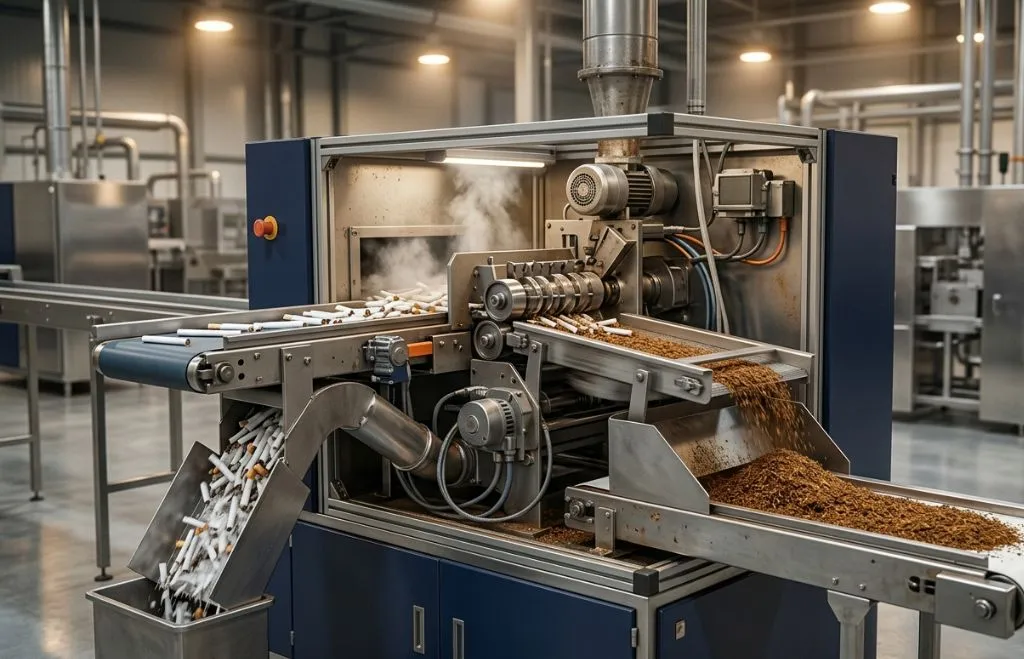
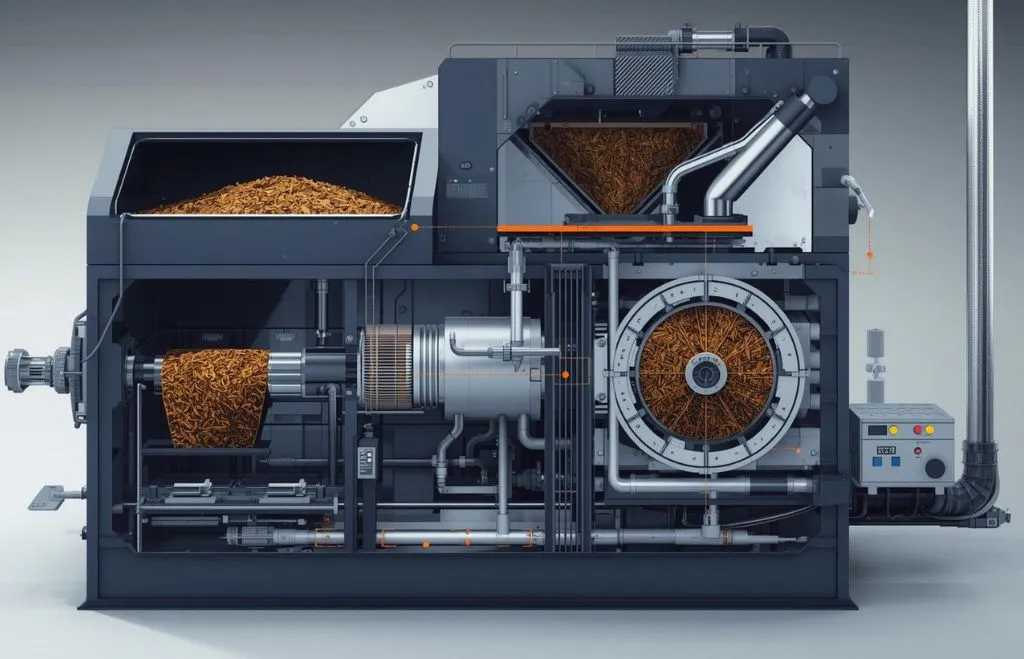
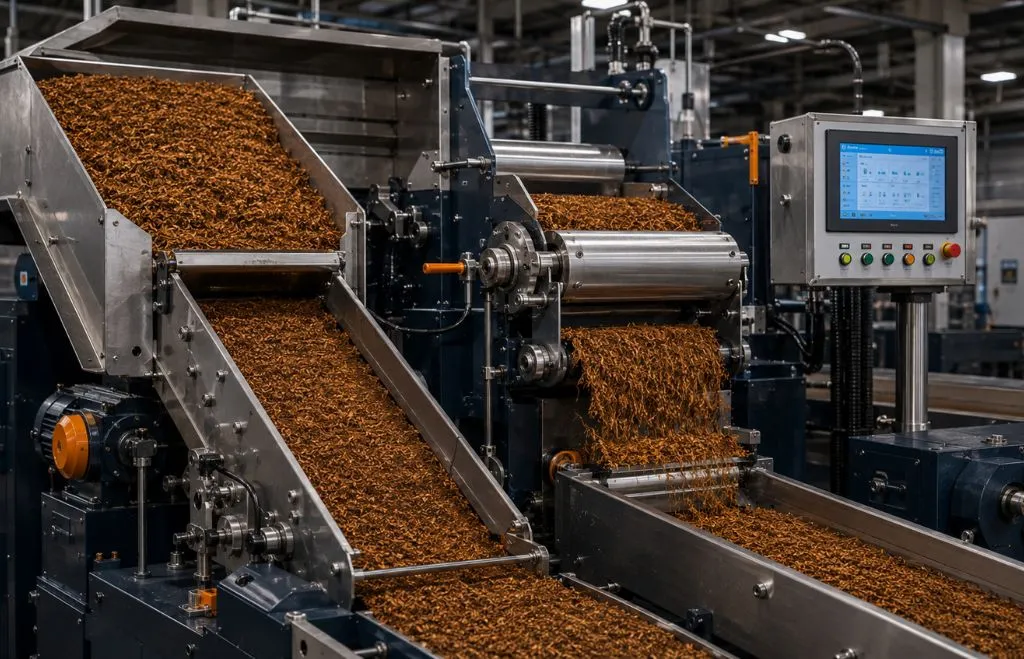
The tobacco feeder’s primary function is to deliver a continuous, uniform flow of cut tobacco filler to the cigarette maker’s garniture section at a rate precisely matched to the maker’s production speed. Any deviation from this uniform flow — whether a surge, a shortage, or an inconsistent density variation — creates a corresponding variation in cigarette rod weight. For a full explanation of how the tobacco feeder connects to the garniture section and the full production line, see our guide to the Tobacco Feeder System: How It Works and Machine Compatibility Guide.
Underweight cigarettes: Below-specification cigarettes are detected and rejected by the maker’s microwave weight control system. High rejection rates from underweight cigarettes increase tobacco waste, reduce line efficiency, and indicate a feed rate problem that needs immediate investigation.
Overweight cigarettes: Above-specification cigarettes consume excess tobacco per rod — increasing material cost and potentially causing draw resistance problems. Consistent overweight production indicates the feed rate is running high and needs calibration.
Weight variation: Inconsistent weight — some cigarettes under, some over — indicates a flow uniformity problem rather than a simple rate calibration issue. This typically points to a mechanical problem in the feeder, a moisture variation in the tobacco blend, or a hopper level control issue.
Key Factors That Determine Tobacco Feeder Accuracy
Tobacco feeder accuracy is not a single parameter — it is the combined result of seven interdependent factors. Each one must be managed consistently for stable cigarette weight production.
| Accuracy Factor | What It Affects | How to Optimise |
| Tobacco moisture content | Rod weight consistency and cut filler density | Verify conditioning system — maintain 12 to 14 percent moisture |
| Feed rate calibration | Cigarette weight uniformity at maker | Calibrate feed rate to maker CPM — check at each shift start |
| Hopper fill level | Flow consistency — surges and stoppages | Maintain 30 to 70 percent hopper level — avoid overfill and underfill |
| Tobacco particle size distribution | Feed uniformity and garniture tube flow | Verify primary processing cut width — check after blend changes |
| Weight control sensor calibration | Weight control system accuracy | Calibrate weight sensors at each scheduled maintenance interval |
| Belt and roller condition | Feed rate consistency and tobacco degradation | Inspect belt tension and roller wear — replace at wear limit |
| PLC control parameters | Response to feed rate changes | Verify PLC setpoints match current product specification |
Factor 1 — Tobacco Moisture Content
Moisture is the single most significant variable affecting tobacco feeder accuracy. Cut tobacco at the correct moisture specification — typically 12 to 14 percent — flows consistently through the feeder’s hopper, belts, and distribution system. Tobacco that is too dry flows too freely — surging through the garniture and producing overweight cigarettes. Tobacco that is too moist clumps and restricts flow — producing underweight cigarettes or stoppages.
Verify the conditioning system output moisture at the start of each production run and after any blend change. If moisture varies during a run — typically caused by conditioning system drift or incoming leaf moisture variation — the feed rate control system must compensate automatically. Ensure the PLC-controlled feed rate system is set to respond to weight control feedback in real time.
Factor 2 — Feed Rate Calibration
The tobacco feeder’s feed rate must be calibrated to match the cigarette maker’s production speed at the current product specification. Feed rate is typically expressed in grams per minute delivered to the maker at a given CPM. At the start of each production run verify the feed rate setpoint matches the current product weight specification and maker speed.
Calibrate the feed rate at each scheduled maintenance interval using a direct weight measurement — collect feeder output over a timed period, weigh it, and compare against the setpoint. Adjust the PLC setpoint if the measured output deviates from specification by more than the permitted tolerance. If the maker speed changes during a run, the feeder’s PLC must update the feed rate setpoint automatically.
Factor 3 — Hopper Fill Level
The tobacco hopper fill level affects feed flow consistency more than most engineers anticipate. A full hopper — above 70 percent capacity — creates excess material pressure on the lower feed belt, causing the belt to push more tobacco than the setpoint requires. An empty hopper — below 30 percent — causes surge and starvation cycles as material falls unevenly onto the belt.
Maintain hopper fill level between 30 and 70 percent throughout the production run. Configure the hopper replenishment system to top up in small frequent additions rather than large infrequent dumps — this prevents the level swings that cause feed rate variation.
Factor 4 — Weight Control Sensor Calibration
The weight control sensor — typically a microwave or beta-gauge density sensor positioned at the cigarette maker — provides the feedback signal that the feeder’s PLC uses to trim the feed rate in real time. A drifted or incorrectly calibrated sensor produces incorrect feedback — causing the PLC to adjust the feed rate in the wrong direction and worsening weight variation rather than correcting it.
Calibrate weight control sensors at each scheduled maintenance interval using certified calibration standards. A sensor that appears to be working — displaying values and triggering adjustments — can still be drifted and causing systematic weight errors that only show up in end-of-shift quality data.
Factor 5 — Belt and Roller Condition
Belt tension and roller condition directly affect feed rate consistency. A slack belt slips under the tobacco load — delivering less tobacco than the PLC setpoint requires. A worn roller creates an uneven nip point — causing inconsistent tobacco compression and flow variation.
Inspect belt tension and roller wear at each scheduled maintenance interval. Replace belts and rollers at the manufacturer’s specified wear limit — do not wait for visible failure. A belt that looks intact but has lost tension is delivering variable feed rates on every production run.
Troubleshooting Common Tobacco Feeder Accuracy Problems
Consistent cigarette underweight: Check feed rate calibration first. Verify hopper fill level is above 30 percent. Check belt tension — slack belt is a common cause. Verify tobacco moisture — dry tobacco can cause apparent underweight by flowing too loosely through the garniture.
Consistent cigarette overweight: Reduce feed rate setpoint in small increments and recheck weight. Verify hopper fill level is not above 70 percent. Check whether a recent blend change increased tobacco density — denser blends deliver more weight per unit volume and require feed rate reduction.
Weight variation — not consistent over or under: This indicates a flow uniformity problem. Check the hopper fill level control system for surging. Check primary processing blend consistency — if cut width varies the feeder cannot compensate. Verify sensor calibration — a fluctuating sensor signal causes the PLC to hunt and produces weight variation rather than stability.
Feeder stoppages during production: Check tobacco moisture — moist tobacco clumps and blocks the feed path. Check the hopper for bridging — where tobacco forms an arch above the outlet. Verify belt and roller condition for wear-related stoppages. Check the PLC for fault codes indicating sensor or motor faults.
Maintenance Schedule for Consistent Feeder Accuracy
- Every shift: Check hopper fill level control, verify feed rate setpoint matches product specification, visually inspect belt condition
- Every week: Calibrate feed rate by direct weight measurement, verify weight control sensor response, check roller alignment
- Every month: Full belt and roller inspection and replacement if at wear limit, clean all tobacco contact surfaces, verify PLC setpoints against product specification sheet
- Every quarter: Full sensor calibration with certified standards, lubricate all bearing points, verify hopper replenishment system timing and fill level control
For a complete technical guide to the tobacco feeder system including machine compatibility and 5-stage process explanation, see our guide to the Tobacco Feeder System. For a guide to how cut filler properties from primary processing affect feeder behavior, see our What Is Tobacco Filler guide.
Frequently Asked Questions
Why does tobacco feeder accuracy matter for cigarette quality?
Tobacco feeder accuracy directly determines cigarette weight consistency. Every deviation in the feed rate produces a corresponding deviation in cigarette rod weight — underweight cigarettes are rejected by the quality control system, overweight cigarettes waste material and increase draw resistance. At 5,000 cpm even a 1 percent feed rate deviation produces 3,000 out-of-specification cigarettes per hour.
What is the correct tobacco moisture for feeder accuracy?
Cut tobacco fed through the feeder should be at 12 to 14 percent moisture for consistent flow and rod weight performance. Below 12 percent the tobacco flows too freely and produces overweight cigarettes. Above 14 percent the tobacco clumps and restricts flow — producing underweight cigarettes or feed stoppages.
How often should tobacco feeder feed rate be calibrated?
Feed rate calibration should be verified at the start of each production run, after any blend change, after any speed change, and at each scheduled weekly maintenance interval. Calibration uses a direct weight measurement — collecting feeder output over a timed period, weighing it, and comparing against the PLC setpoint.
What causes cigarette weight variation at the feeder?
The most common causes of cigarette weight variation from the tobacco feeder are: tobacco moisture variation, incorrect feed rate calibration, hopper fill level outside the optimal 30 to 70 percent range, drifted weight control sensors, and worn belts or rollers. Weight variation — as opposed to consistent over or underweight — typically points to flow uniformity problems rather than a simple setpoint error.
How does the PLC control system affect tobacco feeder accuracy?
The PLC receives real-time feedback from the cigarette maker’s weight control sensor and adjusts the feeder’s feed rate setpoint in response. If the weight sensor shows cigarettes running light, the PLC increases the feed rate. If cigarettes are running heavy, it reduces the feed rate. The accuracy of this closed-loop control depends entirely on correct sensor calibration and correct PLC setpoints — a drifted sensor or incorrect setpoint causes the PLC to adjust in the wrong direction.
Conclusion
Tobacco feeder accuracy is a continuous optimization discipline — not a one-time setup task. Moisture management, feed rate calibration, hopper level control, sensor maintenance, and mechanical condition all contribute to consistent rod weight performance. For production engineers managing cigarette line performance, systematic attention to each of these factors is the most direct route to reducing cigarette rejection rates and improving material utilization. For full technical specifications and machine compatibility details of tobacco feeder systems, see our comprehensive guide to the Tobacco Feeder System. For tobacco machinery suppliers in USA who supply and service tobacco feeder equipment, see our dedicated suppliers page.