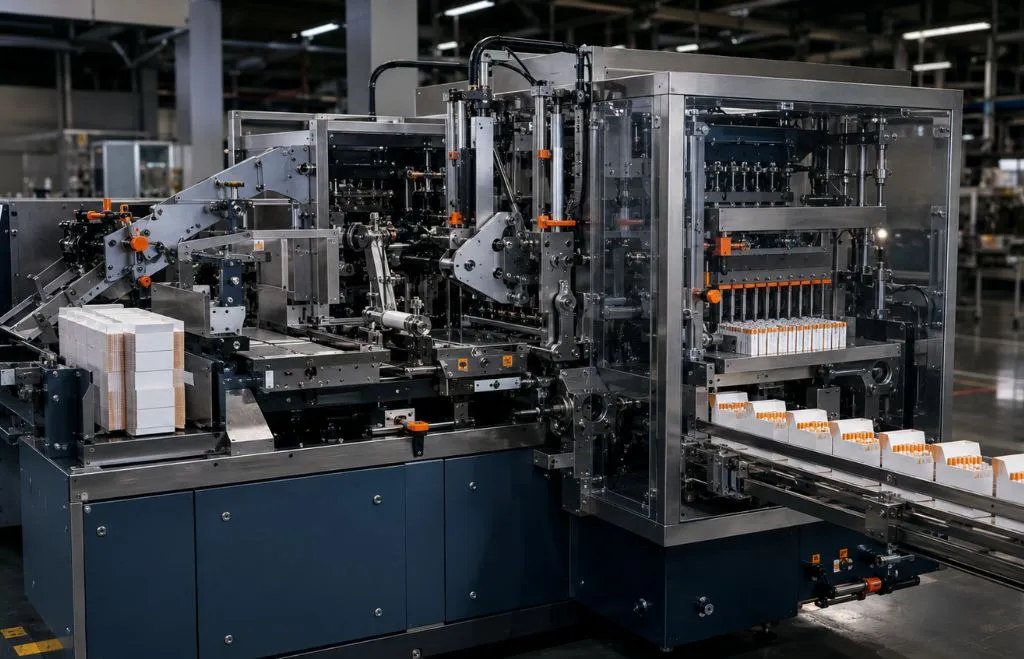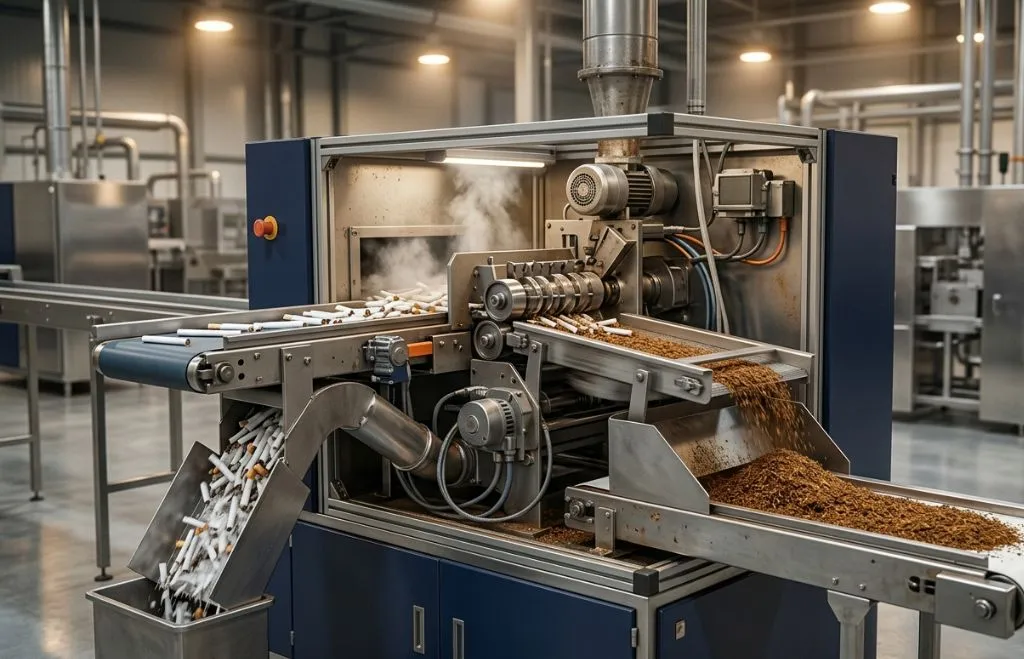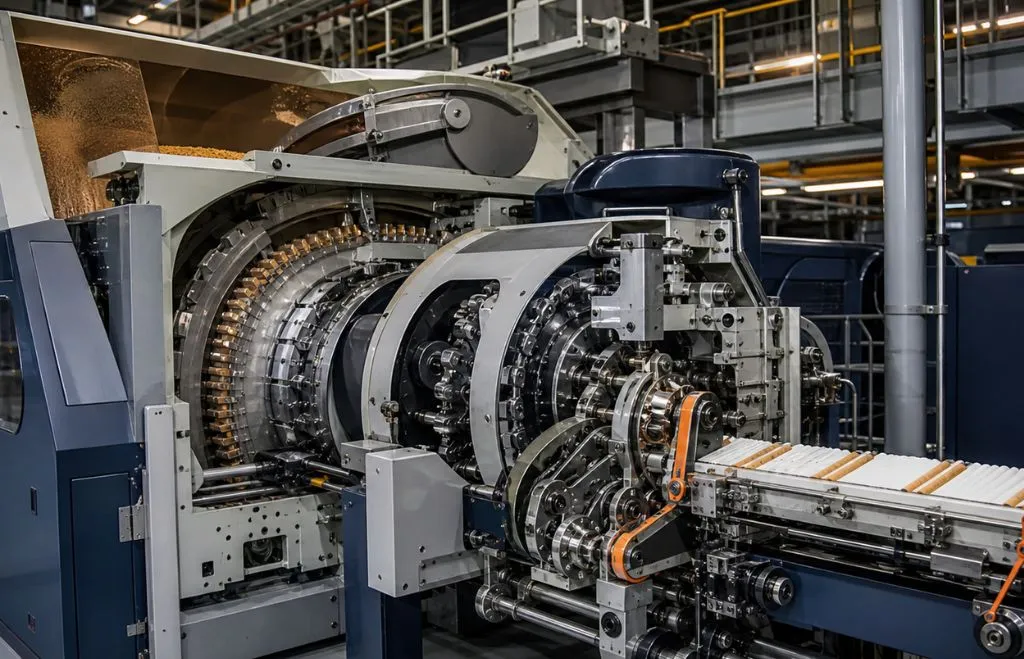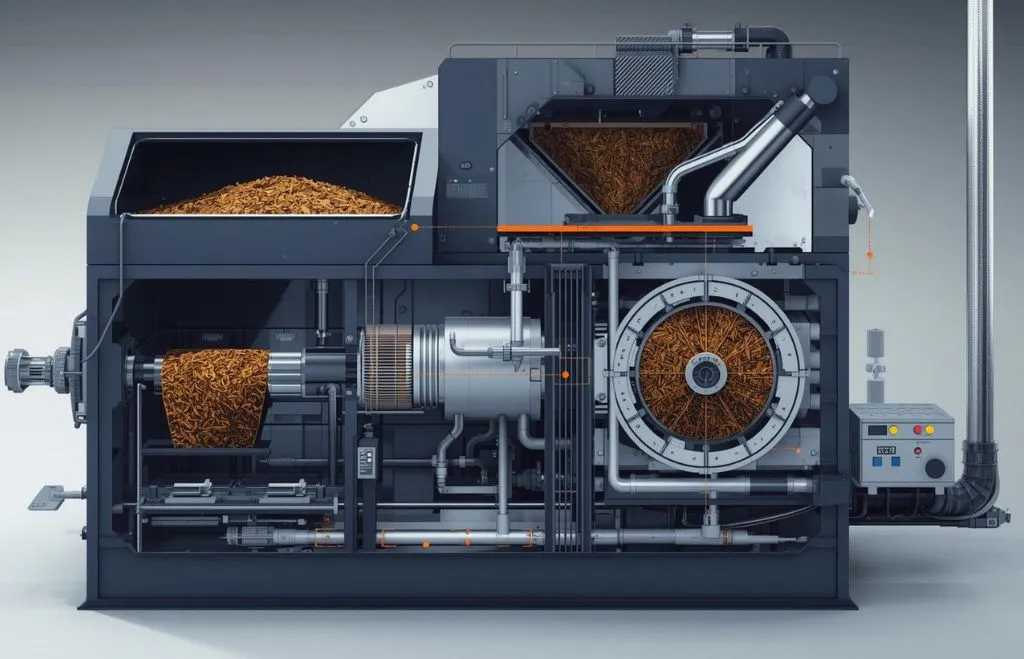
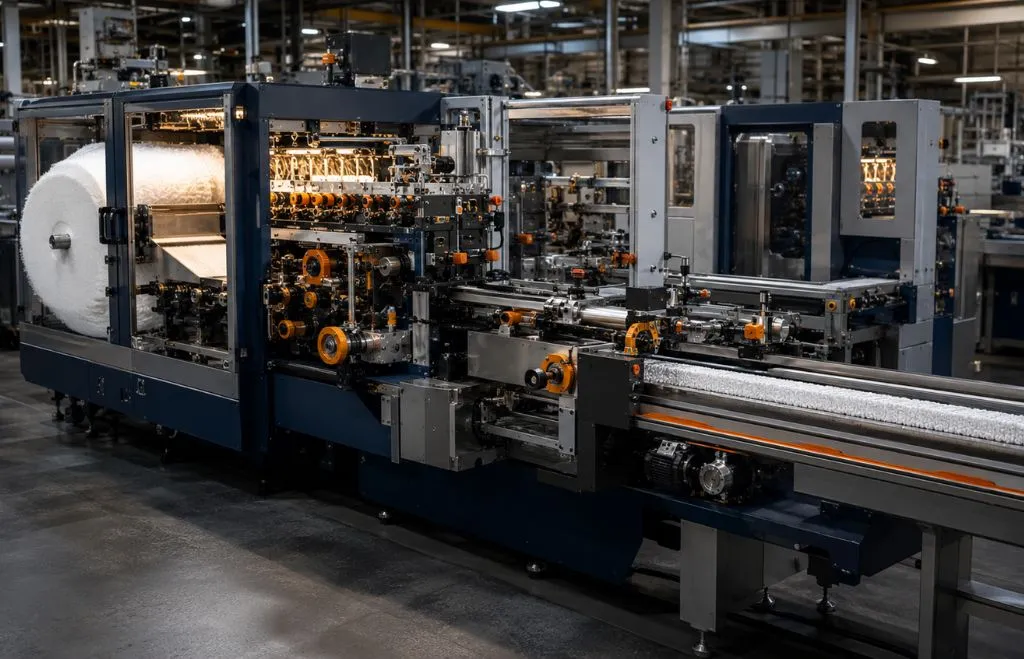
Understanding how the Hauni KDF makes filter rods starts with its two variants — the KDF 1 for standard medium-scale production and the KDF 2 running at 400 meters per minute — both converting acetate tow into finished filter rods ready for the cigarette making line. Manufactured by Hauni, now operating as Körber Technologies, the KDF series has been the benchmark for industrial cigarette filter production for decades, dominating the filter making segment the way the Protos dominates cigarette making. Two active variants serve the market: the KDF 1 for standard medium-scale filter production and the KDF 2 for high-speed high-volume output with advanced format flexibility. This guide provides everything a factory buyer needs to know about the Hauni KDF cigarette filter making machine, verified specifications for both variants, how they integrate with the cigarette production line, KDF 1 versus KDF 2 comparison, refurbished market pricing, and USA sourcing guidance.
What Is the Hauni KDF Cigarette Filter Making Machine?
A cigarette filter making machine, also called a filter rod maker, produces the acetate filter rods that are attached to cigarette rods by the filter attachment machine (tipper) during cigarette manufacturing. The filter maker is an upstream machine in the cigarette production process: it converts acetate tow, a raw fibrous material, into finished filter rods of precise length and circumference, which are deposited into trays and transported to the cigarette making line for attachment.
The Hauni KDF series are mono filter makers, meaning they produce single-segment standard acetate filters, the most widely used filter type in commercial cigarette production globally. The KDF series supports a wide range of filter circumferences and lengths, making it compatible with standard, slim, and super slim cigarette formats across both 84mm and 100mm rod lengths.
For context on how the filter making machine fits within the full cigarette production line, see our guide to Cigarette Production Line Equipment: From Raw Tobacco to Finished Pack.
How a Cigarette Filter Making Machine Works
Understanding the filter making process is essential for any factory buyer specifying a KDF machine. The process converts raw acetate tow into finished filter rods through a continuous sequence of stages:
- Tow processing: Raw acetate tow is drawn from bales and opened by the tow processor (on KDF 2, the integrated tow opener performs this function). Opening the tow separates the individual fibres and creates the uniform low-density fibre bed required for filter rod formation.
- Plasticizer application: Triacetin plasticizer is applied to the opened tow to bond the acetate fibers together when compressed into rod form. The application rate is critical, too little produces a soft, structurally weak filter; too much creates excessive draw resistance.
- Rod formation: The plasticized tow is gathered and compressed into a continuous rod by the garniture section, wrapped in plugwrap paper, and sealed with hot-melt adhesive. The continuous rod exits the garniture at the machine’s operating speed.
- Cutting: The continuous filter rod is cut into individual filter lengths by precision cutting blades. The KDF 2’s plugwrap splicing system allows splicing at any speed without fluctuation, maintaining rod quality throughout the splice cycle.
- Quality control: Circumference is monitored continuously. The KDF 1 uses a laser-based circumference control system. The KDF 2 uses the integrated tow opener and HCF80 system for quality monitoring and automatic tray filling.
- Tray filling: Finished filter rods are deposited into standard trays by the tray filler. The KDF 2 includes the HCF80 auto tray filler as an integrated component. Trays are transported to the cigarette making line where filters are attached by the Max S or equivalent tipper.
The filter making machine must be matched to the cigarette making machine’s filter consumption rate. At 5,500 cpm on a Molins MK9 Classic producing standard 20mm filters, the maker consumes approximately 11,000 individual filter rods per minute. The KDF 2 at 400 meters per minute producing 20mm filter rods yields approximately 20,000 filter rods per minute — well above the MK9’s requirement. For the full Hauni Protos and Molins machine specifications, see our Industrial Cigarette Machinery Brands: Complete Manufacturer Guide.
Hauni KDF 1: Full Specifications
The following specifications are verified from multiple industry sources including Orchid Tobacco, Cigmatic, and Makepak International, cross-referenced May 2026.
| Machine type | Mono cigarette filter maker — acetate tow processing |
| Filter length | 120mm |
| Filter circumference | 16.8mm – 28.1mm |
| Filter length range | 64mm – 150mm |
| PLC control system | Siemens or Beckhoff |
| Servo system | Lenze or Beckhoff |
| Circumference control | Laser-based system |
| Power consumption | 40 kW |
| Key feature | Precision laser circumference control — standard format focus |
| Best for | Medium-scale production, standard filter formats, precision-first operations |
The KDF 1 is the entry-level variant of the Hauni KDF series, designed for manufacturers focused on standard format filter production at moderate throughput. Its laser-based circumference control system delivers precise filter diameter consistency without the complexity of the tow opener and HCF80 combination found on the KDF 2. For first-time filter making machine buyers or factories producing a single standard filter format at moderate volume, the KDF 1 represents the more accessible and maintainable entry point into the Hauni filter making platform.
Hauni KDF 2: Full Specifications
The KDF 2 is the high-speed variant of the Hauni KDF series, designed for high-volume production environments requiring maximum filter output and multi-format flexibility. The integrated tow opener and HCF80 auto tray filler make the KDF 2 a complete filter making line rather than a standalone machine.
| Machine type | High-speed mono cigarette filter maker, acetate tow processing |
| Production speed | 400 meters per minute (acetate tows) |
| Filter circumference | 16.8mm – 28.1mm |
| Filter length range | 64mm – 150mm |
| PLC control system | Siemens or Beckhoff |
| Servo system | Lenze or Beckhoff |
| Circumference control | Tow opener + HCF80 auto tray filler integration |
| Total machine weight | 6,500 kg |
| Power consumption | 55 kW total (KDF-2: 40 kW + HCF80: 15 kW) |
| Included components | KDF-2 filter maker + tow opener + HCF80 auto tray filler |
| Tip sizes supported | 20mm, 21mm, 25mm — normal and menthol |
| Filter types | Standard, capsule, hollow, menthol — high format flexibility |
| Brand change time | Under 5 minutes |
| Length change time | Approximately 20 minutes |
| Best for | High-volume production, diverse format requirements, automated output |
The KDF 2’s 400 meters per minute output at standard filter lengths makes it the benchmark high-speed filter maker in the global refurbished market. Its format flexibility, supporting standard, capsule, hollow, and menthol filters across a wide circumference and length range, makes it suitable for factories producing diverse product lines from a single machine. The brand change time of under 5 minutes is a significant operational advantage for factories managing multiple SKUs on a single filter making line.
Hauni KDF 1 vs KDF 2: Which Is Right for Your Factory?
| Feature | Hauni KDF 1 | Hauni KDF 2 |
| Production speed | Moderate — standard output | 400 meters per minute |
| Filter length | 120mm | 64mm – 150mm (variable) |
| Filter circumference | 16.8 – 28.1mm | 16.8 – 28.1mm |
| PLC system | Siemens or Beckhoff | Siemens or Beckhoff |
| Servo system | Lenze or Beckhoff | Lenze or Beckhoff |
| Circumference control | Laser-based | Tow opener + HCF80 |
| Power consumption | 40 kW | 55 kW (KDF-2 + HCF80) |
| Machine weight | Lighter configuration | 6,500 kg |
| Auto tray filler | Not included standard | HCF80 included |
| Brand change time | Standard | Under 5 minutes |
| Format flexibility | Standard formats | High — capsule, hollow, menthol |
| Best for | Standard medium-scale | High-speed high-volume diverse formats |
| Refurbished price range | $30,000 – $80,000 | $60,000 – $150,000 |
Choose KDF 1 if:
- Your factory produces a single standard filter format at moderate volume
- You are entering filter making for the first time and want a simpler machine to commission and maintain
- Your capital budget favors the lower-cost KDF 1 configuration
- Laser circumference control is your preferred quality monitoring approach
- Your cigarette maker operates below 6,000 cpm and does not require maximum filter throughput
Choose KDF 2 if:
- Your factory produces multiple filter formats, standard, slim, capsule, hollow, or menthol
- Your cigarette maker operates at 6,000 cpm or above and requires maximum filter rod supply
- You need brand change capability in under 5 minutes for multi-SKU production
- Automated tray filling is required, the HCF80 auto tray filler eliminates manual tray handling
- Your production volume justifies the higher capital and energy cost of the KDF 2 configuration
How the Hauni KDF Integrates with Your Production Line
Upstream: The KDF receives acetate tow from bale storage, either manually loaded or via an automated tow handling system for high-volume lines. The tow processor or tow opener on the KDF 2 draws tow from the bale and prepares it for rod formation.
Downstream: Finished filter rods in trays are transported to the cigarette making machine, typically a Hauni Protos or Molins Mark 9 series maker. The filter rods are loaded into the maker’s filter rod magazine and consumed by the filter attachment unit (Max S tipper or equivalent) at the maker’s production rate.
Speed matching: The KDF must produce filter rods faster than the cigarette maker consumes them to maintain a buffer. At a Molins MK9 Classic producing 5,500 cpm on 84mm cigarettes with a 25mm filter, filter consumption is approximately 5,500 rods per minute. The KDF 2 at 400 m/min producing 25mm rods yields approximately 16,000 rods per minute, well ahead of the maker’s consumption rate, providing comfortable buffer capacity.
For the full picture of speed matching and equipment integration across the complete production line, see our guide to How a Cigarette Production Line Works: Step-by-Step Process.
Buying a Hauni KDF: New vs Refurbished
New KDF machines: Available through Körber Technologies’ authorized sales network. Lead times for new filter making machines typically run 6 to 12 months from order confirmation. New machines carry full Körber warranty and OEM commissioning support.
Refurbished KDF machines: A strong secondary market exists for both the KDF 1 and KDF 2. Specialist rebuilders including Makepak International regularly list rebuilt KDF machines. Refurbished KDF 1 machines typically range from $30,000 to $80,000 depending on age and reconditioning scope. Refurbished KDF 2 configurations with HCF80 typically range from $60,000 to $150,000.
What to verify before buying a refurbished Hauni KDF:
- Confirm the specific variant, KDF 1 or KDF 2, and verify the serial number against Körber’s production records
- Check garniture tape condition, garniture tapes are the primary wear component on filter rod makers
- Verify the plugwrap paper system for roller wear and tension control function
- Check the plasticizer application system for calibration accuracy and nozzle condition
- Confirm the PLC version, Siemens or Beckhoff, and verify software is current
- Request a full-speed production test at rated meters per minute before accepting delivery
- Verify the HCF80 tray filler condition separately on KDF 2 configurations
For a comprehensive pre-purchase inspection framework applicable to all refurbished tobacco machinery, see our guide to New vs Refurbished Cigarette Manufacturing Machines.
Maintenance Requirements
Garniture tape: The garniture tape is the most critical wearing component on the KDF filter maker, it forms the filter rod around the compressed tow and must be replaced at regular intervals. Garniture tape specifications for the KDF 2 are 2,715 x 18.5mm (or 18/19mm variants). Tape condition directly affects rod firmness, filter diameter consistency, and plugwrap paper adhesion quality.
Plasticizer system: The triacetin plasticizer application system requires regular calibration to maintain correct application rates. Under-application produces soft filters with poor structural integrity. Over-application increases draw resistance beyond specification and contaminates downstream equipment. Nozzle condition and flow rate should be verified at each scheduled maintenance interval.
Cutting system: The precision cutting blades that produce individual filter rods from the continuous rod must be inspected and replaced regularly. Worn blades produce ragged cut ends that cause filter rejection downstream and increase debris contamination on the filter attachment machine.
PLC and sensor calibration: The circumference control system, laser-based on KDF 1, tow-opener-based on KDF 2, requires regular sensor calibration to maintain diameter specification compliance. Out-of-specification circumference on filter rods causes rejection by the cigarette maker’s quality control sensors.
HCF80 tray filler (KDF 2): The HCF80 auto tray filler requires inspection of the tray handling mechanism, rod counting system, and magazine loading for wear and alignment. Misaligned tray filling causes rod orientation errors that produce filter attachment rejects on the cigarette making line.
Hauni KDF Availability in the USA
New Hauni KDF machines are available through Körber Technologies’ North American sales and service network. Körber maintains a direct service presence in the USA, one of its strongest territorial service networks globally, providing new machine supply, commissioning, and ongoing maintenance contract options for USA-based buyers.
Refurbished KDF 1 and KDF 2 machines are available from specialist tobacco machinery dealers in the USA and from international rebuilders who supply the North American market. The large global installed base of both KDF variants means that quality used units regularly become available as factories upgrade or consolidate filter making capacity. For guidance on identifying and vetting Körber-authorized and specialist dealers for KDF machines in the USA, see our procurement guide: How to Source Cigarette Machinery Suppliers in the USA.
Frequently Asked Questions
What is the Hauni KDF cigarette filter making machine?
The Hauni KDF is an industrial cigarette filter making machine manufactured by Hauni, now operating as Körber Technologies. It converts acetate tow into finished filter rods for use in cigarette production. Two active variants exist: the KDF 1 for standard medium-scale filter production and the KDF 2 for high-speed high-volume output at 400 meters per minute. Both variants use PLC control systems from Siemens or Beckhoff and Lenze or Beckhoff servo systems.
What is the difference between Hauni KDF 1 and KDF 2?
The KDF 1 is designed for standard format filter production at moderate speed, using a laser-based circumference control system and consuming 40 kW. The KDF 2 is the high-speed variant producing 400 meters per minute, incorporating a tow opener and HCF80 auto tray filler as an integrated system, with a total power consumption of 55 kW and a machine weight of 6,500 kg. The KDF 2 supports brand changes in under 5 minutes and handles a wider range of filter types including capsule and hollow filters.
How fast is the Hauni KDF 2?
The Hauni KDF 2 produces filter rods at 400 meters per minute for acetate tows. At standard 25mm filter lengths this equates to approximately 16,000 individual filter rods per minute — well above the consumption rate of even high-speed cigarette makers operating at 8,000 to 10,000 cpm, providing comfortable buffer capacity in any production configuration.
What cigarette formats is the Hauni KDF compatible with?
The Hauni KDF series supports filter circumferences from 16.8mm to 28.1mm and filter lengths from 64mm to 150mm, covering standard king size, slim, super slim, and 100mm cigarette formats. The KDF 2 additionally supports capsule filters, hollow filters, and menthol filters. Tip sizes supported on the KDF 2 include 20mm, 21mm, and 25mm in both normal and menthol configurations.
How does the Hauni KDF connect to the cigarette making machine?
The KDF produces finished filter rods that are deposited into standard trays by the tray filler (HCF80 on the KDF 2). These trays are transported to the cigarette making machine and loaded into the filter rod magazine of the filter attachment unit — typically a Hauni Max S or Max 80 tipper. The tipper attaches filter rods to cigarette rods at the maker’s production rate. The KDF must produce filter rods faster than the maker consumes them to maintain a tray buffer that prevents cigarette making stoppages due to filter shortage.
How much does a Hauni KDF filter making machine cost?
Refurbished Hauni KDF 1 machines typically range from $30,000 to $80,000 depending on age and reconditioning scope. Refurbished KDF 2 configurations with HCF80 auto tray filler typically range from $60,000 to $150,000. New KDF machines are available through Körber Technologies’ authorized sales network, contact Körber North America for a current quotation and lead time.
Is the Hauni KDF available refurbished in the USA?
Yes. Both the KDF 1 and KDF 2 have active secondary markets globally and in the USA. Specialist tobacco machinery rebuilders such as Makepak International regularly list rebuilt KDF machines available for international shipment. Domestic USA dealers also periodically list KDF units from factory upgrades and closures. The large global installed base makes Hauni KDF spare parts widely available from both Körber OEM channels and established aftermarket suppliers.