
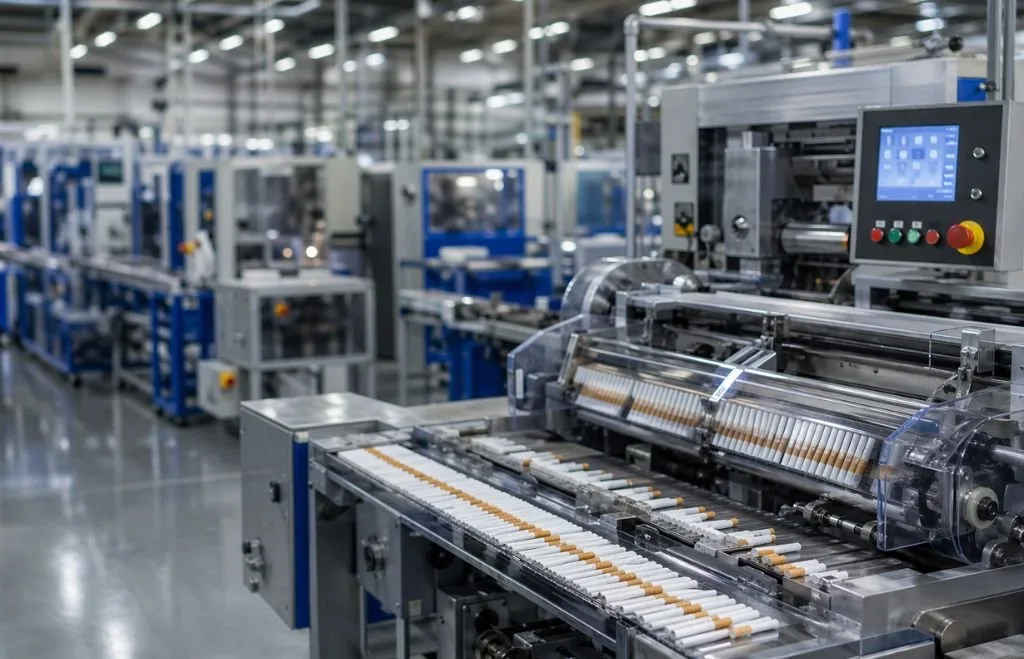
How to Source Cigarette Machinery Suppliers in the USA
Finding the right cigarette machinery suppliers in the USA is not a search engine exercise, it is a procurement discipline. The industrial cigarette equipment market is relationship-driven, technically complex, and dominated by a small number of proven platforms. A poor supplier decision does not just mean a bad machine. It means months of downtime, a parts sourcing nightmare, and capital losses that take years to recover.
This guide gives factory owners, procurement managers, and new entrants a structured process for identifying, evaluating, and contracting with the right industrial cigarette equipment supplier for their specific production requirements in the USA market.
Why Supplier Selection Matters More Than Machine Selection
Most buyers approach this decision backwards. They identify a machine model first, a Protos 80 ER, a Molins Alto, a SASIB 3000, and then look for whoever can sell it to them at the lowest price. This approach consistently produces bad outcomes.
The machine is only part of what you are purchasing. The supplier relationship determines whether you receive accurate technical specifications, honest condition grading on refurbished units, realistic lead times, proper commissioning support, reliable spare parts access, and responsive after-sales service. A factory running the right machine through the wrong supplier channel faces every one of these failure points.
The industrial tobacco machinery market is a classic “big ticket, long cycle” B2B market deeply embedded in customer operations. Procurement is strategic and long-term. The same principle applies in reverse for buyers: choosing your supplier is a strategic decision, not a transactional one. Get it right the first time.
Types of Cigarette Machinery Suppliers in the USA
Understanding the supplier landscape is the first step. There are four distinct categories of cigarette machinery vendors operating in the USA, each with different risk profiles, price points, and service capabilities.
1. OEM Authorized Dealers and Regional Representatives
OEM authorized industrial cigarette equipment suppliers represent specific manufacturers, Körber Technologies (formerly Hauni), Molins, G.D (Coesia), SASIB, and sell new equipment directly or through exclusive regional agreements. In the USA, most major OEMs handle North American sales either through a direct subsidiary office or through appointed regional representatives.
What you get: Factory-new equipment with full OEM warranty, guaranteed spare parts availability, access to OEM technical support and software updates, and manufacturer-certified installation and commissioning.
What you pay: Full market price for new equipment, typically the highest price tier. Lead times can run 6 to 18 months for configured machines. Service response times depend on OEM staffing in your region.
Best for: Large factories establishing flagship production lines where maximum reliability and full warranty coverage justify the capital outlay. For context on machine specifications, see our Industrial Cigarette Making Machines: Complete Buyer’s Guide.
2. Independent Specialist Dealers
Independent specialist dealers are the backbone of the USA secondary market for tobacco machinery. These companies operate outside OEM authorization but focus exclusively on the tobacco equipment sector. The best of them have decades of experience, in-house reconditioning facilities, and established relationships with spare parts networks across Europe and Asia.
What you get: Access to refurbished, reconditioned, and occasionally new machines at 35 to 65 percent of OEM pricing. Faster availability than new, often 2 to 8 weeks for units in stock.
What you pay: Variable, depending on machine age, condition grade, and dealer quality. Warranty terms range from 30 days to 12 months depending on reconditioning work performed.
Best for: Buyers who need proven production capacity without full OEM pricing. See our detailed comparison of New vs Refurbished Cigarette Manufacturing Machines before approaching this channel.
3. Industrial Brokers
Brokers facilitate transactions between sellers (closing factories, liquidators, auction houses) and buyers without taking ownership of the machines themselves. They earn a commission on completed sales.
What you get: Access to a broader inventory network, sometimes including machines that are not publicly listed.
What you pay: Broker commission built into the asking price. Brokers typically offer no reconditioning, no warranty, and limited technical expertise.
Best for: Buyers with in-house technical expertise who can conduct their own inspection, searching for a hard-to-find model. Not recommended as a primary channel for buyers without strong engineering capability.
4. Direct from Factory: Surplus and Liquidation
Occasionally, factories closing production lines or upgrading to newer equipment sell machines directly. These transactions can represent exceptional value when the selling factory has maintained meticulous service records.
What you get: Potentially the best value in the market, with complete maintenance history direct from the operator.
What you pay: These opportunities appear unpredictably, require you to move quickly, and demand that you arrange your own inspection, transport, and installation support.
Best for: Experienced buyers with flexible timelines and in-house technical teams.
How to Vet a Cigarette Machinery Supplier in the USA
Whether you are approaching an OEM dealer or any Cigarette machine vendor USA, an independent specialist, or any other channel, the same vetting framework applies. Run every prospective supplier through these checkpoints before advancing to a purchase discussion.
Establish sector focus. General industrial equipment dealers who occasionally handle tobacco machinery cannot match the expertise of specialists. Ask how long they have been active in the tobacco machinery sector specifically, and what brands they regularly transact.
Request transaction references. Any legitimate industrial cigarette equipment supplier operating in the USA should be able to provide references from recent buyers. Contact these references directly and ask about machine condition on arrival and after-sale responsiveness.
Verify reconditioning documentation. For any refurbished or reconditioned machine, demand a detailed written report of exactly what was inspected, what was replaced, and what was left in its found condition. Vague descriptions like “fully serviced” are red flags.
Confirm spare parts access. Ask the supplier specifically which spare parts they stock for the machine you are considering, and lead times for the top ten most commonly replaced components on that specific model.
Assess warranty terms in writing. Get the warranty in writing before agreeing to anything. Coverage that excludes tobacco-related wear provides no meaningful protection.
Evaluate commissioning and installation support. Confirm whether the supplier provides commissioning engineers and whether technicians are based in the USA or will be flying in from overseas.
Questions to Ask Before You Purchase
The following questions should be part of every pre-purchase conversation with any tobacco machinery dealer USA.
- What is the exact manufacture date and model designation of this machine?
- How many hours or shifts did it run in its previous installation?
- Can you provide the full service log from the previous owner?
- What specifically was replaced or rebuilt during reconditioning, and by whom?
- Which components were inspected but not replaced, and why?
- Is a pre-purchase operational test available at your facility?
- What is the current availability status of the top twenty most-replaced spare parts for this model?
- Does the warranty cover the machine running on my specific tobacco blend and cigarette format?
- What is your escalation process if the machine cannot be brought to specification after installation?
- Do you have references from USA-based factories who have purchased this model through you?
A supplier who answers these questions directly and without defensiveness is demonstrating the transparency that should underpin a high-value capital equipment transaction.
Red Flags to Avoid
These warning signs apply regardless of which supplier channel you are using.
No inspection access. Any supplier who will not allow a pre-purchase technical inspection of the machine is concealing something. Walk away without exception.
Pressure on timeline. “Another buyer is interested” and “this price is only available this week” are pressure tactics designed to prevent proper due diligence. Legitimate transactions do not work this way.
No verifiable address or facility. A legitimate specialist dealer maintains a physical facility in the USA where machines are received, inspected, and stored. Verify this independently.
Mismatched machine documentation. If serial numbers on the machine do not match documents provided, or ownership history cannot be cleanly traced, the provenance is in question.
Parts and service disclaimers buried in contract. Read purchase agreements carefully for clauses that disclaim responsibility for parts availability or after-sales support.
Import vs Domestic Sourcing: What USA Buyers Should Know
A significant portion of industrial tobacco machinery available to USA buyers originates in Europe, from UK, Italian, and German-based dealers and manufacturers. Buying internationally is entirely workable but adds complexity.
Customs clearance, freight insurance, inspection at port of entry, and the cost of flying in an overseas commissioning engineer can add $15,000 to $50,000 or more to the total landed cost. Factor these costs explicitly into any comparison against domestically available machines.
Understanding machine speed requirements before you source is equally important. Review our guide to High-Speed vs Mid-Speed Cigarette Manufacturing Machines before finalizing your specification.
Frequently Asked Questions
How do I find legitimate cigarette machinery suppliers in the USA?
What is the difference between an OEM dealer and an independent dealer?
Is it safe to buy from an industrial broker?
Should I buy domestically or source from overseas?
What warranty should I expect from a USA tobacco machinery dealer?
How long does procurement typically take from first contact to commissioned production?

Looking for Cigarette Machinery?
Browse our current inventory of manufacturing, filter making, packing, and wrapping equipment, or send us your target speed and format for a fast quote.