
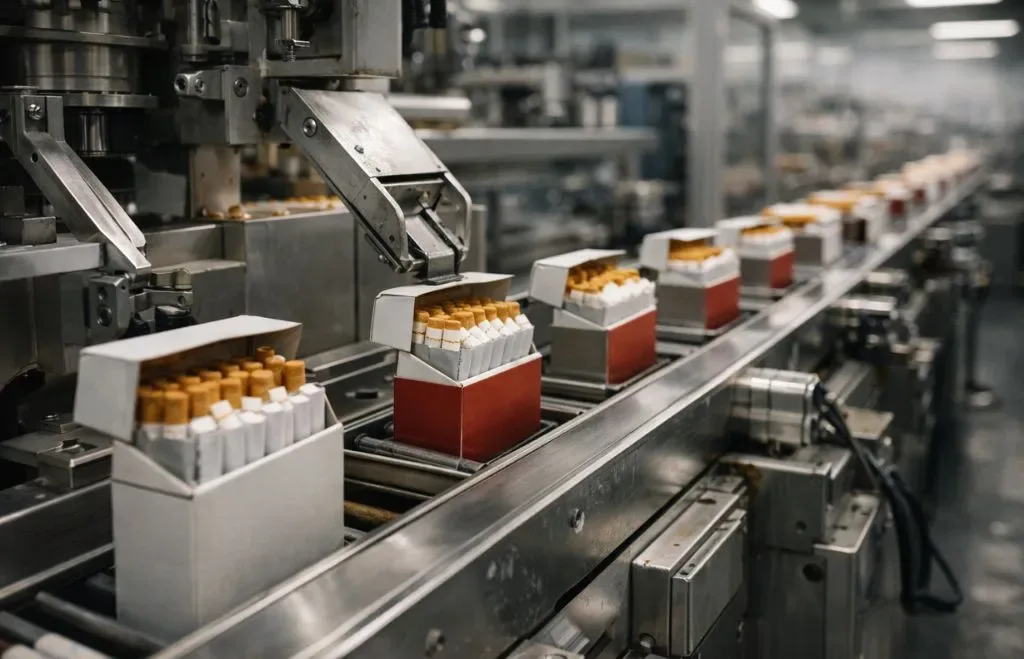
New vs Refurbished Cigarette Manufacturing Machines: A Factory Buyer’s Comparison
Every factory buyer eventually faces the same crossroads: do you spend full capital on brand-new cigarette manufacturing equipment, or do you buy used tobacco machinery and redirect the savings into your operation? It is one of the most financially significant decisions a tobacco manufacturer makes, and the right answer depends on far more than the sticker price.
This guide breaks down the refurbished cigarette manufacturing machine market from both sides of the ledger, what you gain, what you risk, and exactly what to verify before signing a purchase order. Whether you are setting up a new production line in the USA or expanding an existing one, this comparison will give you the clarity to decide with confidence.
For deeper guidance before you begin sourcing, visit our Complete Buyer’s Guide to Cigarette Making Machines and our breakdown of What Is a Cigarette Making Machine.
New vs Refurbished Cigarette Manufacturing Machines: The USA Market
The secondary market for tobacco machinery is substantial and well-established. Unlike many industries where used equipment is hard to trace or authenticate, the cigarette manufacturing world runs on a relatively small number of dominant machine platforms, Hauni, Molins, SASIB, GD, that have been in continuous production for decades. This means spare parts remain available, rebuild expertise exists, and resale values are predictable.
In the USA, demand for a refurbished cigarette manufacturing machine is driven by several factors. Smaller independent manufacturers and start-up tobacco operations often cannot justify the $500,000 to $2 million price tag of a new high-speed cigarette maker. Contract manufacturers looking to add a secondary line for a specific format find refurbished equipment economically attractive. And established factories replacing aging machinery sometimes opt for a reconditioned unit as a bridge solution while they secure capital budget for new equipment.
The result is a genuine marketplace where a buyer who does their due diligence can acquire reliable production capacity at 30 to 60 percent of the cost of new, provided they know what they are buying.
What “Refurbished” Actually Means: OEM Rebuild vs As-Is
Before you buy used tobacco machinery, you need to understand that the word “refurbished” covers a wide spectrum of conditions. Sellers use the terms refurbished, reconditioned, rebuilt, and used interchangeably, but these are not the same thing.
As-Is / Used: The machine is sold in whatever condition it was when it left the last factory floor. It may run, it may need repairs, and documentation is typically minimal. This is the lowest cost option and the highest risk category. As-is purchases require in-house engineering capability or a reliable service partner to assess and restore the machine.
Dealer-Reconditioned: A machinery dealer purchases the unit, cleans it, replaces visibly worn components, performs basic calibration, and resells it with a short warranty. Quality varies enormously by dealer. The critical question is what was replaced and what was only cleaned.
OEM or Specialist Rebuild: The machine is fully disassembled, all wearing parts are replaced to manufacturer specification, electronic systems are updated or replaced, and the unit is tested to production speed before shipping. This is the closest equivalent to new performance you can achieve in a reconditioned cigarette maker, and it is priced accordingly, typically 50 to 70 percent of new rather than 30 to 40 percent.
Understanding which category you are being quoted is the first question to ask any supplier. For a fuller picture of what these machines consist of at a mechanical level, see our Cigarette Making Machines: The Complete Buyer’s Guide.
Price Differential: New vs Refurbished Cigarette Manufacturing Machines
The price gap between new and used cigarette manufacturing machine purchases in the USA is significant enough to be decisive for many buyers, but it is not always as wide as buyers expect at the higher end of refurbished quality.
| Machine Type | New Price (USD) | Refurbished (USD) | Typical Saving |
|---|---|---|---|
| Entry-level maker (3,000–5,000 cpm) | $180,000 – $350,000 | $60,000 – $130,000 | 45–65% |
| Mid-speed maker (5,000–8,000 cpm) | $400,000 – $750,000 | $150,000 – $300,000 | 40–60% |
| High-speed maker (10,000+ cpm) | $900,000 – $2,000,000+ | $350,000 – $750,000 | 35–55% |
| Cigarette packing line | $150,000 – $600,000 | $50,000 – $200,000 | 40–65% |
Note: Prices vary by machine age, brand, condition grade, included spares, and supplier. These ranges reflect typical USA market values and are intended as planning benchmarks only.
When comparing refurbished cigarette machine price across suppliers always request a detailed breakdown of what reconditioning work was performed — not just the asking price.
The price differential widens further when you factor in lead times. New machinery from major OEMs can carry lead times of 6 to 18 months depending on configuration and market demand. A refurbished unit already in a USA warehouse can be commissioned in weeks. For a factory with an urgent capacity need, that timeline difference alone can justify a premium on refurbished stock.
Risk Assessment: What Can Go Wrong
Buying a used cigarette machine in the USA carries real risks that need to be weighed honestly against the price advantage.
- Mechanical wear beyond visible inspection: Internal components wear in ways not visible until the machine runs under production load. Camshafts, bearings, and precision-ground surfaces may appear acceptable but fail within months.
- Obsolete electronics and controls: Machines manufactured in the 1990s and early 2000s may run on proprietary control systems for which software support and replacement boards are no longer available.
- Incomplete history and unknown runtime: A used machine comes with an unknown maintenance history. How many shifts did it run? Was it maintained to OEM intervals? Reputable sellers provide service logs, but not all do.
- Parts availability cliffs: Some older platforms have crossed the threshold where critical proprietary spare parts are no longer manufactured. Verify availability for the specific model from at least two independent sources.
- Currency of safety certification: Machines that have changed hands multiple times may not carry current CE or UL certification applicable to your jurisdiction. Recertification can be costly and time-consuming.
For context on how machine speed tiers affect your operational risk profile, see our comparison of High-Speed vs Mid-Speed Cigarette Manufacturing Machines.
Cigarette Machine Inspection Checklist: What to Verify Before You Buy
A thorough pre-purchase inspection is non-negotiable when you buy used tobacco machinery. If a seller will not permit a full inspection, mechanical, electrical, and operational, walk away.
Mechanical Inspection Checklist
- Drivetrain condition: Check for play in the main camshaft, worn couplings, and signs of vibration or heat staining on bearing housings.
- Cutting and trimming elements: Inspect cutting drums, knives, and tipping drum surfaces for wear. These components directly affect cigarette quality and are expensive to replace.
- Gluing systems: Check gum wheel condition, adhesive channels, and heater block function. Dried or carbonized adhesive residue indicates poor maintenance history.
- Filter assembly components: Inspect tipping paper path, drum surfaces, and tongue plates on integrated filter attachment systems.
- Vacuum system: Inspect the suction drum and all vacuum seals. Vacuum degradation is a common cause of tobacco distribution failure.
Electrical and Controls Inspection
- Confirm the control system is a current or supported platform (Siemens, Beckhoff, or equivalent).
- Verify all sensors and encoders are functional and have available replacements.
- Test all safety interlocks and emergency stop circuits.
- Check cable runs for insulation degradation, particularly in high-heat zones.
Operational Test
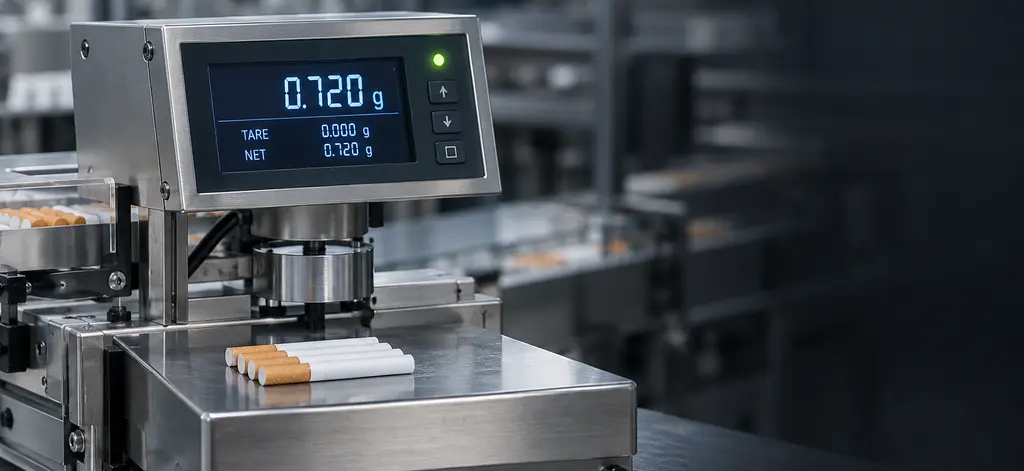
Request a full-speed production run on your specific tobacco blend and cigarette format before finalizing any purchase. Measure cigarette weight, draw resistance, and end closure quality across a timed run. A machine that cannot demonstrate consistent quality at speed is not worth any price.
Not sure what components to focus on? Our guide to What Is a Cigarette Making Machine explains all machine types, key parts, and speed capacities in detail.
Warranty Expectations on a Refurbished Machine
Warranty terms on a refurbished cigarette manufacturing machine vary widely and are one of the clearest indicators of a seller’s confidence in what they are selling.
As-is sales typically carry no warranty. Dealer-reconditioned machines generally offer 30 to 90 days on parts replaced during reconditioning. A full OEM-standard rebuild from a reputable specialist should carry a warranty of 6 to 12 months on all replaced components, comparable in scope (if not duration) to what you would expect on new equipment.
Read warranty terms carefully. Coverage that excludes wear parts, consumables, or “damage resulting from tobacco processing” can be written so broadly that it effectively covers nothing meaningful. A reliable supplier of a reconditioned cigarette maker will provide clear, itemized documentation of what was replaced and offer warranty coverage that reflects that investment.
Best Brands for Long-Term Parts Availability
Parts availability over the machine’s service life is the single most important factor in long-term ownership cost. These brands offer the strongest parts ecosystem for buyers in the USA:
Hauni (now Körber Technologies): The dominant platform in global cigarette manufacturing. Hauni machines including the Protos 70, Protos 80, and KDF series have the broadest spare parts network of any manufacturer. Both OEM and third-party parts remain readily available for machines going back several decades.
Molins (Mark 8, Mark 9): Molins machines have an exceptionally long service life and a dedicated aftermarket parts community. The Mark 8 and Mark 9 platforms remain workhorses in many USA operations, and parts availability is strong.
SASIB (3000, 5000 series): SASIB packing equipment carries excellent parts availability through both the parent organization and specialist aftermarket suppliers. The SASIB 3000 in particular is widely serviced in North America.
GD (Packaging lines): GD equipment has strong parts support through both OEM channels and the broader European-origin aftermarket that ships competitively to USA buyers.
Avoid purchasing machines from platforms where the OEM is no longer in business and no organized aftermarket has developed. The initial price saving will be consumed by parts sourcing costs within the first service cycle.
Where to Source Refurbished Machines in the USA
The used tobacco machinery USA market operates through several distinct channels, each with different risk and value profiles.
Specialist Tobacco Machinery Dealers: Companies that focus exclusively on tobacco equipment offer the most reliable sourcing. They know the machines, maintain reconditioning capability, and have established supplier relationships for parts. For vetted dealer contacts serving the USA market, see our guide to Best Tobacco Machinery Suppliers in USA.
Direct from Closing or Restructuring Factories: Purchasing directly from a factory that is closing or upgrading its line can yield excellent value, particularly if the machines were well-maintained and full-service records are available.
Industry Auction Houses: Tobacco industry auctions occasionally offer surplus machinery. Prices can be competitive, but inspection time is limited and as-is conditions typically apply. Best suited for buyers with in-house technical expertise.
OEM Trade-In Programs: Some manufacturers and major dealers accept trade-ins and resell refurbished machines with more rigorous reconditioning and stronger warranty backing. This channel typically carries higher prices but lower risk.
Broker Networks: General industrial brokers sometimes list tobacco machinery but usually lack the technical expertise to accurately describe condition or verify parts availability. Use this channel only with independent technical verification.
New vs Refurbished Cigarette Manufacturing Machines: A Direct Comparison Summary
| Factor | New Machine | Refurbished Machine |
|---|---|---|
| Upfront cost | High | 35–65% lower |
| Lead time | 6–18 months | 2–8 weeks |
| Warranty | Full OEM (12–24 months) | 0–12 months (grade-dependent) |
| Parts availability | Guaranteed current | Model-dependent |
| Technology currency | Latest controls & features | Variable by age |
| Production risk | Lowest | Higher without full inspection |
| ROI timeline | Longer payback | Faster break-even |
| Best for | Long-term flagship lines | Expansion, new lines, budget starts |
Frequently Asked Questions
Is buying a refurbished cigarette manufacturing machine worth it?
What is the difference between refurbished and reconditioned?
How long do refurbished cigarette machines last?
Can I get financing for used tobacco machinery in the USA?
What cigarette machine models are easiest to find parts for in the USA?
Should I hire an independent inspector before buying?

Looking for Cigarette Machinery?
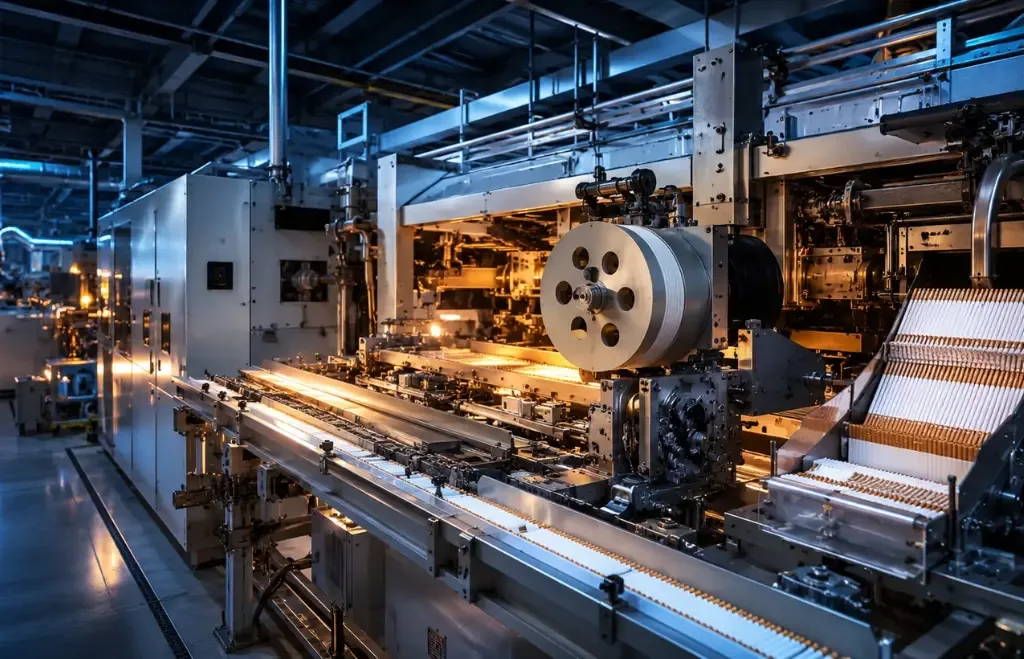
Browse our current inventory of manufacturing, filter making, packing, and wrapping equipment, or send us your target speed and format for a fast quote.