April 11, 2026

What Is Cigarette Making Machine? Types, Speeds & Capacity Explained

what is cigarette making machine

Before committing to any capital equipment purchase, factory owners and procurement managers need to understand what cigarette making machine actually is, and mainly, how the different types and speed tiers compare. Ask the wrong questions and you risk buying a machine with the wrong capacity for your factory, the wrong format capability for your product range, or the wrong complexity level for your engineering team. This guide gives you the foundation to avoid those mistakes.

If you are looking for the broader purchasing picture, pricing, brands, suppliers, and regulations, see our full Cigarette Making Machines: The Complete Buyer’s Guide. This article focuses specifically on machine types, CPM capacity, and how to match machine specifications to your factory’s production requirements.

What Is Cigarette Making Machine?

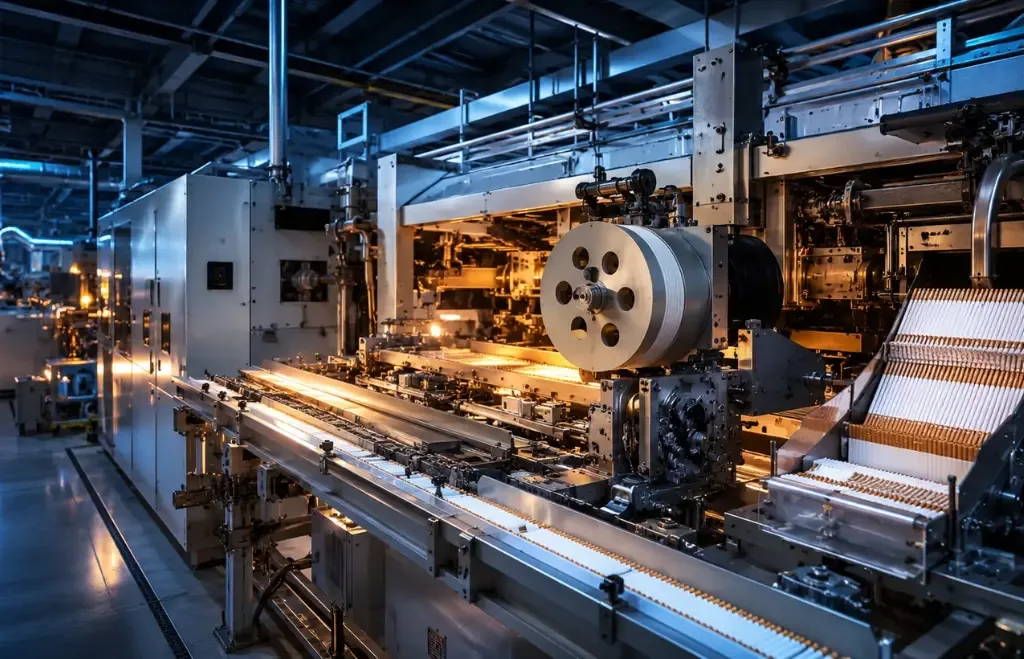
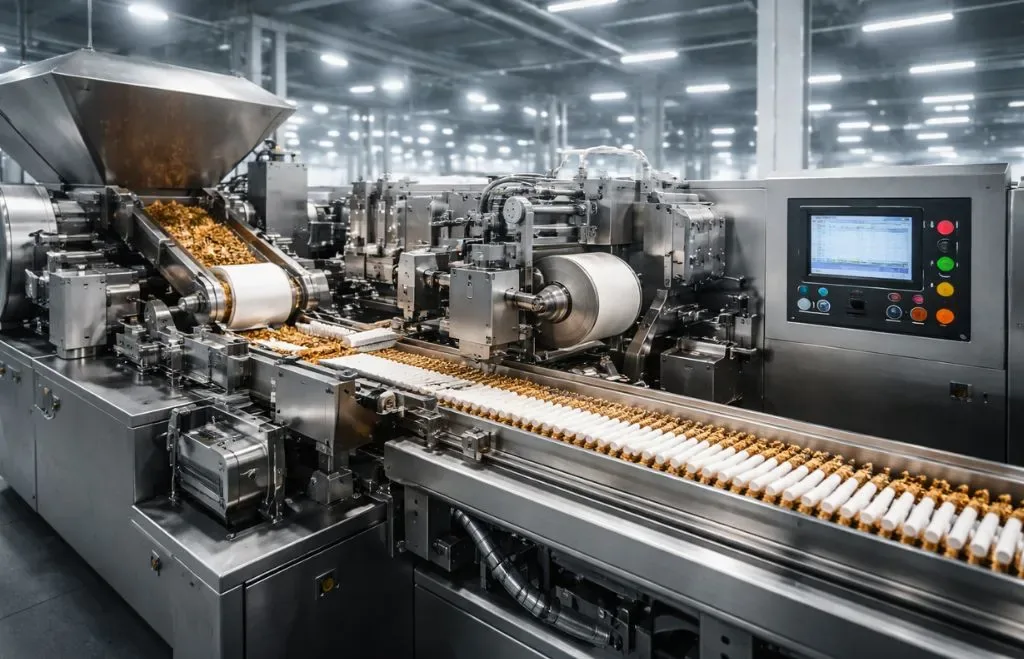
Cigarette making machine also called a cigarette maker, rod maker, or cigarette manufacturing machine, is a high-speed automated system that continuously forms, wraps, and cuts cigarettes on a production line. It operates as part of a complete cigarette production process, receiving prepared tobacco as input and delivering a continuous stream of finished cigarette rods as output.

These machines are factory-grade equipment designed for sustained high-speed operation, often running continuously for multiple shifts per day. They are fundamentally different in scale, complexity, and cost from any consumer-facing device. The smallest industrial machines produce thousands of cigarettes per minute. The largest produce over 20,000.

The core principle has remained consistent across decades of innovations in the tobacco industry: tobacco is fed into the machine, compressed and shaped into a continuous rod, wrapped in cigarette paper, the paper seam is glued and sealed, and the rod is cut into individual cigarettes at high speed. What has changed is the precision, speed, automation level, and digital integration of the machinery performing these steps.

Cigarette maker — key facts at a glance:

Purpose: Continuous automated production of cigarette rods from loose tobacco and paper.

Input: Prepared cut tobacco (typically 0.8–1.2mm cut width) + cigarette paper reel.

Output: Individual cigarette rods (unfiltered) at rated CPM speed.

Next stage: Output feeds directly into a filter attachment machine (tipper).

Operating environment: Factory floor, typically 24/7 multi-shift operation.

Lifespan: 20–30+ years with proper maintenance.

CPM: The Most Important Specification on Any Cigarette Maker

CPM (cigarettes per minute) is the single most important specification when evaluating any cigarette making machine. Every other specification flow from this number: the size of the tobacco feeding system, the speed of the paper reel handling, the precision of the cutting mechanism, and the capacity required from the downstream filter attachment and packing machines.

CPM is always quoted as a rated figure, the maximum speed the machine is designed to reach under optimal conditions. In practice, the realistic operating CPM is lower, typically 80–90% of rated capacity, accounting for minor stoppages, quality rejection events, tobacco feed adjustments, and scheduled maintenance windows.

Rated CPM vs realistic operating CPM: what to ask your supplier

Always ask for both figures. A machine rated at 5,000 cpm operating at 82% efficiency delivers a realistic 4,100 cpm. Over a 24-hour shift that is the difference between 295 million and 354 million cigarettes — a gap that has major implications for your production planning.

Also ask: what is the typical changeover time between cigarette formats, and how does that affect daily output?

Beyond raw CPM, factory buyers should also understand the following capacity-related specifications:

  • Rod diameter: The cigarette diameter the machine is configured to produce. Standard is approximately 7.9mm. Slim format is approximately 5.3mm. Super-slim is approximately 4.5mm. Format changes require different machine parts and setup time.
  • Cigarette length: Typically 70–84mm for standard formats, up to 100mm for longer formats. The cutting mechanism must be calibrated to the specified length.
  • Paper reel width: Determined by the cigarette circumference. Different formats require different paper reel specifications, a factor when planning tobacco wrapping material procurement.
  • Tobacco consumption rate: At rated CPM, how many grams of tobacco per 1,000 cigarettes. This drives raw material procurement and the capacity of the tobacco feeder system upstream.
  • Waste rate: The percentage of tobacco and paper rejected during production. Modern high-speed machines with waste recovery systems (like the Körber DWR+) can recover up to 96% of tobacco waste, which has significant cost implications for high-volume operations.

The 6 Key Components Inside Every Cigarette Maker

Understanding the internal architecture of a cigarette making machine allows factory buyers to ask better questions, understand maintenance requirements, and evaluate machine quality more accurately. Every cigarette maker, regardless of brand or speed tier, contains these six functional sections:

Component Function What Can Go Wrong Key Maintenance Point
Tobacco hopper & feed system Receives prepared cut tobacco and controls the flow rate into the garniture section Inconsistent feed causes rod density variation; bridging in the hopper creates gaps in the rod Regular cleaning; tobacco moisture level must be within specification
Garniture section Compresses and shapes the tobacco into a continuous cylindrical rod as it moves forward Worn garniture tape causes rod diameter inconsistency; misalignment causes splitting Garniture tape replacement at scheduled intervals; alignment checks
Paper reel & handling system Feeds cigarette paper from a continuous reel; maintains tension and alignment as the paper wraps around the tobacco rod Paper breaks cause line stoppages; paper tension variation causes seam defects Paper reel changes must be pre-staged; tension sensors need periodic calibration
Gluing system Applies adhesive to the paper seam to permanently seal the cigarette rod Blocked glue nozzles cause open seams; excess glue causes paper contamination Glue system cleaning after every production run; nozzle inspection
Rod inspection system Continuously monitors the rod for density, diameter, and seam quality; rejects non-conforming cigarettes before cutting Sensor drift causes excessive rejection rates or quality escapes; detector fouling from tobacco dust Sensor calibration checks; air purging of detection chambers
Cutting mechanism Severs the continuous rod into individual cigarettes at precise length intervals Dull cutting blades produce ragged cuts; wear causes length variation Blade replacement at manufacturer-specified intervals; blade storage and handling protocol


The PLC control systems and Lenze servo drives used in modern cigarette makers coordinate all six sections simultaneously, adjusting feed rates, paper tension, and cutting speed in real time based on sensor feedback. In older machines, these functions were managed mechanically, which is why modern machines achieve significantly tighter quality tolerances than their predecessors.

The pneumatic cylinders throughout the machine perform positioning and clamping functions at high speed, a critical component whose condition has a direct impact on both output quality and machine uptime.

The Three Production Speed Tiers

Cigarette making machines are commercially classified into three speed tiers based on their CPM rating. This classification directly determines which factories they are suited to, which brands supply them, and what capital investment is required. The top trends in cigarette machinery technology for 2026 show all three tiers evolving toward higher automation and digital integration, but at different rates and price points.

Speed Tier CPM Range Shift Output (8hr @ 85%) Factory Scale Representative Machines Entry Price (New)
Low-speed Up to 3,000 cpm ~1.2 billion cigs/yr (3 shifts) Start-up, pilot, R&D Körber Lab Maker, SASIB low-speed range, older Molins models ~$80K–$300K
Mid-speed 3,000–5,500 cpm ~2.2B–4.0B cigs/yr (3 shifts) Regional, SME manufacturer Molins Mark 8, Mark 9 with Max S, SASIB 3000 ~$300K–$800K
High-speed 5,500–20,000+ cpm ~4.0B–14.6B+ cigs/yr (3 shifts) National, multinational Körber Protos 70, Protos 80 ER, G.D double-rod ~$800K–$3M+

Low-Speed Machines (Up to 3,000 CPM)

Low-speed machines serve three distinct buyer types: manufacturers entering the market for the first time, factories running small-batch production for niche formats, and R&D departments developing new cigarette products. The Körber Lab Maker, rated at up to 2,000 cpm, is the most widely used machine in tobacco company R&D departments globally — it produces test batches in cigarette-identical format using the same fundamental rod-forming process as production machines, allowing accurate sensory and quality testing before committing to full-scale production.

For first-time manufacturers in the USA, low-speed machines represent the most accessible entry point. The SASIB 3000 operates in this tier and is notable for its quality control capabilities relative to its size — an important consideration for manufacturers needing to demonstrate product consistency to the FDA from the outset of production.

Mid-Speed Machines (3,000–5,500 CPM)

Mid-speed machines are the most widely deployed cigarette makers in the global installed base. The Molins product family has historically dominated this tier, with the Mark 8 and Mark 8 with Multi Roll representing some of the most prolific cigarette manufacturing machines ever built. The Mark 9 with Max S extended Molins’ mid-speed capability further, combining the maker with Hauni Max S filter attachment system for an integrated making-tipping solution.

Mid-speed machines offer manufacturers the best balance of production capacity and capital cost. For a regional manufacturer targeting output of 2–4 billion cigarettes per year, a mid-speed machine running three shifts will meet production requirements without the significant capital commitment of a high-speed line.

The mid-speed segment also has the largest selection of refurbished machines available in the market. A well-maintained Molins machine from the 1990s or 2000s, properly rebuilt, can deliver years of reliable production at a fraction of the cost of new equivalent equipment.

High-Speed Machines (5,500–20,000+ CPM)

High-speed machines are the preserve of large national and multinational tobacco manufacturers. The Protos 70 and Protos 80 ER from Körber Technologies represent the mid-to-upper end of this tier, while the PROTOS-M5 pushes to 20,000 cpm with AI-integrated quality control and predictive maintenance as standard features. At this speed, the machine’s cutting mechanism alone performs over 330 cuts per second, a level of precision that demands extraordinary mechanical engineering and continuous sensor monitoring.

G.D’s double-rod machines (part of the Coesia Group) are the primary alternative to Körber at the high-speed end, achieving 10,000–16,000 cpm by forming two parallel cigarette rods simultaneously from a single machine unit. This double-rod architecture is discussed in detail in the next section.

High-speed machines require significant factory infrastructure investment beyond the machine purchase price. The electrical supply requirements, compressed air capacity, HVAC systems, and floor loading specifications for a Körber Protos high-speed line are substantial. The Beckhoff IPC and Siemens IPC platforms used in these machines for automation and process control also require factory IT infrastructure and engineer training to operate and maintain.

Single-Rod vs Double-Rod Production

The architecture of the rod-forming system, whether a machine forms one continuous rod or two parallel rods simultaneously, is one of the most important technical distinctions in cigarette making. It affects output capacity, factory footprint, equipment cost, and operational complexity.

Factor Single-Rod Machine Double-Rod Machine
Rod formation One tobacco rod formed and wrapped continuously Two parallel tobacco rods formed simultaneously on a single machine
Speed ceiling Typically up to 10,000–12,000 cpm before mechanical limits are reached 10,000–20,000 cpm; double output per machine unit
Factory footprint Smaller; more suitable for constrained factory floor plans Larger; requires more floor space and is heavier
Capital cost Lower entry cost for equivalent speed tier Higher purchase price; but lower cost-per-cigarette at full scale
Mechanical complexity Lower; single set of rod-forming components Higher; two synchronized garniture sections, two paper reels, dual cutting mechanism
Operator skill requirement Standard cigarette machine technician training Higher-level training required; more complex fault diagnosis
Waste recovery Standard tobacco waste recovery systems available Dual-channel waste recovery; more efficient at scale
Typical buyers Start-ups, SME, regional manufacturers, mid-speed operations Large national manufacturers, multinationals with high-volume single-format lines
Key brands Molins, SASIB, Körber (lower range) G.D (Coesia), Körber Protos M5 and high-end


The practical implication of this architecture choice for a factory buyer is straightforward: if your production requirements can be met by a single-rod machine running at full utilization, there is no operational benefit from a double-rod system and the additional cost and complexity represent unnecessary risk. Double-rod machines are justified when output requirements demand more than a single-rod machine can deliver, or when the cost-per-cigarette economics of a single high-speed double-rod unit are more favorable than two single-rod machines running in parallel.

Machine Types by Cigarette Format

cigarette making machines are not universally interchangeable across all cigarette formats. The machine’s garniture, paper handling system, and cutting mechanism must be configured or reconfigured via format parts for the specific cigarette diameter and length being produced.

Format Rod Diameter Typical Length Production Consideration
Standard (King Size) ~7.9mm 84mm Most common; widest machine compatibility; largest refurbished machine supply
Slim ~5.3mm 84mm Requires slim-format garniture parts; paper width and glue system recalibrated
Super-slim ~4.5mm 84mm More demanding tolerances; fewer machines support this format at high speed
100mm (Long) ~7.9mm 100mm Longer cutting stroke; paper reel width same as King Size; popular in USA market
Short (70mm) ~7.9mm 70mm Less common; requires specific cutting configuration


Multi-format capability is a common requirement for factories serving diverse markets. Most modern machines support format changeover, but the time and cost of changeover parts must be factored into production planning. A factory running three different formats on a single machine will experience more downtime than one running a single format continuously.

Format diversity also affects the downstream filter assembler and overwrapping stages, a slim cigarette requires a different filter tipping configuration than a standard King Size, and the packing machine must be configured for the specific pack dimensions of each format.

How the Cigarette Maker Connects to the Production Line

Cigarette making machine is never a standalone purchase. It is the central node in a production line, and its specifications determine the capacity requirements of every machine upstream and downstream. Understanding these connections is essential before finalizing any machine selection. The full tobacco production process from raw leaf to finished pack, involves multiple machine stages that must be precisely matched.

Upstream connections (feeding the maker)

The tobacco feeder system controls the flow of prepared cut tobacco into the maker’s hopper. The feeder must be calibrated to the maker’s consumption rate at rated CPM to prevent hopper depletion or overflow, both of which cause production stoppages. Upstream of the feeder, tobacco chopping machines and tobacco leaf shredders must produce tobacco at the correct cut width (typically 0.8–1.2mm) and moisture content for the specific maker in use.

Downstream connections (processing maker output)

The cigarette rods exiting the maker feed directly into the filter attachment machine (tipper). The Hauni KDF filter making machine produces the filter rods consumed by the tipper, its output rate must match the maker’s CPM. After filter attachment, cigarettes enter the packing line. The HLP 250 packing machine, capable of processing 250 packs per minute, is a common choice matched to mid-to-high speed makers. The SASIB Boxer handles box packing downstream of the packing stage.

After packing, the naked over-wrapper and cigarette overwrapping machines apply the final protective film layer to each pack. The cigarette reclaimer system captures tobacco waste from the making and packing process for recycling back into production, an increasingly important efficiency and sustainability consideration for factory operators.

Line matching rule: the maker sets the pace for the entire production line.

Every machine downstream of the cigarette maker must have a capacity equal to or greater than the maker’s realistic operating CPM (not its rated maximum). Under-specifying any downstream machine — particularly the packer — creates a bottleneck that limits the effective output of the entire line.

When sourcing a complete line, always request a line balance analysis from your supplier showing the matched speeds of all machines from maker through to overwrapper.

Frequently Asked Questions

What does CPM stand for in cigarette machinery?

CPM stands for cigarettes per minute. It is the primary capacity rating for all cigarette making machines and refers to the number of individual cigarettes the machine can produce in one minute at maximum speed under optimal conditions. In practice, factories calculate realistic daily output using an efficiency factor, typically 80–90% of rated CPM, to account for minor stoppages, format changeovers, and maintenance. CPM is the starting point for all production line planning and capacity investment decisions.

What is the difference between low, mid, and high-speed cigarette machines?

The three speed tiers are defined by CPM range. Low-speed machines (under 3,000 cpm) suit startups, pilot lines, and R&D applications. Mid-speed machines (3,000–5,500 cpm) serve regional and SME manufacturers and represent the largest segment of the global installed base. High-speed machines (5,500–20,000+ cpm) are used by large national and multinational tobacco manufacturers. Higher speed tiers require greater capital investment, factory infrastructure, and technical expertise, but deliver significantly lower cost-per-cigarette at scale.

What tobacco cut width do cigarette making machines require?

Most cigarette makers are optimized for a tobacco cut width of 0.8–1.2mm. The precise specification varies by machine model and the cigarette format being produced. Tobacco that is cut too coarsely produces inconsistent rod density; tobacco that is too fine can block the garniture section. The tobacco leaf shredder and tobacco chopping machine used in primary processing must be configured to produce tobacco at the correct cut width for the downstream maker.

Can one cigarette machine produce multiple formats (King Size, slim, 100mm)?

Yes, most cigarette makers support format changeover by replacing the garniture, paper handling components, and cutting configuration. However, changeover takes time, typically several hours for a full format change, and requires maintaining an inventory of format parts for each cigarette diameter and length produced. Factories producing a single format continuously will always achieve higher utilization than those running multiple formats on the same machine.

What is a double-rod cigarette maker?

A double-rod cigarette maker forms two parallel cigarette rods simultaneously on a single machine, effectively doubling the output of a single-rod machine of similar physical size. Double-rod machines achieve 10,000–20,000 cpm and are primarily supplied by G.D (Coesia) and Körber at the high end of the market. They require more factory floor space, more complex engineering, and higher capital investment than single-rod machines — but deliver the lowest cost-per-cigarette at high volumes.

How does the cigarette maker connect to the filter attachment machine?

The cigarette rods exiting the maker travel on a continuous conveyor or tray system directly into the filter assembler (also called the filter tipper). The tipper receives a continuous supply of filter rods, produced upstream by machines like the Hauni KDF, and attaches one filter to each cigarette rod using tipping paper. The tipper must be rated to handle the same CPM as the maker it is paired with, otherwise the filter attachment stage becomes the bottleneck in the production line.

What role do PLC systems and servo drives play in cigarette makers?

PLC control systems coordinate all machine functions simultaneously, tobacco feed rate, paper tension, glue application, cutting timing, and quality inspection, based on real-time sensor feedback. Lenze servo drives provide precise motor control for the positioning and speed-critical movements throughout the machine. Together, these systems allow modern machines to maintain tight quality tolerances at high speed and to log process data for quality assurance and regulatory compliance purposes.

Summary: Matching Machine Type to Your Factory’s Needs

The right cigarette making machine for your factory is determined by three factors working together: your required production volume (which sets the CPM tier), your product format range (which determines format compatibility requirements), and your capital and operational budget (which influences the new vs refurbished decision and the brand tier).

No machine type is universally superior. A high-speed Körber Protos is not the right choice for a 500-million-cigarette-per-year factory, just as a refurbished Molins Mark 8 is not the right choice for a factory targeting 10 billion per year. The value is in the match between machine capability and factory requirement.