
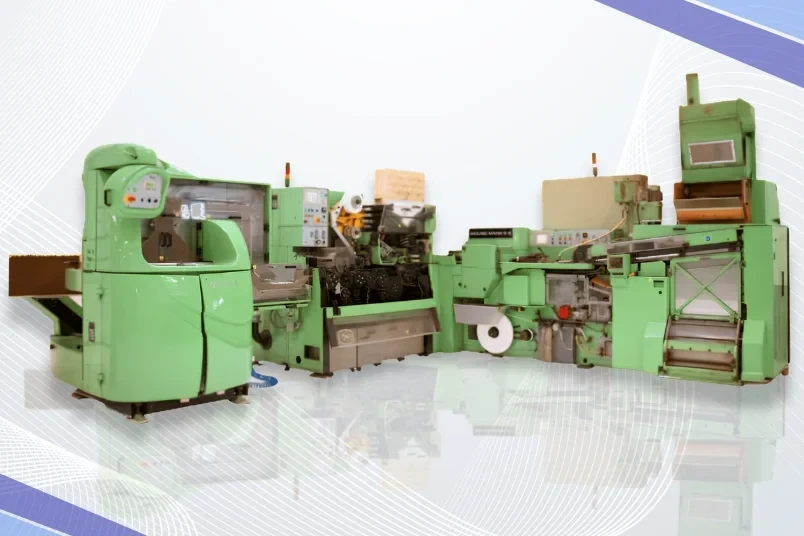
Mark 9 Max S
The Mark 9 Max S pairs the Mark 9 body with the Max S combiner unit, giving factories a reliable step up in throughput over the Mark 8 line.
Spec sheet
- Rated Speed
- 4,500 – 5,000 Cigarettes Per Minute
- Maker Unit
- MK-9 Tobacco Cigarette Making Machine
- Rod Circumference
- 17mm – 28.3mm
- Combined Rod Length
- 65mm – 110mm
- Filter Combiner
- Max-S Filter Assembler with Mass Flow Tray Filler
- Standard Format
- Standard 84mm
- Approximate Weight
- 7,800 Kgs. (Approx.)
About the Mark 9 Max S
The Mark 9 Max S pairs the MK-9 cigarette maker body with the Max-S combiner, and it's the real jump in output from the Mark 8 line: 4,500 to 5,000 cigarettes per minute against the Mark 8D's 3,000. For a factory outgrowing its Mark 8 equipment but not ready for a Protos-class line, this is the natural next step.
The Max-S filter assembler runs through a mass flow tray filler rather than an older-style combiner, which keeps material waste and filter misalignment down at this higher speed. Circumference range stays at 17mm to 28.3mm with 65mm to 110mm filter-plus-rod length, and the default setup runs standard 84mm.
Worth noting for anyone comparing our Mark 9-family listings directly: this unit runs the MK-9 maker body, not the later MK-9.5. The Mark 9.5 Max S in our range uses the newer 9.5 body at the same rated speed, and the Mark 9.5 Lenze Servo Drives unit trades some of that speed ceiling for servo-driven format-change precision. All three share the same Max-S combiner concept, so the real choice between them comes down to maker generation and whether raw speed or format-change precision matters more for your line.
At around 7,800 kg, it's a heavy, stable machine built for continuous running, and a well-documented step for a factory scaling past entry-level output without committing to top-tier Protos volume.
The MK-9 maker and Max-S tipper stay in sync through a continuous speed-reference signal: the tipper tracks the maker's speed within roughly 0.1% to 0.5%, and rising rejects at the Max-S transfer point are usually the first sign that this synchronization has drifted and needs recalibrating. On the maintenance side, the parts that wear fastest and get replaced most often are garniture tapes, suction bands, cut-off knives, tipping drums, and the Max-S combiner's cam assemblies, all of which are available through both Molins OEM channels and independent aftermarket suppliers.
More from Cigarette Manufacturing Machines
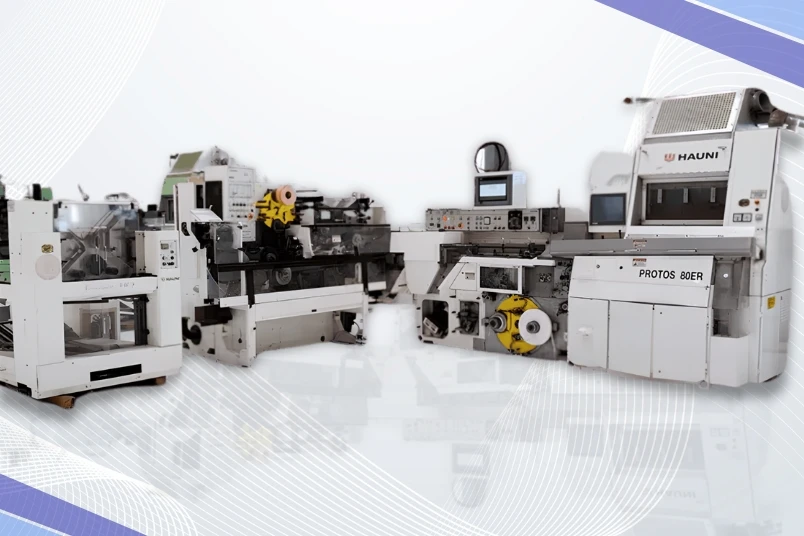
Protos 80 ER
- Rated Output
- 8,000 cpm (Regular Dia), 7,000 cpm (Slim & Super Slim)
- Rod Circumference
- 17mm – 28.3mm
- Combined Rod Length
- 65mm – 110mm
- Control System
- SIEMENS IPC or BECKHOFF IPC
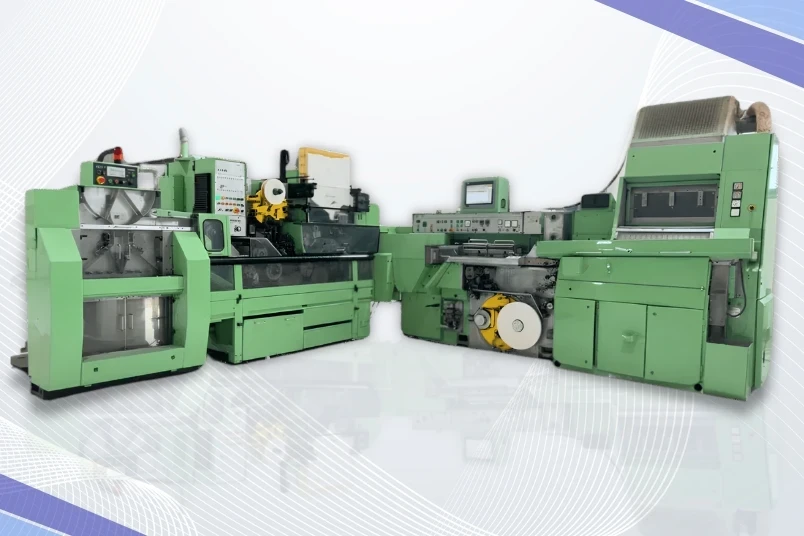
Protos 70
- Rated Output
- 7,000 cpm (Regular Dia), 6,000 cpm (Slim & Super Slim)
- Rod Circumference
- 17mm – 28.3mm
- Combined Rod Length
- 65mm – 110mm
- Control System
- SIEMENS IPC or BECKHOFF IPC
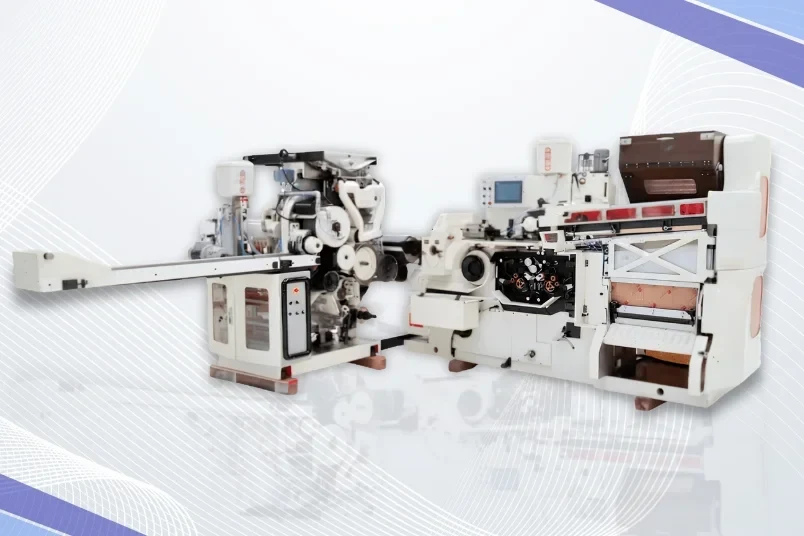
Mark 8 Post-64
- Rated Speed
- 1,800 – 2,000 Cigarettes Per Minute
- Maker Unit
- Molins MK-8 'Post 64' with Double Color Printer
- Rod Circumference
- 17mm – 28.3mm
- Combined Rod Length
- 65mm – 110mm