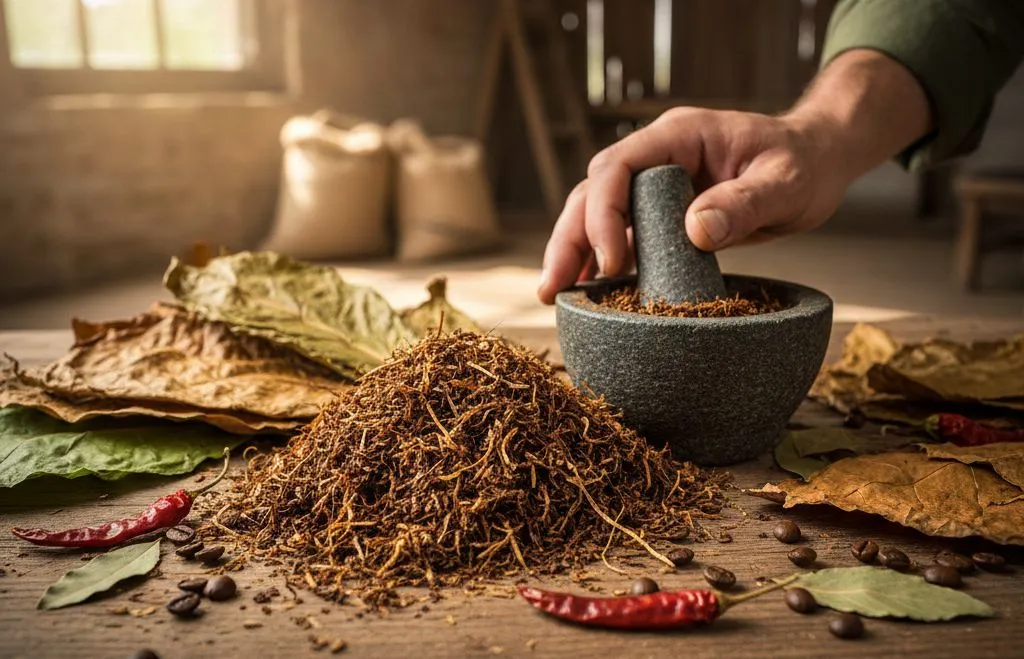
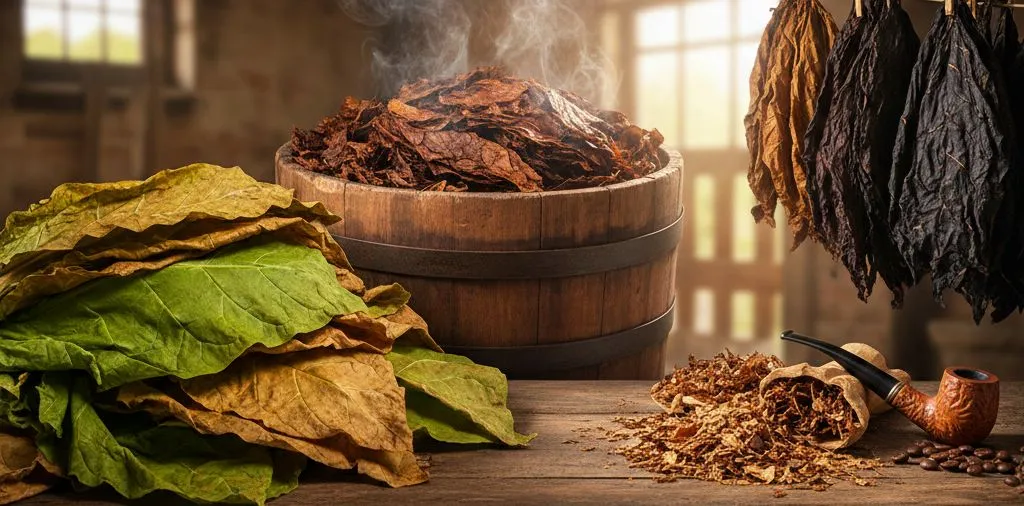
The tobacco drying process is the post-harvest stage that reduces fresh leaf moisture from 80 to 90 percent at harvest down to 15 to 20 percent for stable storage — and it does far more than remove moisture. The rate, temperature, and method of drying directly determine the leaf’s sugar content, physical structure, and fermentation readiness, all of which carry through into factory primary processing performance and cigarette making machine output quality.
What the Tobacco Fermentation Process Actually Does
Fermentation is driven by naturally occurring enzymes within the tobacco leaf and by microbial activity on the leaf surface — both activated by the combination of heat, moisture, and time within the fermentation pile. The chemical changes that occur during fermentation are extensive:
Ammonia reduction: Cured tobacco leaf contains significant ammonia — a byproduct of protein breakdown during curing. Ammonia in the finished cigarette produces a sharp, harsh character. During fermentation, ammonia dissipates from the leaf — reducing harshness and making the finished cigarette significantly smoother. This is why fermented leaf produces a fundamentally different smoking character from unfermented cured leaf of the same variety.
Sugar conversion and stabilization: Residual sugars in the leaf continue to develop during fermentation — further refining the sweetness and flavor character that began during curing. These sugars stabilize chemically during fermentation, producing more consistent sugar content from leaf to leaf within a batch — which contributes to more consistent blend chemistry in primary processing.
Aromatic compound development: Fermentation drives the formation of volatile aromatic compounds — esters, ketones, and organic acids — that contribute to the complex aroma profile of high-quality tobacco. These compounds are not fully developed at the curing stage — fermentation is where the majority of aromatic complexity develops. Inadequate fermentation produces leaf with underdeveloped aroma that cannot be corrected in subsequent processing.
Protein breakdown: Residual proteins in cured leaf continue to break down during fermentation — converting into simpler nitrogen compounds that are less harsh in use. This protein breakdown also reduces the leaf’s tendency to produce harsh nitrogen oxide compounds during combustion — improving the character of the finished cigarette.
Tobacco Fermentation Parameters — What Controls Quality
Temperature — the most critical parameter: Fermentation generates heat internally as microbial and enzymatic activity proceeds. The bulk temperature must be monitored continuously and controlled within the target range — typically 45 to 55 degrees Celsius for Virginia leaf and 40 to 50 degrees Celsius for Burley leaf. Below this range fermentation proceeds too slowly, producing incomplete chemical transformation. Above this range — particularly above 60 degrees Celsius — enzymes are denatured and microbial activity kills the beneficial organisms, stopping fermentation and potentially producing off-flavors from thermal degradation of aromatic compounds.
Turning — pile management: When the bulk temperature reaches the target maximum, the pile must be turned — reorganizing the leaf so that outer layers with lower temperature move to the centre and inner layers with higher temperature move to the outside. This turning prevents overheating of the pile centre and ensures even fermentation throughout the batch. Poorly managed piles with insufficient turning produce batches with highly variable fermentation depth — outer layers underfermented, inner layers overfermented.
Moisture — maintaining the correct range: Fermentation requires a specific moisture range — typically 18 to 22 percent in the bulk — to support enzymatic and microbial activity. Below this range activity slows or stops. Above this range the pile can develop anaerobic conditions that produce undesirable fermentation byproducts. Leaf entering fermentation at the correct dried moisture of 15 to 20 percent typically falls within the acceptable fermentation moisture range.
Duration — varies by leaf type and target: Fermentation duration depends on leaf type, batch size, and the target fermentation depth. Virginia leaf typically ferments for 4 to 8 weeks. Burley leaf may ferment for 8 to 16 weeks. Oriental and specialty tobaccos may ferment for 6 months or longer for premium products. Shorter fermentation produces leaf with less complete ammonia reduction and aromatic development — appropriate for lighter blend positions. Longer fermentation produces deeper, more complex character for premium blend components.
Traditional vs Controlled Fermentation
Traditional bulk fermentation: Large piles of cured leaf — called bulks or prizing boxes — are stacked in warehouse conditions and allowed to ferment naturally. Workers monitor temperature by hand or with thermometers and turn the bulks at temperature trigger points. Traditional fermentation is labor-intensive and produces some batch-to-batch variation but remains standard practice for many specialty and premium tobacco types.
Controlled environment fermentation: Modern facilities use climate-controlled fermentation rooms with automated temperature and humidity monitoring. Turning frequency and bulk size are managed to precise schedules. This approach produces more consistent fermentation outcomes batch to batch — reducing the leaf quality variation that arrives at factory primary processing from different seasonal lots. For factory buyers sourcing leaf from suppliers using controlled fermentation, the batch-to-batch consistency of incoming leaf chemistry is typically better than from traditionally fermented sources.
Tobacco Fermentation in Context — the Full Processing Sequence
Understanding fermentation’s position in the full leaf processing sequence helps factory buyers see its implications for production.
| Processing Stage | Primary Purpose | Flavor Impact | Factory Implication |
| Curing | Remove moisture — develop base chemistry | Develop base aroma — sugar and nicotine stabilization | Determines leaf chemistry entering fermentation |
| Fermentation | Transform chemical compounds — reduce harshness | Smooth, rich, complex flavor development | Batch consistency affects blend uniformity in primary processing |
| Aging | Stabilize and mature post-fermentation chemistry | Refined balance — continued aromatic development | Longer aging reduces primary processing conditioning variation |
| Primary processing | Cut and condition for making machine | No flavor development — preservation of fermented character | Correct conditioning maintains fermented leaf quality through to rod |
The key factory implication is that fermentation quality — specifically batch consistency — determines how variable the incoming leaf chemistry is when it arrives at primary processing. Well-fermented leaf from a controlled process arrives with consistent ammonia levels, consistent sugar content, and consistent aromatic compound development. Variable or incomplete fermentation produces leaf with chemistry that varies between batches and even within a single batch — creating blend formulation challenges and potential cigarette making machine performance variation that traces back to upstream fermentation rather than to the factory. For a complete guide to how the tobacco production process flows from fermentation through primary processing to the cigarette making machine, see our guide to How the Tobacco Production Process Works Step by Step.
Frequently Asked Questions
What is the tobacco fermentation process?
The tobacco fermentation process is the controlled biochemical transformation of cured tobacco leaf — driven by naturally occurring enzymes and microbial activity — that reduces harshness, develops aromatic complexity, and stabilizes leaf chemistry. It occurs after curing and before aging. Key chemical changes include ammonia reduction, sugar stabilization, aromatic compound development, and protein breakdown. The process is managed by controlling bulk temperature, moisture, turning frequency, and duration.
What temperature should tobacco fermentation reach?
Tobacco fermentation bulk temperature typically targets 45 to 55 degrees Celsius for Virginia leaf and 40 to 50 degrees Celsius for Burley leaf. Below the target range fermentation proceeds too slowly — producing incomplete chemical transformation. Above 60 degrees Celsius enzymes are denatured and beneficial microbial activity stops — potentially producing off-flavors from thermal degradation. When the pile reaches the maximum target temperature it must be turned to prevent overheating.
How long does tobacco fermentation take?
Fermentation duration varies by leaf type and target fermentation depth. Virginia leaf typically ferments for 4 to 8 weeks. Burley leaf may ferment for 8 to 16 weeks. Oriental and specialty tobaccos may ferment for 6 months or longer for premium products. Shorter fermentation produces less complete ammonia reduction and aromatic development — appropriate for lighter blend positions. Longer fermentation produces deeper character for premium blend components.
How does incomplete tobacco fermentation affect factory production?
Incompletely fermented tobacco leaf arrives at factory primary processing with higher residual ammonia levels — producing harsher character in the finished cigarette that cannot be corrected downstream. Variable fermentation within a batch produces leaf with inconsistent chemistry — creating blend formulation challenges and potential cigarette weight and draw resistance variation at the making machine. This variation appears as a production quality problem but traces back to the upstream fermentation stage rather than to machinery or processing parameters.
Conclusion
The tobacco fermentation process is where the chemical character of the finished cigarette is fundamentally determined — after curing sets the foundation and before aging refines the result. For factory buyers and production managers, the consistency of fermentation in incoming leaf is as important as the leaf variety or curing method. Well-fermented leaf with consistent batch chemistry produces predictable blend behavior in primary processing and stable cigarette rod quality at the making machine. Variable or incomplete fermentation introduces leaf chemistry variation that primary processing and the cigarette maker cannot fully compensate for. Understanding this upstream dependency is part of managing incoming leaf quality intelligently. For a complete guide to how leaf quality at each upstream stage connects to factory production performance, see our guide to What Is Tobacco Filler and How It Shapes Cigarettes. For tobacco machinery suppliers in USA who supply primary processing equipment, see our dedicated suppliers page.