
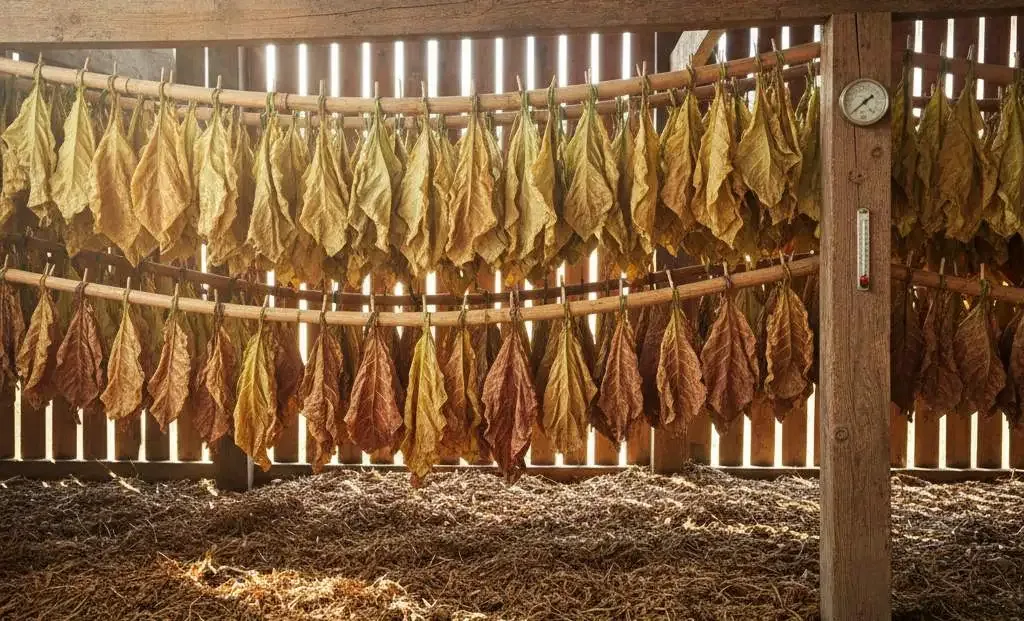
Tobacco Drying Process: Why It Matters for Leaf Quality and Factory Processing
The tobacco drying process is the post-harvest stage that reduces fresh leaf moisture from 80 to 90 percent at harvest down to 15 to 20 percent for stable storage — and it does far more than remove moisture. The rate, temperature, and method of drying directly determine the leaf’s sugar content, physical structure, and fermentation readiness, all of which carry through into factory primary processing performance and cigarette making machine output quality.
What the Tobacco Drying Process Actually Does
The tobacco drying process performs three simultaneous functions as moisture is removed from harvested leaf:
Moisture reduction: Fresh harvested tobacco leaf contains 80 to 90 percent moisture by weight. The drying process reduces this to 15 to 20 percent — the range at which microbial growth is inhibited and the leaf can be safely stored and transported. Leaf above 20 percent moisture is vulnerable to mold growth during storage. Leaf below 12 percent becomes brittle and breaks during handling, generating excess dust in primary processing.
Chemical stabilization: As moisture is removed, enzyme activity in the leaf slows and eventually stops. The drying process arrests the chemical reactions initiated at harvest — locking in the leaf’s sugar content, nicotine chemistry, and aromatic compound development at the point where drying is complete. The rate of drying determines which chemical state is locked in — rapid high-temperature drying arrests reactions earlier than slow gradual drying, producing different leaf chemistry profiles in the finished dried product.
Physical structure setting: The leaf’s physical structure — its flexibility, lamina integrity, and vein condition — is set during drying. Leaf dried too quickly develops stress fractures as moisture leaves the outer surface faster than the interior — producing brittle, fragile leaf that breaks during stripping, cutting, and transport. Leaf dried evenly throughout maintains flexible lamina that handles well during primary processing and generates less dust at the cutting stage.
Tobacco Drying Methods and Their Outcomes
Natural air drying: Tobacco is hung in open or ventilated barns and dried by natural airflow without artificial heat. This is the traditional drying approach for Burley tobacco and Oriental tobacco — varieties where slow drying at ambient temperature is part of the chemical development process that produces their characteristic leaf chemistry. Natural air drying is climate-dependent — humidity and temperature variations between seasons produce year-to-year variation in drying duration and outcomes.
Controlled barn drying: Controlled temperature and airflow barns maintain stable drying conditions regardless of external weather. Temperature, humidity, and airflow are managed throughout the drying cycle — typically following a staged temperature profile that progresses from low temperature moisture removal through higher temperature finishing. Controlled barn drying produces more consistent results batch to batch than natural air drying — reducing the leaf moisture variation that arrives at the factory.
Mechanical drying: Industrial rotary drum dryers or belt dryers are used in some large-scale operations for rapid moisture reduction of primary processing materials — including reconstituted tobacco sheet components and stem material. Mechanical drying is not typically used for whole leaf as the physical stress of mechanical handling damages the lamina structure. It is more commonly applied to cut or processed tobacco materials.
Correct vs Incorrect Drying — Comparison for Factory Buyers
The following table shows how correct drying, insufficient drying, and excessive drying each affect the leaf that arrives at the factory and its behavior in primary processing.
| Aspect | Correct Drying | Insufficient Drying | Excessive Drying |
|---|---|---|---|
| Final moisture level | 15 to 20% for storage | Above 20% — mold risk | Below 12% — brittle leaf |
| Leaf texture | Flexible and intact | Soft, prone to rot | Brittle, breaks during handling |
| Mold risk | Very low | High — microbial growth | Very low |
| Factory conditioning load | Standard — normal conditioning | Extended conditioning required | Extended re-moistening required |
| Primary processing performance | Normal — standard cut behavior | Variable — high moisture causes garniture issues | High dust — excessive brittleness |
| Fermentation readiness | Optimal | Unpredictable fermentation | Incomplete fermentation potential |
How Tobacco Drying Affects Factory Primary Processing
The moisture content of incoming leaf at factory arrival directly determines the conditioning load required in the primary processing section. Leaf arriving at the factory target moisture of 15 to 20 percent enters the conditioning system at a standard starting point and requires normal conditioning time and energy to reach the 12 to 14 percent moisture specification required at the cigarette maker’s tobacco feeder infeed. Leaf arriving above or below the target creates additional conditioning requirements that extend processing cycle time and can cause moisture inconsistency in the cut filler delivered to the making machine. For a complete guide to how moisture affects the cigarette feeder and making machine performance, see our guide to Tobacco Feeder Accuracy: How to Optimize Cigarette Feeding Performance.
High-moisture incoming leaf (above 20 percent): Requires extended conditioning and pre-drying before it can be processed. If the conditioning system does not fully reduce moisture to specification before cutting, high-moisture leaf clumps in the tobacco leaf shredder — causing blade fouling, feed blockages, and irregular cut width. High-moisture cut filler fed to the cigarette maker’s garniture section produces tacky, clumping tobacco that contaminates the garniture tape and causes rod break-outs.
Low-moisture incoming leaf (below 12 percent): Brittle leaf shatters during stripping and cutting — generating significantly more dust than properly dried leaf. Excess dust in the cut filler blend reduces blend quality, causes feed flow problems at the tobacco feeder, and increases garniture contamination at the cigarette maker. Low-moisture leaf also requires re-moistening before processing — adding a conditioning step that normal leaf does not require.
Tobacco Drying as Preparation for Fermentation
Correct tobacco drying is a prerequisite for effective fermentation — the post-drying stage where microbial and enzymatic activity develops flavor complexity and reduces harshness in the leaf. Leaf that is dried to the correct moisture range ferments more evenly and predictably — producing consistent chemical development across the batch. Leaf that is under-dried ferments unevenly, with sections at different moisture levels reacting at different rates — producing batches with variable chemical composition that create blend consistency challenges in primary processing. For a complete guide to the fermentation stage that follows drying, see our guide to the Tobacco Curing Process: How It Shapes Aroma, Taste and Leaf Quality.
Frequently Asked Questions
What is the tobacco drying process?+
The tobacco drying process is the controlled removal of moisture from harvested tobacco leaf — reducing moisture from 80 to 90 percent at harvest down to 15 to 20 percent for stable storage. It is not simply a preservation step — the rate, temperature, and method of drying affect the leaf’s chemical composition, physical structure, and fermentation readiness, which carry through into factory primary processing performance.
What moisture level should tobacco reach after drying?+
Tobacco leaf should reach 15 to 20 percent moisture after the drying process for stable storage and transport. Above 20 percent the leaf is vulnerable to mold growth during storage. Below 12 percent the leaf becomes brittle and generates excessive dust during primary processing. The factory primary processing conditioning system then adjusts moisture to the 12 to 14 percent specification required at the cigarette maker’s tobacco feeder infeed.
How does incorrect tobacco drying affect factory processing?+
High-moisture leaf arriving above 20 percent requires extended conditioning and risks producing tacky, clumping cut filler that contaminates the cigarette maker’s garniture tape. Low-moisture leaf arriving below 12 percent is brittle — it shatters during stripping and cutting, generating excess dust that causes feed flow problems at the tobacco feeder and garniture contamination at the making machine. Both conditions add conditioning cost and risk production quality problems.
Why does tobacco drying affect fermentation quality?+
Correct drying to 15 to 20 percent moisture produces a leaf that ferments evenly and predictably — the entire batch starts fermentation from a consistent moisture baseline. Under-dried leaf at variable moisture levels ferments unevenly — sections at different moisture levels react at different rates, producing batches with variable chemical composition. This variable composition creates blend inconsistency challenges in factory primary processing that proper drying prevents.
Conclusion
The tobacco drying process is a critical quality control point between harvest and factory arrival — one that determines the moisture content, physical integrity, and fermentation readiness of every incoming leaf batch. Factory production managers who understand drying’s downstream implications can use incoming leaf moisture data as a diagnostic tool — identifying batches that will require extended conditioning, cause processing problems, or produce inconsistent cut filler quality before they reach the cigarette maker. For a complete guide to how the tobacco production process flows from leaf cultivation through drying, curing, and primary processing to the finished cigarette, see our guide to How the Tobacco Production Process Works Step by Step. For tobacco machinery suppliers in USA who supply primary processing equipment, see our dedicated suppliers page.



Looking for Cigarette Machinery?
Browse our current inventory of manufacturing, filter making, packing, and wrapping equipment, or send us your target speed and format for a fast quote.