
Tobacco Curing Methods: Which Type Produces Which Leaf
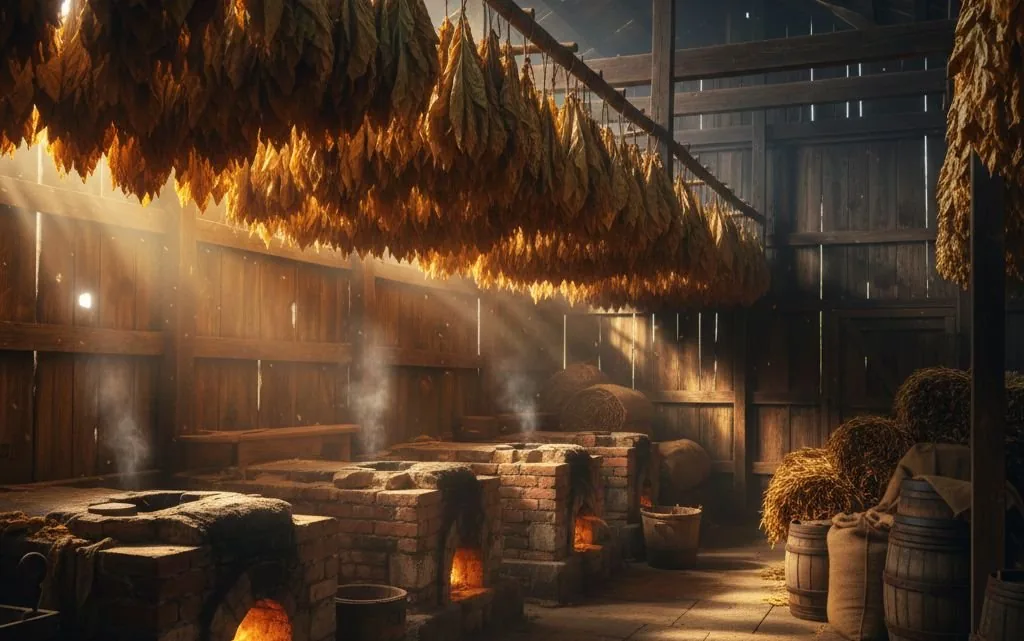
Tobacco curing methods are the four distinct post-harvest drying and chemical transformation approaches used to convert freshly harvested green tobacco leaf into stable, aromatic material suitable for commercial cigarette production. The four tobacco curing methods — flue curing, air curing, sun curing, and fire curing — each produce leaf with fundamentally different chemical composition, physical structure, and sensory characteristics. The choice of curing method is not interchangeable — it is determined by the tobacco variety being grown and the blend position the leaf will occupy in commercial cigarette production. Understanding the differences between tobacco curing methods helps factory buyers interpret incoming leaf quality specifications, understand why blend formulations use specific leaf types, and recognize when curing method variation in incoming leaf affects primary processing performance. For a complete guide to how each curing method affects leaf chemistry and its downstream factory implications, see our dedicated guide: Tobacco Curing Process: How It Shapes Aroma, Taste and Leaf Quality.
The Four Tobacco Curing Methods — Comparison at a Glance
| Method | Tobacco Type | Duration | Sugar Content | Blend Position |
|---|---|---|---|---|
| Flue curing | Virginia | 5 to 10 days | High (up to 20%) | Primary filler — 50 to 70% of most blends |
| Air curing | Burley | 4 to 8 weeks | Very low (under 1%) | Body and strength — 20 to 30% of blends |
| Sun curing | Oriental | 2 to 4 weeks | Low to moderate | Aroma — 5 to 15% of blends |
| Fire curing | Dark tobaccos | Several weeks | Very low | Specialty products — pipes, chewing tobacco |
Method 1 — Flue Curing
Tobacco type: Virginia tobacco — Nicotiana tabacum Virginia-type varieties grown primarily in the USA Southeast, Brazil, and Zimbabwe.
How it works: Harvested leaves are hung in sealed barns through which heated air circulates — generated by indirect heat sources (originally flue pipes, now more commonly heat exchangers) that prevent combustion gases from contacting the leaf. The controlled temperature profile progresses through three stages: yellowing at 32 to 43 degrees Celsius to develop color and begin starch-to-sugar conversion, leaf drying at 43 to 60 degrees Celsius to reduce moisture, and stem drying at 60 to 74 degrees Celsius to finish the process.
Duration: 5 to 10 days — the fastest of the four tobacco curing methods.
Resulting leaf chemistry: High sugar content — up to 20 percent. Moderate nicotine. Bright golden-orange color. Mild, sweet aroma. The rapid controlled temperature progression locks in high sugar retention — the defining characteristic of flue-cured Virginia leaf.
Blend position: Virginia is the primary filler component in most international cigarette blends — typically 50 to 70 percent of the blend by weight. Its high sugar content produces a sweet, mild character that defines the baseline flavor of most commercial cigarettes.
Method 2 — Air Curing
Tobacco type: Burley tobacco — Nicotiana tabacum Burley-type varieties grown primarily in Kentucky, Tennessee, and Malawi.
How it works: Harvested leaves hang in open-sided or ventilated barns without artificial heat. Curing relies entirely on natural airflow and ambient temperature to progressively remove moisture over several weeks. The slow process without heat allows almost complete starch-to-sugar conversion to proceed — and then for most of those sugars to be metabolized by naturally occurring organisms, producing the characteristic low-sugar chemistry of Burley.
Duration: 4 to 8 weeks — significantly longer than flue curing. Duration varies with ambient temperature and humidity — cooler growing regions require longer air curing periods.
Resulting leaf chemistry: Very low sugar content — under 1 percent. High nicotine — typically 3 to 4 percent, versus 2 to 3 percent for flue-cured Virginia. Brown to tan color. Earthy, slightly bitter aroma. The low sugar, high nicotine profile makes Burley the strength and body component in cigarette blends.
Blend position: Burley is the body and strength component — typically 20 to 30 percent of American blend cigarettes and lower percentages in international blends. Its nicotine content contributes to blend strength while its low sugar prevents the sweetness from Virginia from becoming unbalanced.
Method 3 — Sun Curing
Tobacco type: Oriental tobacco — small-leafed Nicotiana tabacum varieties grown in Turkey, Greece, Bulgaria, and surrounding Eastern Mediterranean regions.
How it works: Harvested leaves are laid on frames or strings and dried in direct sunlight for several weeks. The combination of UV exposure, ambient temperature, and natural airflow drives a slow, gentle curing process that preserves the fragrant aromatic oils characteristic of Oriental varieties — oils that would be altered or lost under the higher temperatures of flue curing.
Duration: 2 to 4 weeks depending on sunlight intensity and ambient temperature.
Resulting leaf chemistry: Low to moderate sugar content. Moderate nicotine. Small leaf size — Oriental leaves are significantly smaller than Virginia or Burley leaves, which affects their processing behavior in primary processing equipment. High aromatic oil content — esters and volatile compounds that produce the distinctive spicy, herbal character associated with Oriental tobacco.
Blend position: Oriental is used as a flavor modifier at low inclusion rates — typically 5 to 15 percent of the blend. Its aromatic complexity contributes character that neither Virginia nor Burley can replicate, even at small percentages.
Method 4 — Fire Curing
Tobacco type: Dark tobacco varieties — specific Nicotiana tabacum dark-leaf types grown in Kentucky, Tennessee, western Virginia, and parts of Europe.
How it works: Harvested leaves hang in barns where hardwood fires burn on the barn floor — allowing combustion gases and wood smoke to contact the leaf directly. The smoke compounds are absorbed into the leaf during curing, producing the characteristic smoky aroma of fire-cured tobacco. Fire curing is the most intensive of the four tobacco curing methods in terms of leaf chemistry modification.
Duration: Several weeks depending on desired smoke depth and leaf type.
Resulting leaf chemistry: Very low sugar. Very high nicotine — fire-cured tobaccos are among the highest nicotine-content commercial leaf types. Very dark brown to black color. Distinctive smoky aroma from absorbed wood combustion compounds.
Blend position: Fire-cured tobacco is not used in standard commercial cigarette blends. It appears in pipe tobaccos, chewing tobacco, snuff, and some specialty cigarette products where the smoky character is a deliberate product attribute.
Why Tobacco Curing Methods Cannot Be Substituted
Factory buyers sometimes ask whether different curing methods can be applied to the same tobacco variety to adjust leaf chemistry without changing the variety. The answer is effectively no — the curing method is not a variable that can be freely adjusted.
- Virginia tobacco varieties are specifically developed for flue curing — their genetic makeup produces the high starch levels that flue curing converts to sugars. Air curing Virginia leaf does not produce Burley chemistry — it produces degraded Virginia leaf with poor chemical development
- Burley varieties are selected for their performance in air curing — their low starch content means flue curing produces a leaf with little sugar development and altered flavor that does not match either a proper Virginia or proper Burley profile
- Oriental varieties require the specific UV exposure and temperature conditions of sun curing — their aromatic oil development is driven by the sun curing process and cannot be replicated by other methods
The practical implication for factory buyers is that leaf labeled by curing method carries specific expectations about its chemistry. When a supplier changes curing methods — even subtly — the resulting leaf behaves differently in the blend and at the cigarette maker. For a complete guide to how each curing method’s chemistry affects primary processing and cigarette making machine performance, see our guide to What Is Tobacco Filler and How It Shapes Cigarettes.
Frequently Asked Questions
What are the four tobacco curing methods?
What is the difference between flue curing and air curing?
Can you use a different curing method on the same tobacco variety?
Which tobacco curing method is used for cigarettes?
Conclusion
The four tobacco curing methods produce four fundamentally different leaf types that each serve distinct roles in commercial cigarette blend formulations. Flue-cured Virginia provides the sweet, mild primary filler. Air-cured Burley provides body and strength. Sun-cured Oriental provides aromatic complexity. Fire-cured dark tobacco serves specialty markets outside standard cigarette production. Understanding which curing method produces which leaf chemistry — and why each blend position requires its specific leaf type — gives factory buyers the foundation for interpreting incoming leaf quality specifications and understanding why blend formulations are structured the way they are. For a complete guide to how leaf chemistry from each curing method affects cigarette production performance, see our guide to How the Tobacco Production Process Works Step by Step. For tobacco machinery suppliers in USA who supply primary processing equipment, see our dedicated suppliers page.


Looking for Cigarette Machinery?
Browse our current inventory of manufacturing, filter making, packing, and wrapping equipment, or send us your target speed and format for a fast quote.