
How the Tobacco Production Process Works Step by Step
The tobacco production process transforms raw leaf tobacco into finished cigarettes through a sequence of seven stages — from cultivation and curing through primary processing, cigarette making, quality inspection, and final packaging. Each stage uses specialized industrial equipment, and the quality output of each stage directly affects the next. Understanding the complete tobacco production process helps factory buyers specify the right equipment for each stage and identify where quality problems originate when they appear on the production line.
Step 1: Cultivate Tobacco Leaves
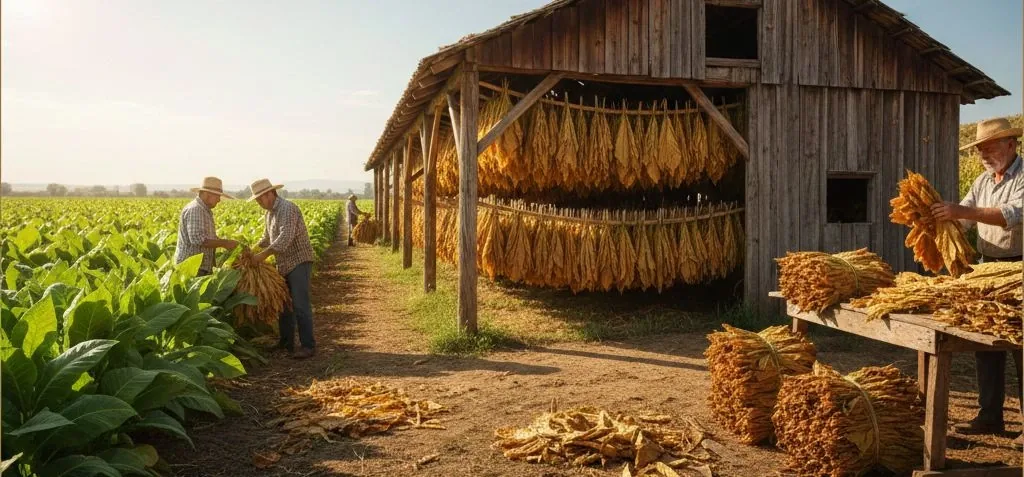
Farmers start the tobacco production process by planting tobacco in fertile soil with consistent sunlight, water, and nutrients. They select tobacco varieties — Virginia, Burley, Oriental — based on target flavor profile and growing conditions. Monitoring for pests and diseases during the growing season is critical — damaged or diseased leaf creates quality problems that carry through every subsequent processing stage.
After reaching maturity, farmers harvest leaves using the priming method — picking lower mature leaves first and leaving upper leaves to ripen. Careful harvesting minimizes leaf damage that would affect cut filler quality in primary processing. After harvest, leaves enter the curing stage immediately to prevent quality degradation.
Step 2: Cure and Ferment Leaves
Curing enhances tobacco’s taste and aroma by transforming its chemical composition through controlled drying. Producers select the curing method based on the tobacco type:
- Flue curing — used for Virginia tobacco — rapid drying with indirect heat produces high-sugar, mild leaf
- Air curing — used for Burley tobacco — slow natural drying in ventilated barns produces low-sugar, high-nicotine leaf
- Sun curing — used for Oriental tobacco — natural sun drying produces aromatic, complex leaf
- Fire curing — indirect smoke contact produces specialty tobaccos used in select blends
After curing, producers ferment the leaves under controlled temperature and humidity conditions. Fermentation reduces harshness, develops flavor complexity, and stabilizes the leaf chemistry. Air circulation, temperature, and moisture are monitored throughout — uneven fermentation produces inconsistent leaf chemistry that creates blend variability in downstream processing.
Step 3: Strip and Blend Tobacco
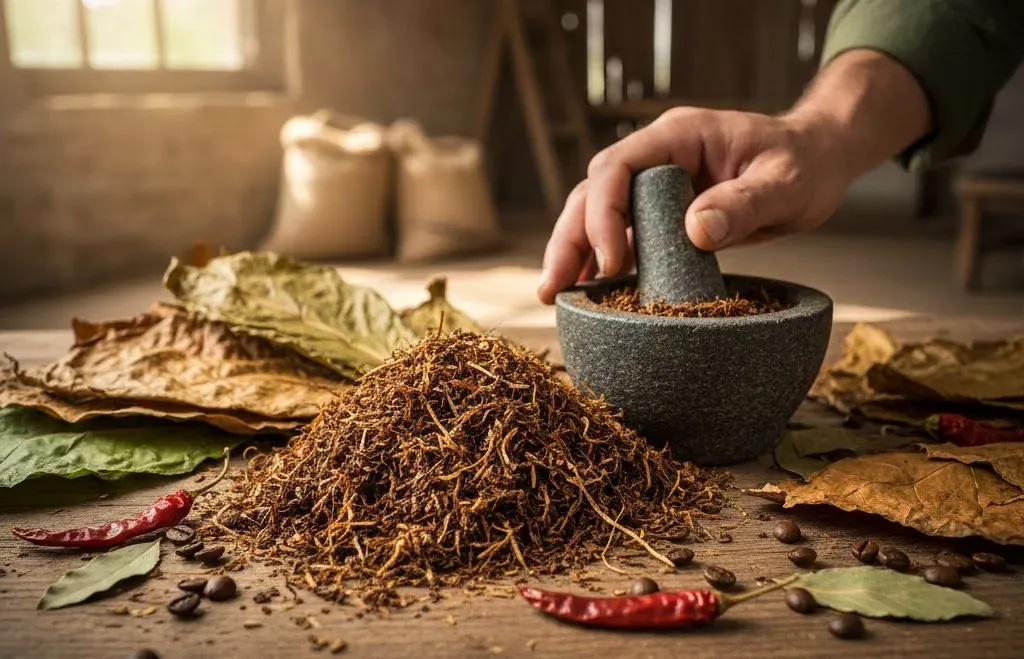
After fermentation, workers or stripping machines remove the central midrib vein from each leaf, leaving only the usable lamina. Stripping ensures that the midrib — which does not cut cleanly and burns poorly — does not contaminate the cut filler blend. The stripped lamina is then graded and sorted by quality before blending.
Blending combines stripped tobacco from different varieties and origins in precise ratios to achieve the target flavor profile and chemical specification for each cigarette brand. The blend ratio — proportions of Virginia, Burley, Oriental, reconstituted tobacco, and expanded tobacco — is specified by the product development team and maintained consistently throughout production. Precise blending is essential because any variation in blend composition produces a measurable change in finished cigarette flavor and strength.
Step 4: Cut and Condition Tobacco
Producers cut the blended leaf lamina into cut filler at the specified cut width — typically 0.8mm to 1.2mm for standard cigarette formats — using industrial tobacco cutting machines. Cut width is a critical specification: it determines how the filler flows through the tobacco feeder system and garniture section of the cigarette maker. Too wide a cut produces uneven rod density. Too fine a cut generates excess dust and feed flow problems.
After cutting, the filler passes through a conditioning system that adjusts its moisture content to the target specification — typically 12 to 14 percent — required for consistent cigarette making machine performance. Flavor additives, casings, or top dressings may be applied at this stage to achieve the final blend specification before the cut filler enters the cigarette making section.
Step 5: Form Cigarettes on the Making Machine
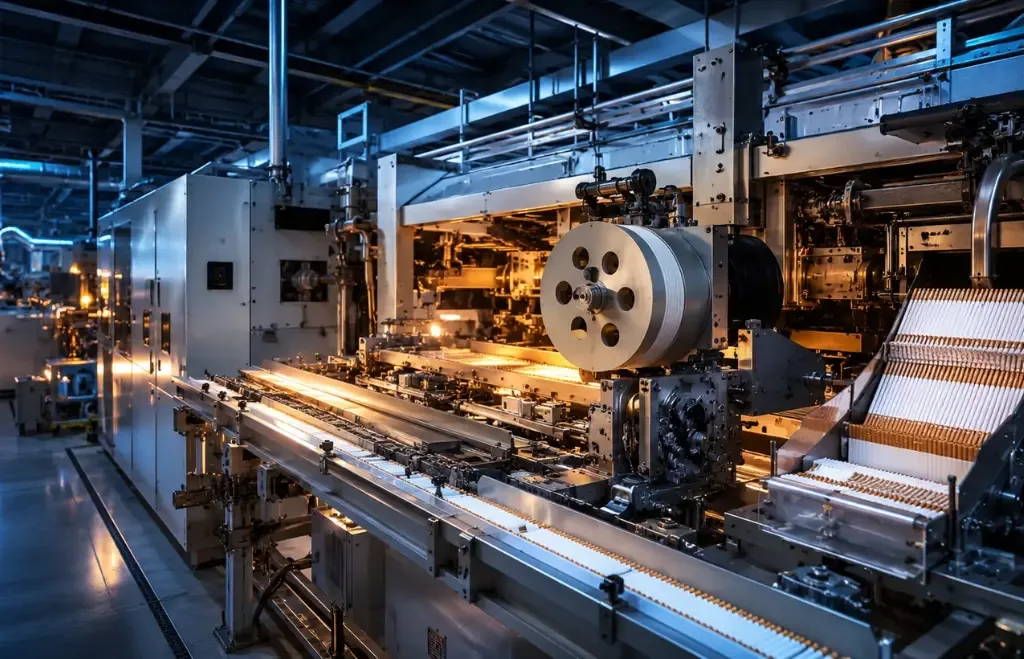
Conditioned cut filler is delivered from the primary processing section to the cigarette making machine via the tobacco feeder system. The making machine forms the tobacco into a continuous rod, wraps it in cigarette paper, attaches a filter, and cuts the rod into individual cigarettes — at speeds of 2,000 to 12,000 cigarettes per minute depending on the platform. The Molins Mark 9 at 5,500 cpm and the Körber Protos 80 ER at 8,000 cpm are among the most widely used industrial cigarette making platforms globally. For a complete guide to industrial cigarette making machines, see our Cigarette Making Machines: The Complete Buyer’s Guide.
Step 6: Inspect for Quality
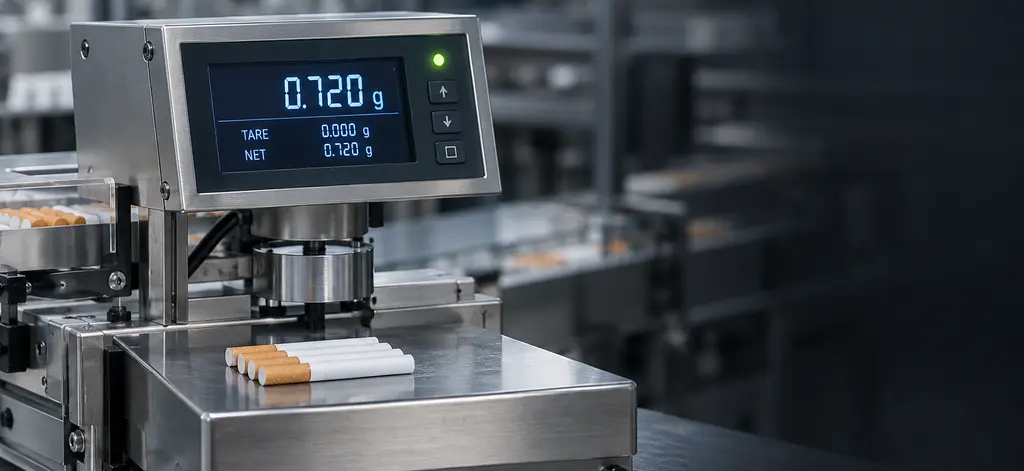
Quality inspection occurs at every stage of the tobacco production process — not just at a single checkpoint. During cigarette making, the making machine’s integrated quality control system detects and rejects cigarettes with weight deviations, air leakage, missing filters, soft spots, and hard spots in real time. Microwave weight control systems on platforms like the Protos 80 ER monitor every cigarette rod continuously — not by sampling — and automatically adjust the tobacco feed rate to maintain weight specification.
After making, cigarettes pass through additional inspection before packing. Packing machines perform their own quality checks — verifying pack fill, alignment, and seal integrity — before accepting packs into the output stream. For a complete overview of how inspection integrates across the full production line, see our guide to Cigarette Production Line Equipment: From Raw Tobacco to Finished Pack.
Step 7: Package and Distribute
After quality inspection, cigarettes are packaged into retail packs by the cigarette packing machine — SASIB, HLP, GD, or Focke depending on factory specification and pack format requirements. Packing machines apply the inner foil liner, form the outer pack shell, attach the cellophane overwrap, and prepare packs for cartoning and distribution. For a full guide to cigarette packing machine options across soft pack and hard box formats, see our guide to Cigarette Packing Machines: Soft Pack vs Hard Box Production Lines.
Frequently Asked Questions
What are the main steps in the tobacco production process?
What happens during tobacco primary processing?
How fast does a cigarette making machine produce cigarettes?
What is the role of quality control in tobacco production?
Conclusion
The tobacco production process is a connected sequence — quality decisions made at the cultivation and curing stage affect primary processing, which affects cigarette making performance, which affects pack quality. Factory buyers who understand the full process can specify appropriate equipment for each stage and trace quality problems to their correct root cause rather than treating symptoms at the wrong stage. For a complete step-by-step technical guide to how the production line works from the cigarette maker’s perspective, see our guide to How a Cigarette Production Line Works: Step-by-Step Process. For tobacco machinery suppliers in USA who supply equipment across all stages of the tobacco production process, see our dedicated suppliers page.
Looking for Cigarette Machinery?
Browse our current inventory of manufacturing, filter making, packing, and wrapping equipment, or send us your target speed and format for a fast quote.