
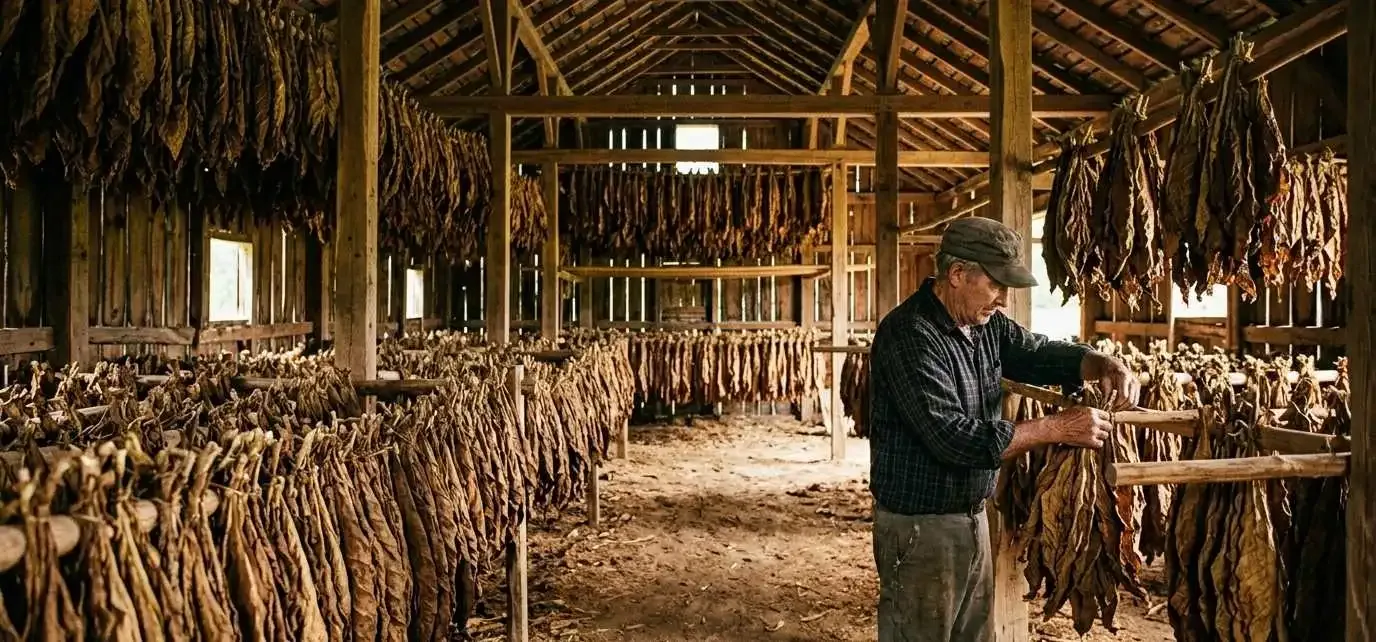
Tobacco Storage Quality: How to Maintain Leaf from Farm to Factory
Tobacco storage quality determines whether the chemical and physical properties developed during cultivation, curing, and fermentation are preserved intact when the leaf arrives at the cigarette factory — or whether they have degraded during storage. Months of careful farming and curing can be partially undone by poor storage conditions that allow excessive moisture uptake, mold development, chemical degradation, or physical leaf damage. Understanding what correct tobacco storage looks like — what parameters to maintain, what problems to watch for, and how storage quality affects incoming leaf at the factory — gives factory buyers and production managers a complete picture of the upstream quality chain they depend on.
Why Tobacco Storage Quality Matters for Factory Production
Tobacco leaf arriving at the factory gate is the starting point for everything that follows — primary processing, blending, cutting, conditioning, and ultimately the cigarette making machine. The quality of that incoming leaf — its moisture content, chemical composition, physical integrity, and consistency — is determined by everything that happened before factory arrival: cultivation, harvesting timing, curing, fermentation, aging, and storage. Storage is the final upstream stage. Leaf stored correctly arrives at the factory in the condition the curing and fermentation process produced. Leaf stored incorrectly arrives with moisture variation, mold contamination, or physical damage that primary processing must work harder to accommodate — and in some cases cannot fully correct. For a complete guide to how incoming leaf quality flows through primary processing and into the cigarette making machine, see our guide to How the Tobacco Production Process Works Step by Step.
Key Tobacco Storage Parameters
Four parameters determine tobacco storage quality. Each must be maintained within its target range throughout the storage period — whether that is weeks for short-term holding or years for aging premium blend components.
| Parameter | Target Range | Below Range Effect | Above Range Effect |
|---|---|---|---|
| Relative humidity | 60 to 65% | Below 55% — leaf becomes brittle, breaks during handling | Above 70% — mold growth risk, leaf degradation |
| Temperature | 15 to 20°C | Below 10°C — slows aging, can cause condensation risk | Above 25°C — accelerates chemical degradation, insect activity |
| Airflow | Moderate, consistent | Stagnant air — moisture pockets, uneven conditions | Excessive airflow — accelerates moisture loss, dries leaf below spec |
| Leaf moisture | 15 to 20% at entry | Below 12% — brittle leaf, excess dust in primary processing | Above 20% — mold risk during storage |
Humidity Control — The Most Critical Parameter
Target relative humidity: 60 to 65 percent relative humidity throughout the storage period.
Below 55 percent: Leaf loses moisture below its stable equilibrium — becoming progressively more brittle over time. Brittle leaf breaks during handling, stripping, and cutting in primary processing — generating significantly more dust than correctly stored leaf. Excess dust in cut filler contaminates the blend, creates feed flow problems at the tobacco feeder, and increases garniture contamination at the cigarette maker.
Above 70 percent: Leaf absorbs ambient moisture above its stable equilibrium — raising leaf moisture toward and potentially above the 20 percent threshold at which mold growth becomes a serious risk. Mold-contaminated tobacco is a quality defect that cannot be corrected in primary processing. Even leaf that absorbs moisture without developing visible mold arrives at the factory above target moisture — requiring extended conditioning before it can be processed.
How to maintain correct humidity: Climate-controlled warehouses with humidity monitoring sensors and automated ventilation systems are standard for commercial tobacco storage. Temperature and humidity data should be logged continuously — not just checked periodically — so that excursions are identified and corrected before leaf quality is affected.
Temperature Control
Target temperature: 15 to 20 degrees Celsius.
Below 10 degrees Celsius: Very low temperatures slow the aging and chemical development process — which is sometimes desirable for very long-term holding. However temperatures below 10 degrees Celsius also increase condensation risk when the warehouse is opened to warmer ambient air — sudden warming of cold leaf surfaces causes moisture condensation that raises leaf surface moisture rapidly and locally, creating conditions for mold development in the affected areas.
Above 25 degrees Celsius: Elevated temperatures accelerate chemical degradation reactions — converting desirable aromatic compounds into less favorable forms and reducing the quality of the leaf’s flavor character over time. High temperatures also encourage insect activity — beetles and mites that damage leaf structure and contaminate the batch. Temperature above 30 degrees Celsius combined with humidity above 65 percent creates high-risk conditions for rapid quality loss.
Physical Handling and Packaging
Leaf packaging forms: Commercial tobacco is stored in several physical forms depending on the stage of processing. Immediately after curing, leaf is typically stored in hogsheads — large wooden barrels traditionally used for Virginia tobacco — or in compressed bales for Burley and Oriental types. Both forms allow moderate airflow while protecting leaf from physical damage during warehouse handling.
Stacking and airflow: Stacks must be organized to allow air circulation between bales or hogsheads — not packed tightly against each other. Stagnant air creates moisture pockets within the stack where local humidity rises above the warehouse average — creating conditions for localized mold development even when the overall warehouse humidity is within the correct range.
Physical handling damage: Each time bales or hogsheads are moved — during receiving, rotation, or shipment — there is a risk of physical leaf damage from rough handling. Damaged leaf breaks during primary processing, generating excess dust. Warehouse procedures that minimize unnecessary handling and use appropriate lifting and moving equipment reduce physical damage risk.
- Label all storage lots with variety, curing method, harvest date, and entry date — for first-in first-out inventory management
- Inspect every lot at regular intervals — check for moisture changes, mold, pest activity, or unusual odor
- Rotate inventory according to first-in first-out principles — prevent oldest lots from remaining in storage beyond target aging periods
- Document temperature and humidity readings continuously — maintain records for quality audit purposes
Long-Term Storage and Aging
Premium tobacco blend components — particularly Oriental tobaccos and specialty leaf types — are stored for extended periods of 1 to 3 years or longer to allow continued chemical development during aging. Aging in correctly controlled storage conditions — 60 to 65 percent relative humidity, 15 to 20 degrees Celsius, moderate airflow — allows aromatic compounds to continue developing and harsh chemical compounds to mellow progressively.
The factory implication of extended aging is that aged leaf arrives with more developed and stable chemical composition than freshly fermented leaf — producing more predictable blend behavior in primary processing and more consistent cigarette quality at the making machine. For a complete guide to how fermentation and aging prepare tobacco leaf for factory processing, see our guide to the Tobacco Fermentation Process: How It Improves Quality and Consistency.
How Poor Tobacco Storage Appears in Factory Processing Data
High incoming leaf moisture (above 20 percent): Extended conditioning required — adds processing time. If not fully corrected before cutting, produces tacky clumping filler that causes garniture tape contamination and rod break-outs at the cigarette maker.
Low incoming leaf moisture (below 12 percent): Brittle leaf generates excess dust in primary processing — tobacco feeder feed flow problems and garniture contamination at the making machine. Requires re-moistening before processing — adds processing time and energy cost.
Mold-contaminated leaf: Cannot be processed — affected lots must be rejected. Creates supply chain disruption and raw material cost loss.
Physically damaged leaf (from poor handling): Produces irregular cut edges in primary processing — increasing dust generation and reducing cut filler uniformity. Appears as variable rod weight and draw resistance at the making machine.
Frequently Asked Questions
What is the correct humidity for tobacco storage?
What temperature should tobacco be stored at?
How does poor tobacco storage affect factory primary processing?
How long can tobacco be stored?
Conclusion
Tobacco storage quality is the final upstream quality control stage before leaf arrives at the cigarette factory. The parameters are specific — 60 to 65 percent relative humidity, 15 to 20 degrees Celsius, moderate consistent airflow — and the consequences of operating outside these parameters are measurable in primary processing performance and cigarette making machine output quality. Factory buyers who understand correct tobacco storage conditions can use incoming leaf quality data to identify whether storage problems are contributing to production inconsistencies — and communicate clearer specifications to leaf suppliers and aging facilities. For a complete guide to how the full upstream quality chain from cultivation through storage affects factory production, see our guide to What Is Tobacco Filler and How It Shapes Cigarettes. For tobacco machinery suppliers in USA who supply primary processing equipment, see our dedicated suppliers page.



Looking for Cigarette Machinery?
Browse our current inventory of manufacturing, filter making, packing, and wrapping equipment, or send us your target speed and format for a fast quote.