
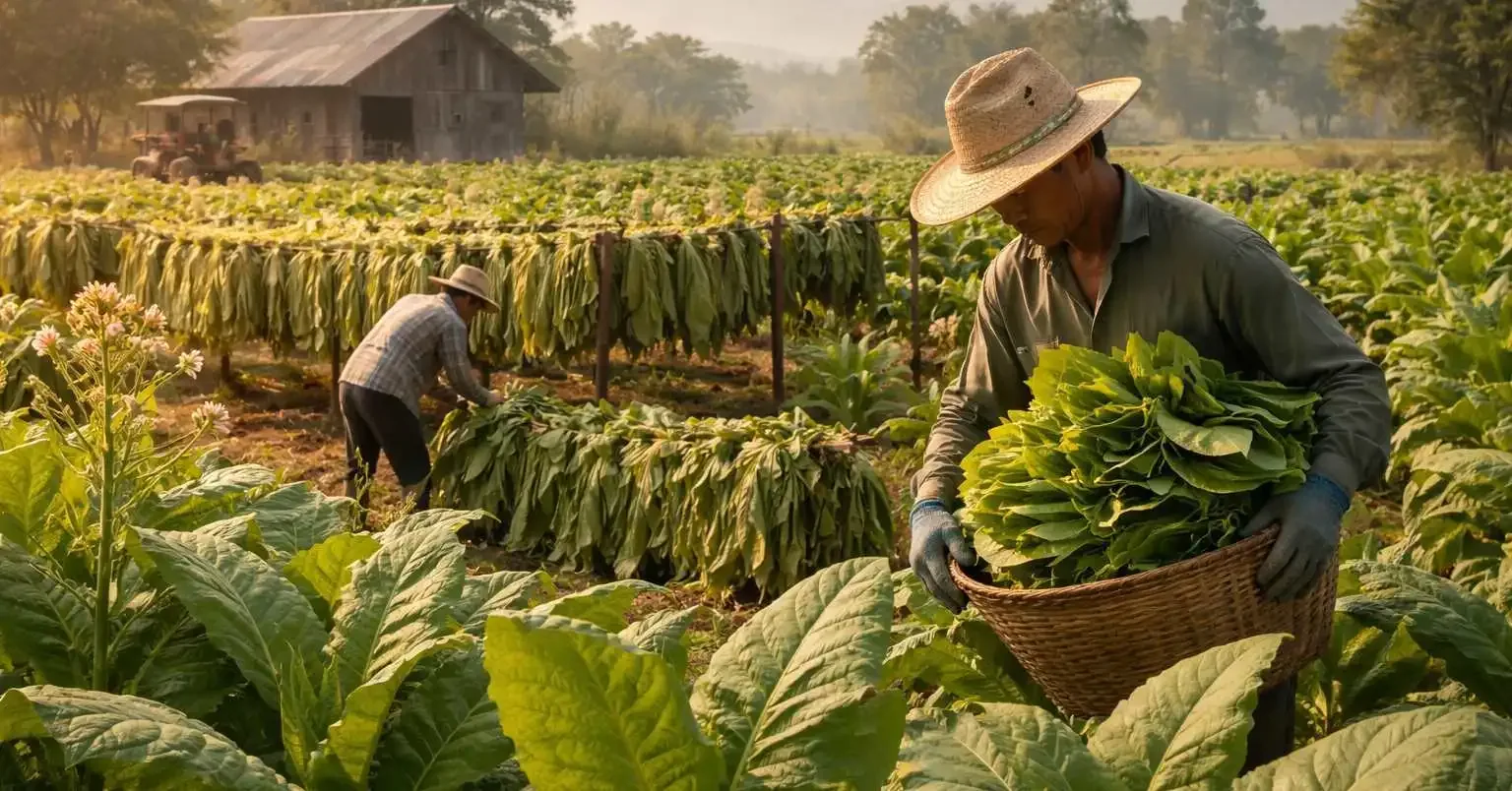
How Is Tobacco Grown and Harvested?
How tobacco is grown and harvested determines the leaf quality that eventually enters your cigarette production line as cut filler. Harvest timing, curing method, and storage conditions all affect the leaf’s moisture content, sugar levels, chemical composition, and cut behavior in primary processing — which in turn affects cigarette rod weight consistency, draw resistance, and blend quality on the making line. This guide covers the complete tobacco growing and harvesting process — from seed selection through curing and grading — with a focus on what each stage means for factory buyers specifying primary processing equipment and managing incoming leaf quality.
Selecting the Right Tobacco Seeds
Farmers start tobacco growing by choosing the right seeds for their climate and soil. High-quality seeds ensure strong seedlings and healthy plants. Common tobacco varieties include Virginia, Burley, and Oriental — each requiring different care and soil conditions and each producing leaf with different chemical and physical properties for cigarette production. Farmers plant seeds in seedbeds or trays filled with nutrient-rich soil, maintaining a controlled environment to encourage germination.
Preparing the Field for Planting
After seedlings grow for 6 to 8 weeks, farmers prepare fields for transplanting. They plow and till the soil to improve aeration and remove weeds. Proper soil preparation ensures that the tobacco roots develop strong foundations. Farmers often test the soil pH and add fertilizers to optimize nutrient availability — directly impacting plant growth and the chemical composition of the mature leaf that determines flavor and burn characteristics in the finished cigarette.
Transplanting Seedlings
Farmers carefully transplant seedlings to the prepared field and space plants evenly to allow airflow and sunlight penetration. Consistent spacing reduces disease risk and promotes uniform leaf development. Uniform leaf development across a crop is important for processing consistency — variable leaf size and maturity within a single harvest batch creates sorting and blending challenges in primary processing.
Managing Plant Growth — Topping and Suckering
During the growing season farmers monitor plants closely. Tobacco growing requires consistent watering, particularly during dry periods, and careful fertilization to maintain nutrient balance. Farmers also remove suckers — the small shoots that appear in leaf axils — to focus the plant’s energy on the main leaves. The process of removing the top flower head of the plant — called topping — stops the plant from flowering and redirects energy into the remaining leaves, increasing their size and nicotine content. Topping timing and height directly affect the nicotine level and chemical composition of the harvested leaf.
Pest and Disease Control
Tobacco plants attract various pests and diseases that can damage crops and reduce leaf quality if unmanaged. Farmers scout fields regularly using integrated pest management strategies to control insects, fungi, and other threats. Proper spacing, crop rotation, and timely pesticide application prevent major infestations while minimizing residue contamination that could affect downstream processing quality standards.
Harvesting Tobacco Leaves
Harvesting is one of the most quality-critical stages in tobacco growing. Farmers determine the right time by observing leaf color and texture — immature leaves lack the sugar development needed for quality flavor while over-mature leaves break down during curing. Harvesting in stages — called priming — picks mature leaves from the bottom of the plant first while leaving upper leaves to continue ripening. This staged approach ensures consistent leaf maturity across the harvest batch.
Leaf damage during harvesting — tearing, bruising, or crushing — creates physical defects that carry through into cut filler quality. Undamaged leaf produces cleaner cut edges with less dust generation in primary processing, which improves feed consistency at the cigarette maker.
Curing Tobacco
Curing is the post-harvest process that transforms raw tobacco leaves into the stable, aromatic leaf used in cigarette production. Different curing methods produce fundamentally different leaf chemistry — which is why the curing method determines which tobacco variety is suitable for which cigarette blend type.
- Air curing — leaves hang in well-ventilated barns for several weeks, allowing slow natural drying. Used for Burley tobacco. Produces low-sugar, high-nicotine leaf suitable for American blend cigarettes.
- Flue curing — heated air circulates around leaves using indirect heat, drying them quickly without combustion smoke contact. Used for Virginia tobacco. Produces high-sugar, bright, mild leaf — the dominant component in most international cigarette blends.
- Fire curing — leaves hang near open wood fires, imparting a smoky flavor through direct smoke contact. Used for specialty tobaccos. Not typically used in standard cigarette blends.
- Sun curing — used for Oriental tobacco varieties. Leaves are laid in the sun to dry naturally. Produces aromatic, complex-flavored leaf used as a blend component in cigarettes at lower percentages.
Curing requires careful monitoring of temperature, humidity, and airflow. Improper curing reduces leaf quality — under-cured leaf retains excess moisture and can develop mold in storage, while over-cured leaf becomes brittle and generates excessive dust during primary processing.
Sorting, Grading, and Storage
After curing, farmers sort leaves based on color, size, and texture. Grading separates leaves into quality categories that determine their suitability for different blend positions. Higher-grade leaves with consistent color and physical integrity produce cleaner cut filler with better flow characteristics in primary processing. Lower-grade leaves with color variation or physical damage are typically used in reconstituted tobacco sheet production rather than direct cut filler.
Storage conditions after grading directly affect the leaf that enters factory primary processing. Tobacco stored in controlled humidity environments — typically 60 to 65 percent relative humidity — maintains stable moisture and chemical composition. Leaf stored in uncontrolled conditions may arrive at the factory with variable moisture levels that require additional conditioning before primary processing can begin.
How Tobacco Growing Connects to Factory Production
Every stage of tobacco growing and harvesting has a downstream impact on factory production. Harvest timing affects sugar content — which affects burn rate and flavor in the finished cigarette. Curing method determines the leaf chemistry that defines the blend’s character. Storage conditions determine the moisture specification that the conditioning section of the primary processing line must target. Understanding these upstream quality factors helps factory buyers and production managers interpret incoming leaf quality data and adjust primary processing parameters accordingly. For a complete guide to how cut tobacco filler flows through the production line from primary processing to finished cigarette rod, see our guide to How a Cigarette Production Line Works: Step-by-Step Process. For a deeper understanding of how tobacco filler types and properties affect cigarette making machine performance, see our guide to What Is Tobacco Filler and How It Shapes Cigarettes.
Frequently Asked Questions
What is the priming method of tobacco harvesting?+
Priming is the staged harvesting method where mature leaves are picked from the bottom of the tobacco plant first, while upper leaves continue ripening. Each priming round harvests leaves at the same maturity stage — producing a more consistent batch than cutting the entire plant at once. Priming is standard for flue-cured Virginia and Burley tobacco production.
How does curing method affect tobacco leaf quality for cigarettes?+
Curing method determines the chemical composition of the cured leaf — particularly its sugar and nicotine content. Flue-cured Virginia has high sugar and moderate nicotine — producing a mild, sweet flavor. Air-cured Burley has low sugar and high nicotine — adding strength and body to blends. These differences mean that Virginia and Burley cannot substitute for each other in a blend specification — they are chemically different raw materials.
How does harvest timing affect cigarette production quality?+
Harvest timing determines the maturity of the leaf and its sugar content at the time of harvest. Leaves harvested too early lack the sugar development that flue curing depends on — producing a thin, harsh flavor profile. Leaves harvested too late deteriorate chemically. Consistent harvest timing across a crop batch produces more uniform leaf chemistry — which translates to more consistent blend behavior in primary processing and more predictable cigarette quality on the making line.
What tobacco varieties are used in commercial cigarette production?+
The three main commercial varieties are Virginia (flue-cured — sweet, mild), Burley (air-cured — strong, earthy), and Oriental (sun-cured — aromatic, complex). Most commercial cigarette blends combine Virginia as the primary component with Burley and Oriental at lower percentages to achieve the target flavor and strength profile. The specific blend ratio and the quality grade of each component are specified by the manufacturer’s product development team.
Conclusion
Understanding how tobacco is grown and harvested gives factory buyers and production managers the upstream context they need to interpret incoming leaf quality, specify appropriate primary processing parameters, and maintain consistent cigarette production quality. Every growing and harvesting decision — from topping timing to curing method to storage conditions — shapes the leaf that eventually enters your production line as cut filler. For a complete guide to what tobacco filler is and how its properties affect your cigarette making machine’s performance, see our guide to What Is Tobacco Filler and How It Shapes Cigarettes. For tobacco machinery suppliers in USA who supply primary processing equipment, see our dedicated suppliers page.



Looking for Cigarette Machinery?
Browse our current inventory of manufacturing, filter making, packing, and wrapping equipment, or send us your target speed and format for a fast quote.