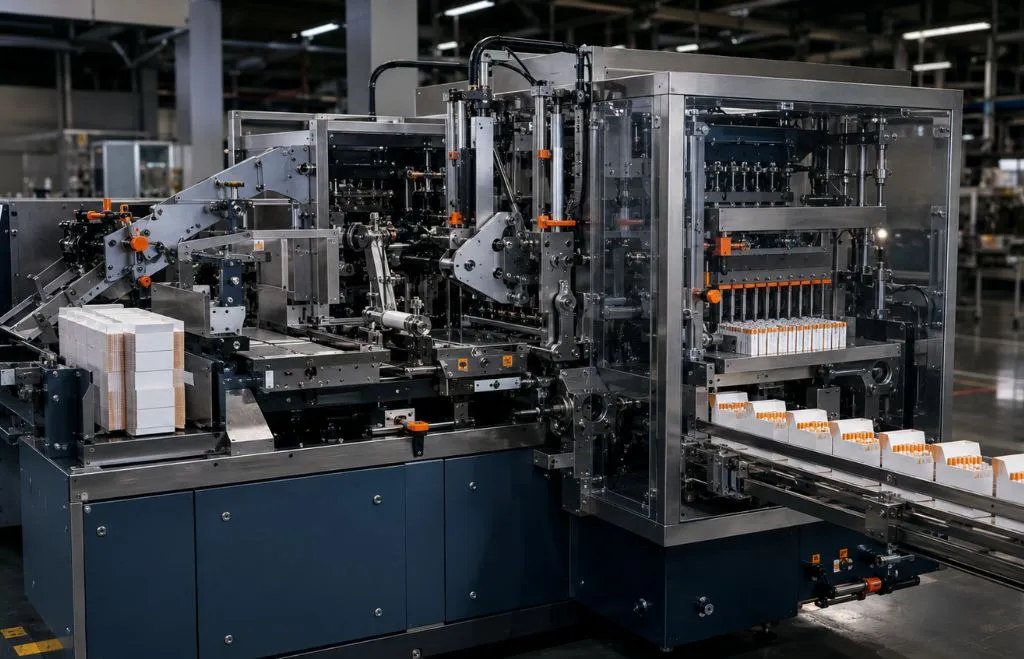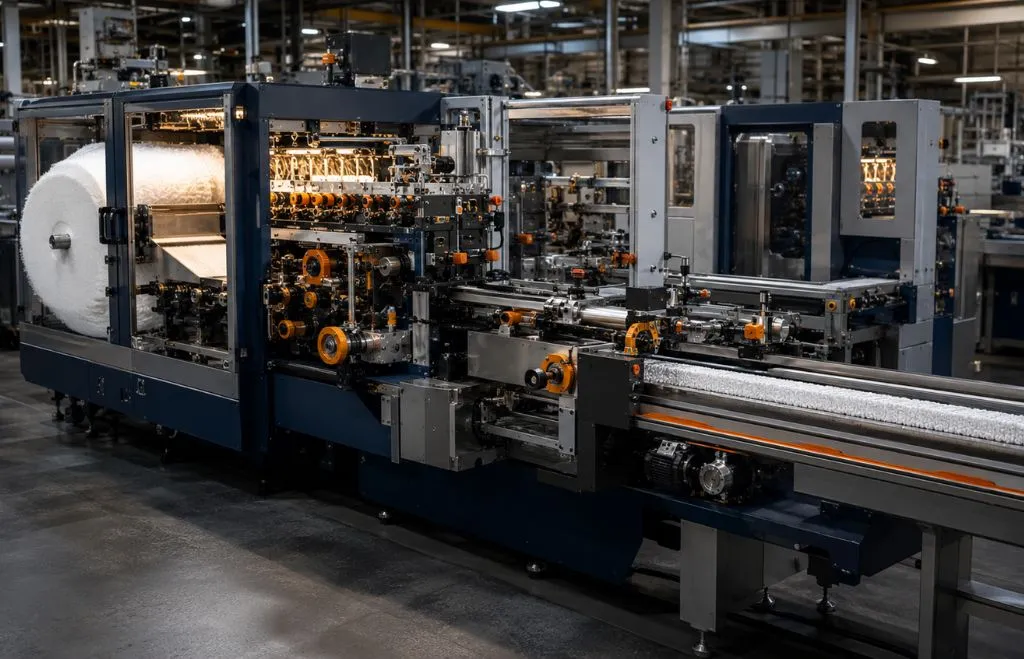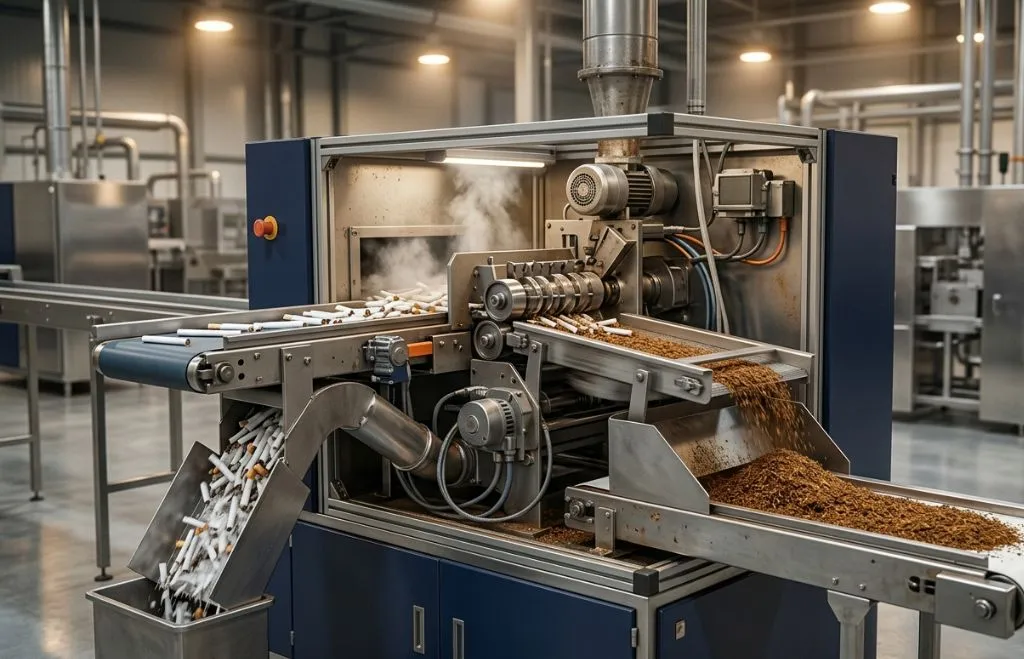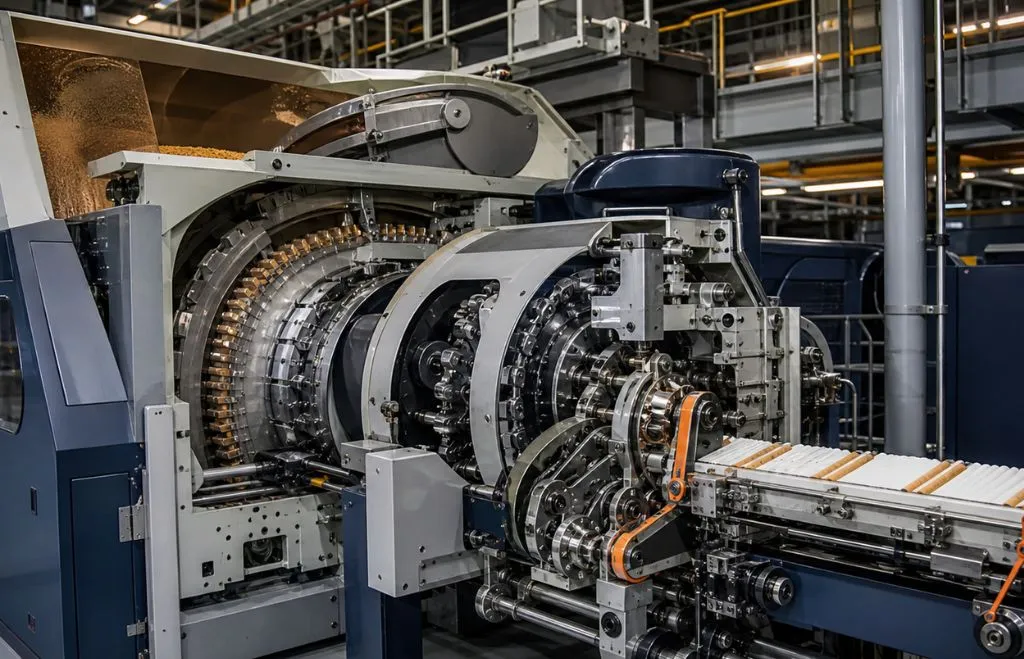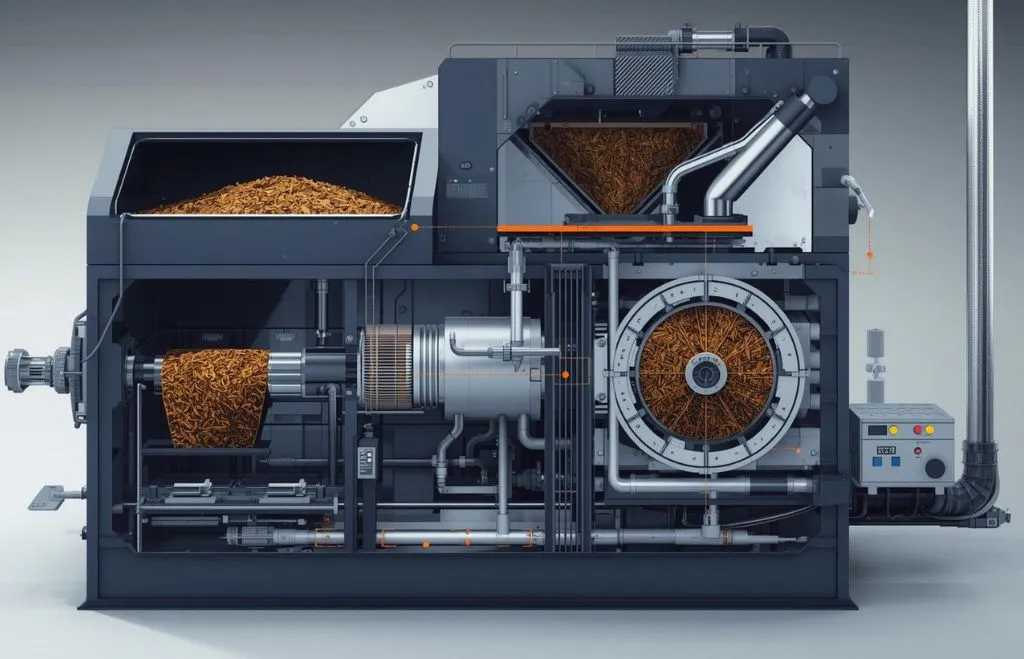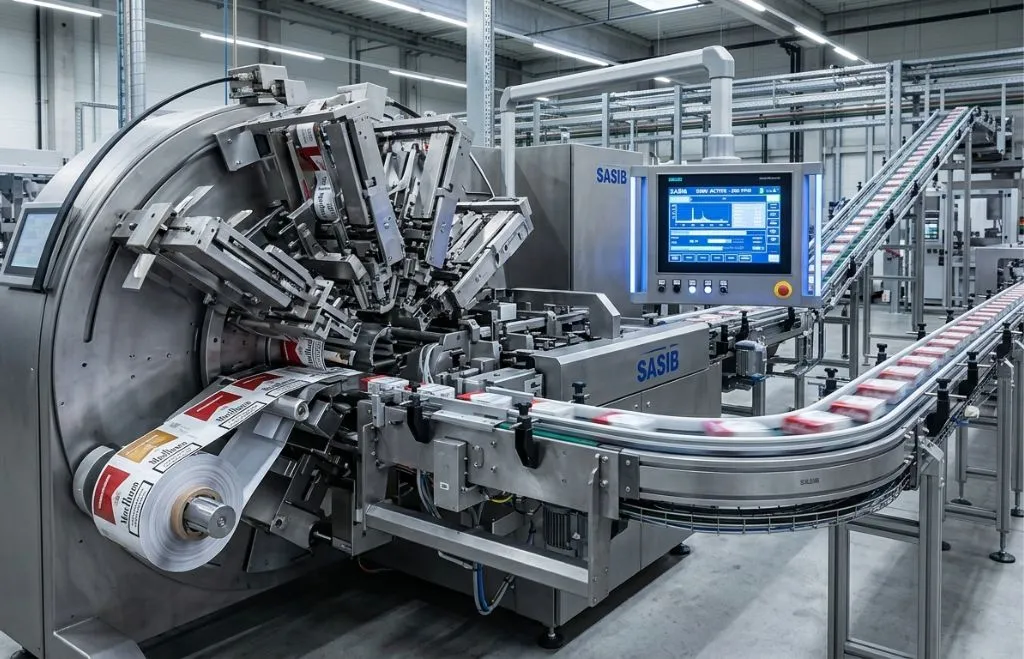
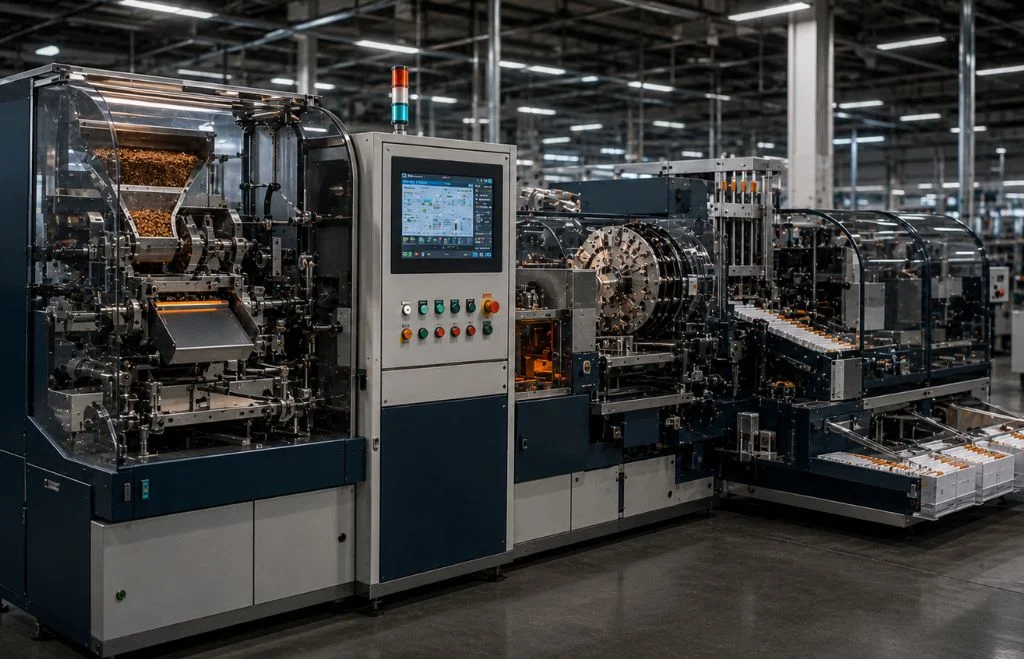
What the Protos 80 ER brings to tobacco production starts with understanding what ER means — Extended Range. The two extensions over the standard Protos 80 are built-in microwave weight control as a standard feature and a Siemens or Beckhoff IPC automation platform replacing the digital control system of the Protos 70. Together these upgrades push production speed to 8,000 cigarettes per minute for standard formats and deliver rod density CV below 4 percent — a measurably tighter weight control performance than any previous Protos platform.
What Does ER Mean in Protos 80 ER?
ER stands for Extended Range — referring to two specific extensions beyond the standard Protos 80 platform:
Extension 1 — Microwave weight control built-in as standard: On the Protos 70 microwave weight control is an optional upgrade. On the Protos 80 ER it is built into every machine as standard. This means every Protos 80 ER produced delivers continuous per-cigarette weight monitoring and automatic feed rate correction from day one — without the additional cost or retrofit complexity of an optional system.
Extension 2 — Siemens or Beckhoff IPC automation platform: The Protos 80 ER replaces the Protos 70’s digital control system with a full industrial PC platform — either Siemens or Beckhoff IPC depending on configuration. The IPC platform enables faster fault detection, more detailed production data logging, remote diagnostics capability, and the recipe-based format change management that factories producing multiple SKUs on the same machine depend on.
These two extensions are what justify the ER designation and the price premium over the Protos 70. For factories where microwave weight control and IPC automation are requirements — either because of quality standards, product complexity, or production volume — the ER designation represents real operational capability, not marketing language.
Protos 80 ER Specifications
| Machine type | High-speed cigarette making machine — Hauni Protos series |
| Production speed — regular | 8,000 cigarettes per minute (cpm) |
| Production speed — slim/super slim | 7,000 cigarettes per minute (cpm) |
| Max rod forming speed | 550 meters per minute |
| Circumference range | 17mm to 28.3mm |
| Rod length range | 65mm to 110mm |
| Machine units | S8000 Rod Maker + M8000 Filter Tip + F80 Auto Tray Filler |
| Total machine weight | 11,400 kg |
| Power — S8000 | 55 kW |
| Power — M8000 | 20 kW |
| Power — F80 | 15 kW |
| Control system | Siemens or Beckhoff IPC |
| Weight control | Microwave weight control — built-in standard |
| Rod density CV | Below 4 percent |
| Quality control | 7-parameter automatic detection and rejection |
| Refurbished price | $300,000 to $500,000 |
| New OEM price | $800,000 to $1.2M+ |
| Status | Current platform — active production and refurbished market |
What the Protos 80 ER Delivers Beyond the Protos 70
8,000 cpm vs 7,000 cpm — 14 percent more output: At 8,000 cpm on three shifts the Protos 80 ER produces approximately 4.2 billion cigarettes per year — versus 3.7 billion for the Protos 70. For factories operating near the Protos 70’s capacity ceiling, this 14 percent speed increase removes the production constraint without requiring an additional making machine.
Microwave weight control — continuous vs periodic: The built-in microwave weight control system monitors the density and weight of every single cigarette rod — not a periodic sample. When weight deviates from the setpoint the system automatically adjusts the tobacco feeder feed rate to correct the deviation before a significant number of out-of-specification cigarettes are produced. Rod density CV below 4 percent is the measurable result — a tighter weight specification than the Protos 70 delivers without the optional upgrade.
Siemens or Beckhoff IPC — faster fault response and better data: The IPC platform enables real-time fault detection with faster response than the Protos 70’s digital controls. Production data is logged continuously — cigarette weight trends, fault frequencies, and downtime events — providing production managers with the data they need to identify root causes of quality problems rather than treating symptoms.
7,000 cpm for slim formats: The Protos 80 ER produces 7,000 cpm for slim and super slim formats — versus 6,000 cpm on the Protos 70. For factories where slim format volume is significant, this speed difference has a direct impact on packing line throughput and daily output targets.
Protos 80 ER vs Protos 70 — Full Comparison
For a complete guide to what the Protos 70 brings to production and how it compares to the Protos 80 ER from the Protos 70’s perspective, see our What the Protos 70 Brings to High Speed Cigarette Production guide.
| Feature | Protos 70 | Protos 80 ER |
| Max speed — regular | 7,000 cpm | 8,000 cpm — 14% more output |
| Max speed — slim | 6,000 cpm | 7,000 cpm |
| Rod forming speed | 490 mpm | 550 mpm |
| Microwave weight control | Optional upgrade | Built-in standard — always included |
| Control system | Digital controls | Siemens or Beckhoff IPC |
| Rod density CV | Standard | Below 4 percent — tighter specification |
| Machine weight | 10,800 kg | 11,400 kg |
| Refurbished price | $200,000 to $380,000 | $300,000 to $500,000 |
| New OEM price | $600,000 to $900,000 | $800,000 to $1.2M+ |
| Best for | 4 to 7 billion cigs per year | Above 7 billion cigs per year |
The practical decision between Protos 80 ER and Protos 70 comes down to three questions. Do you need above 7,000 cpm standard format output? Do you need built-in microwave weight control without retrofit cost? Do you need IPC-level automation for recipe management and remote diagnostics? If the answer to all three is no — the Protos 70 covers the requirement at lower capital cost. If yes to any one — the Protos 80 ER is the correct platform.
The Three Integrated Units of the Protos 80 ER
S8000 Cigarette Rod Maker: The S8000 forms tobacco into a continuous rod at 550 meters per minute — 60 mpm faster than the S7000 on the Protos 70. The built-in microwave weight control sensor is integrated into the S8000’s rod exit section. The Siemens or Beckhoff IPC platform controls the S8000’s feed rate, garniture system, and quality rejection system.
M8000 Filter Tip Attachment: The M8000 on the Protos 80 ER is the same filter tip attachment unit used on the Protos 70 — operating at the increased speed required to match the S8000’s 8,000 cpm output. Ventilation lasers create filter perforations for ventilated cigarette specifications. The M8000 processes exactly as many filter rods as the S8000 produces cigarette rods per minute.
F80 Auto Tray Filler: The F80 Auto Tray Filler on the Protos 80 ER is the same automated tray filling unit as on the Protos 70 — filling output trays without stopping the making line for tray changes. At 8,000 cpm the F80 processes approximately 400 twenty-cigarette trays per hour.
Protos 80 ER Refurbished Market
Refurbished availability: The Protos 80 ER has a strong and growing refurbished market as early installations approach upgrade cycles and factories move to M5 configurations. Quality rebuilt units are available from specialist Körber rebuilders including Makepak International.
Refurbished price range: $300,000 to $500,000 depending on age, configuration, and reconditioning scope — compared to $800,000 to $1.2M or more for a new Protos 80 ER from Körber OEM channels.
What to verify before buying a refurbished Protos 80 ER:
- S8000, M8000 and F80 serial numbers — verify against Körber production records
- IPC platform version — Siemens or Beckhoff — confirm software is current and supported
- Microwave weight control sensor calibration — verify against certified standards
- Garniture tape condition and replacement history — primary wearing component
- M8000 tipping drum surfaces and cam wear
- All seven quality control sensor systems — functional and calibrated
- Full-speed production test at 8,000 cpm on your format before accepting delivery
For a comprehensive pre-purchase framework, see our guide to New vs Refurbished Cigarette Manufacturing Machines.
Protos 80 ER Availability in the USA
The Protos 80 ER is available in the USA through both new and refurbished channels. Körber Technologies maintains direct North American service offices, parts depots, and trained technicians. For the complete list of tobacco machinery suppliers in USA including Körber dealers and specialist Protos rebuilders, see our dedicated suppliers page. For sourcing guidance, see our How to Source Cigarette Machinery Suppliers guide.
Frequently Asked Questions
What does ER mean in Protos 80 ER?
ER stands for Extended Range — referring to two specific extensions over the standard Protos 80 platform: built-in microwave weight control as a standard feature on every machine, and a Siemens or Beckhoff IPC automation platform replacing the digital control system. These two extensions deliver rod density CV below 4 percent and IPC-level automation capabilities not available on the Protos 70.
What does the Protos 80 ER bring that the Protos 70 does not?
The Protos 80 ER brings four specific additions over the Protos 70: 8,000 cpm vs 7,000 cpm standard format speed (14 percent more output), built-in microwave weight control as standard rather than optional, Siemens or Beckhoff IPC automation platform, and rod density CV below 4 percent — a tighter weight specification than the Protos 70 delivers without the optional microwave upgrade.
What is rod density CV below 4 percent on the Protos 80 ER?
Rod density CV (coefficient of variation) below 4 percent means that cigarette rod weight varies by less than 4 percent around the target weight specification in continuous production. This is the measurable outcome of the built-in microwave weight control system — it continuously monitors every rod and adjusts the feed rate to keep weight within this tight variation band. The Protos 70 without microwave weight control typically produces higher CV values.
What is the production speed of the Protos 80 ER?
The Protos 80 ER produces 8,000 cigarettes per minute for standard regular diameter formats and 7,000 cpm for slim and super slim formats. The maximum rod forming speed of the S8000 unit is 550 meters per minute. At 8,000 cpm on three shifts the Protos 80 ER produces approximately 4.2 billion cigarettes per year.
How much does a refurbished Protos 80 ER cost?
Refurbished Protos 80 ER machines from specialist rebuilders typically range from $300,000 to $500,000 depending on age, configuration, and reconditioning scope. New Protos 80 ER configurations from Körber OEM channels typically range from $800,000 to $1.2 million or more. The refurbished market is growing as early Protos 80 ER installations approach upgrade cycles.
Conclusion
What the Protos 80 ER brings to tobacco production is a clearly defined set of additions over the Protos 70 — 14 percent more output, built-in microwave weight control delivering rod density CV below 4 percent, and IPC-level automation for faster fault response and better production data. For factories where these additions are justified by production volume, quality requirements, or product complexity, the Protos 80 ER is the correct platform. For the full Körber Protos range overview including Protos 70 and M5, see our Körber Protos Cigarette Maker guide. For cigarette manufacturing machine cost comparisons, see our Cigarette Manufacturing Machine Cost guide.