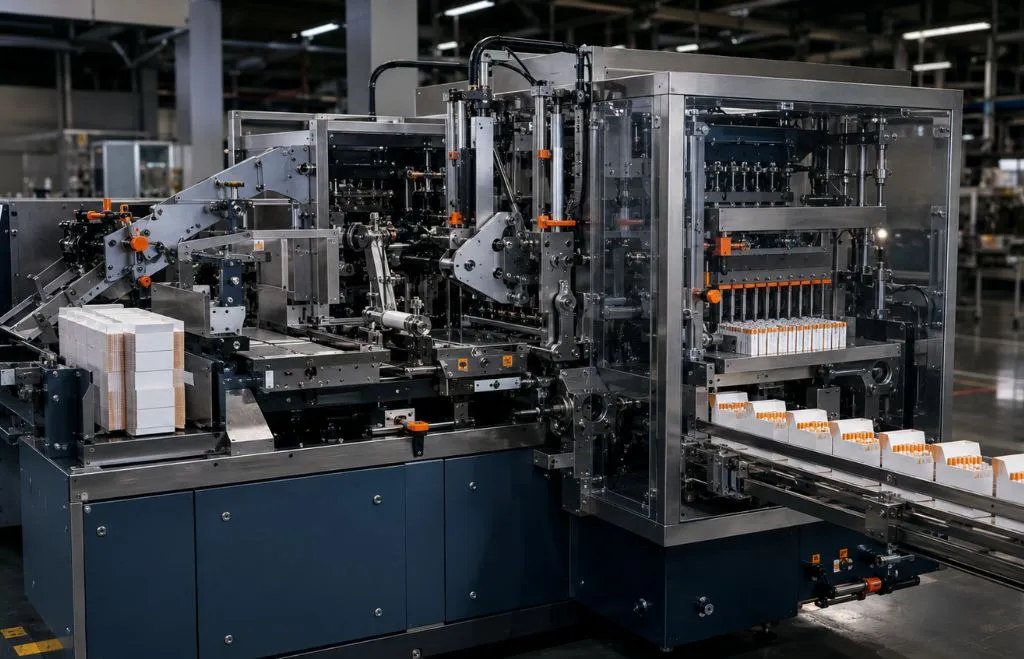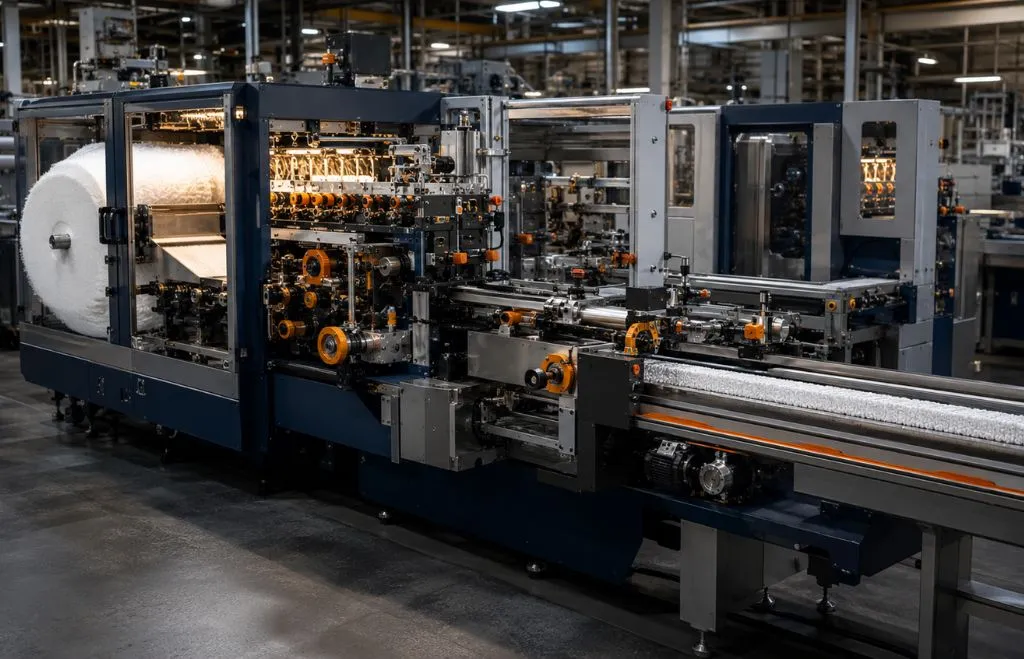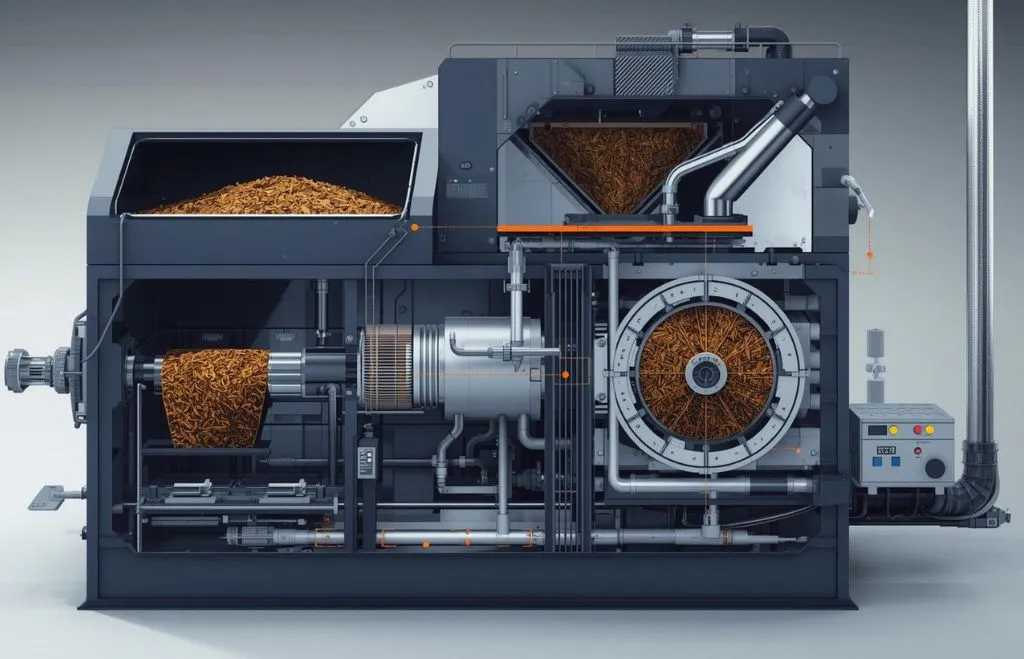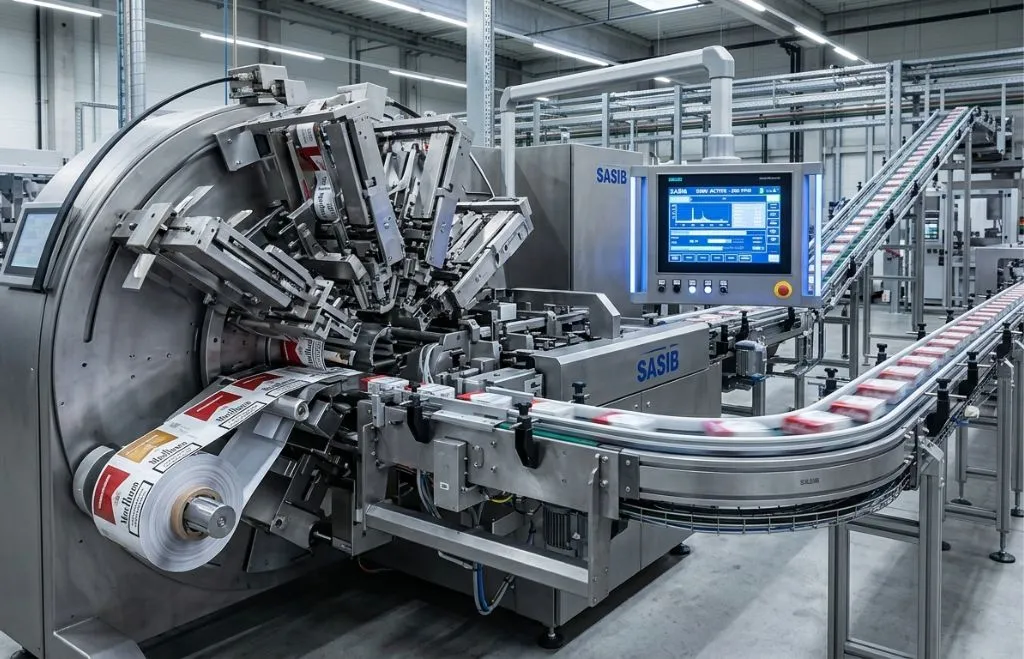

KDF filter rod quality is determined at four points in the filter making process — the garniture section, the plasticizer application system, the cutting blades, and the circumference control sensor. When any one of these drifts or wears, the quality problem it creates shows up downstream — as draw resistance variation at the cigarette maker, filter attachment rejects at the tipper, or circumference failures at the quality control station. This guide identifies the most common KDF filter rod quality problems, traces each one to its mechanical root cause at the KDF, and explains the correct fix.
Why KDF Filter Rod Quality Affects the Entire Cigarette Making Line
The KDF filter making machine is the upstream supplier to the cigarette making machine. Every filter rod the KDF produces is consumed by the tipper — the Hauni Max S on the Mark 9 or the M8000 on the Protos platforms. If KDF filter rod quality is poor, the problems it creates appear at the tipper and quality control station rather than at the KDF itself — making them appear to be tipper problems when the actual root cause is upstream. Understanding where each quality defect originates is the first step to fixing it efficiently. For a complete guide to how the KDF connects to the cigarette making line, see our guide to the Hauni KDF Cigarette Filter Making Machine.
KDF Filter Rod Quality Problems — Complete Reference Table
The table below covers the seven most common KDF filter rod quality problems, their root cause at the KDF, where they show up in the production line, and the correct fix.
| Quality Problem | Root Cause at KDF | Where It Shows Up | Fix |
| Soft filter rod — low firmness | Insufficient plasticizer application — under-application | Draw resistance too low — tipper alignment rejects | Recalibrate plasticizer nozzle — verify flow rate |
| Hard filter rod — excessive firmness | Plasticizer over-application or wrong tow density | Draw resistance too high — consumer complaint | Reduce plasticizer setpoint — verify tow specification |
| Filter rod diameter variation | Garniture tape worn or incorrect tension | Circumference sensor rejects — tipper misalignment | Replace garniture tape — check tension against spec |
| Ragged cut ends | Worn cutting blades | Debris at tipper — filter attachment rejects | Replace cutting blades — verify cutting pressure |
| Filter rod weight variation | Tow feed rate inconsistency or tow opener fault | Weight control rejects at cigarette maker | Check tow opener condition — verify feed rate |
| Paper seam open or weak | Hot melt adhesive system — low temperature or blocked nozzle | Rod break-outs — tobacco contamination | Check nozzle condition — verify adhesive temperature |
| Tow density inconsistency | Tow bale variation or tow opener calibration drift | Variable draw resistance batch to batch | Verify tow opener calibration — check bale specification |
The Four Components That Determine KDF Filter Rod Quality
1 — Garniture Tape
The garniture tape is the primary rod-forming component on the KDF — it wraps around the compressed acetate tow and defines the rod’s circumference and firmness. Garniture tape condition is the most common root cause of KDF filter rod quality problems.
Worn garniture tape: A worn tape no longer applies consistent compression to the tow across its full length. The result is circumference variation — some sections of the rod are larger or smaller than the specification. Circumference variation causes filter attachment rejects at the tipper — the tipping drum pockets are sized for a specific rod diameter, and rods outside the tolerance cause misalignment during filter attachment.
Incorrect garniture tape tension: Too much tension over-compresses the tow — producing a rod that is too firm and has excessive draw resistance. Too little tension under-compresses the tow — producing a soft rod with insufficient structural integrity that collapses during handling at the tipper.
Correct action: Replace garniture tape at the manufacturer’s specified interval regardless of visual appearance. For the KDF 2, the standard garniture tape specification is 2,715 x 18.5mm. Check tape tension against the manufacturer’s specified torque value at each scheduled maintenance interval.
2 — Plasticizer Application System
Triacetin plasticizer bonds the acetate fibers together when compressed into rod form. The application rate is the most sensitive quality variable on the KDF — small deviations from the correct rate produce significant changes in rod firmness and draw resistance.
Under-application: Insufficient plasticizer produces a soft filter rod with poor structural integrity. The rod may feel acceptable at the KDF discharge but collapses under the handling pressure of the tipper tipping drum — causing filter attachment failures and misaligned filters in the finished cigarette. Under-application is the most common cause of soft filter rod problems.
Over-application: Excess plasticizer produces a rigid filter rod with excessive draw resistance. Filters that are too hard produce cigarettes with draw resistance above specification — a consumer-detectable quality failure. Over-application also contaminates downstream equipment — excess triacetin deposits accumulate on tipping drums and conveyor surfaces.
Nozzle condition: Partially blocked nozzles produce uneven plasticizer distribution across the tow width — some sections of the tow receive correct application while others receive too little. The result is inconsistent rod firmness within individual rods and draw resistance variation that appears as batch-to-batch inconsistency.
Correct action: Calibrate plasticizer application rate at each scheduled maintenance interval using a direct measurement — collect plasticizer output over a timed period and compare against the setpoint. Clean nozzles at every maintenance interval. Replace nozzles at the manufacturer’s specified wear limit.
3 — Cutting Blades
The cutting blades on the KDF cut the continuous filter rod into individual filter lengths. Blade condition directly affects cut end quality — and cut end quality affects filter attachment performance at the tipper.
Worn cutting blades: Dull blades tear rather than cut the filter rod. The torn end is ragged and uneven rather than clean and flat. Ragged cut ends cause two downstream problems: debris contamination at the tipper — torn acetate fragments — and filter attachment misalignment because the filter rod end cannot seat cleanly in the tipper’s tipping paper.
Incorrect cutting pressure: Too much cutting pressure compresses the rod during cutting — deforming the cut end and producing a slightly oval cross-section at the tip. This oval deformation causes the filter to misalign in the cigarette rod during tipping.
Correct action: Replace cutting blades at the manufacturer’s specified interval. Verify cutting pressure against specification after each blade replacement — do not assume that new blades at the correct pressure require no verification.
4 — Circumference Control Sensor
The circumference control sensor — laser-based on the KDF 1, integrated with the tow opener on the KDF 2 — monitors filter rod diameter continuously and triggers adjustments when diameter deviates from the setpoint.
Drifted sensor calibration: A drifted circumference sensor produces incorrect feedback — causing the control system to allow out-of-specification diameter rods to pass, or triggering incorrect adjustments that produce unnecessary diameter variation. A sensor that appears to be working can still be drifted — producing systematic diameter errors that only show up as elevated tipper rejection rates.
Sensor contamination: Triacetin vapour from the plasticizer system and fine acetate fibres from the tow opening process deposit on optical sensor surfaces over time — reducing measurement accuracy. Regular sensor cleaning is essential for reliable circumference control.
Correct action: Calibrate the circumference control sensor at each scheduled maintenance interval using certified calibration standards. Clean sensor surfaces at each weekly maintenance check. Do not assume a sensor reading values is correctly calibrated — verify against known standards.
How KDF Filter Rod Quality Affects Cigarette Making Machine Performance
The quality of filter rods produced by the KDF directly determines the rejection rate and throughput of the cigarette making machine downstream. Poor KDF filter rod quality appears as tipper problems — high filter attachment reject rates, filter misalignment, draw resistance variation — but the root cause is at the KDF. For production engineers investigating high rejection rates at the tipper, checking KDF filter rod quality should be the first diagnostic step — before investigating tipper mechanical condition. For a complete guide to how the cigarette making machine processes filter rods, see our Cigarette Production Line Process guide.
KDF Filter Rod Quality Maintenance Schedule
- Every shift: Visual check of filter rod firmness and cut end quality — sample 10 rods per shift and check for soft spots, ragged ends, and diameter consistency
- Every week: Plasticizer nozzle inspection and cleaning, circumference sensor cleaning, cutting blade inspection
- Every month: Plasticizer application rate calibration by direct measurement, circumference sensor calibration against certified standards, garniture tape tension check
- Every quarter: Full garniture tape replacement if at wear limit, cutting blade replacement, tow opener condition inspection, full PLC setpoint verification against product specification
Frequently Asked Questions
What determines KDF filter rod quality?
KDF filter rod quality is determined at four points in the filter making process: the garniture tape condition and tension, the plasticizer application rate and nozzle condition, the cutting blade sharpness and pressure, and the circumference control sensor calibration. When any of these drifts or wears, it creates a specific quality problem that shows up downstream at the tipper or cigarette maker quality control station.
What causes soft filter rods on the KDF?
Soft filter rods are most commonly caused by insufficient plasticizer application — under-application means the acetate fibers are not sufficiently bonded and the rod lacks structural integrity. Worn garniture tape that applies insufficient compression can also produce soft rods. Soft rods collapse under the handling pressure of the tipper tipping drum — causing filter attachment failures and misaligned filters in the finished cigarette.
How does garniture tape condition affect KDF filter rod quality?
Garniture tape condition directly determines rod circumference consistency and firmness. A worn tape applies inconsistent compression across its length — producing circumference variation that causes tipper misalignment rejects. Incorrect tape tension produces either over-compressed rods with excessive draw resistance or under-compressed soft rods. Garniture tapes should be replaced at the manufacturer’s specified interval regardless of visual appearance.
Why do KDF quality problems appear at the tipper rather than at the KDF?
KDF filter rod quality problems often do not cause visible defects at the KDF discharge — a soft rod or slightly oversized rod may look acceptable on the conveyor. The problems appear downstream because the tipper applies mechanical handling stress and the quality control system checks finished cigarette parameters. This is why KDF filter rod quality should be the first diagnostic area when investigating high tipper rejection rates — not the tipper itself.
How often should KDF cutting blades be replaced?
KDF cutting blades should be replaced at the manufacturer’s specified interval and inspected weekly. Worn blades produce ragged filter rod cut ends that cause debris contamination at the tipper and filter attachment misalignment. The blade replacement interval depends on throughput volume and rod specification — verify with the KDF manufacturer’s maintenance schedule for your specific configuration.
Conclusion
KDF filter rod quality is the upstream determinant of cigarette making line rejection rates — and it is often overlooked because quality failures appear at the tipper rather than at the KDF. Systematic attention to garniture tape condition, plasticizer calibration, cutting blade maintenance, and circumference sensor calibration — following the maintenance schedule above — is the most direct route to improving tipper performance and reducing cigarette making line rejection rates. For full KDF specifications and a complete buying guide for new and refurbished KDF machines, see our Hauni KDF Cigarette Filter Making Machine guide. For tobacco machinery suppliers in USA who supply KDF parts and service, see our dedicated suppliers page.