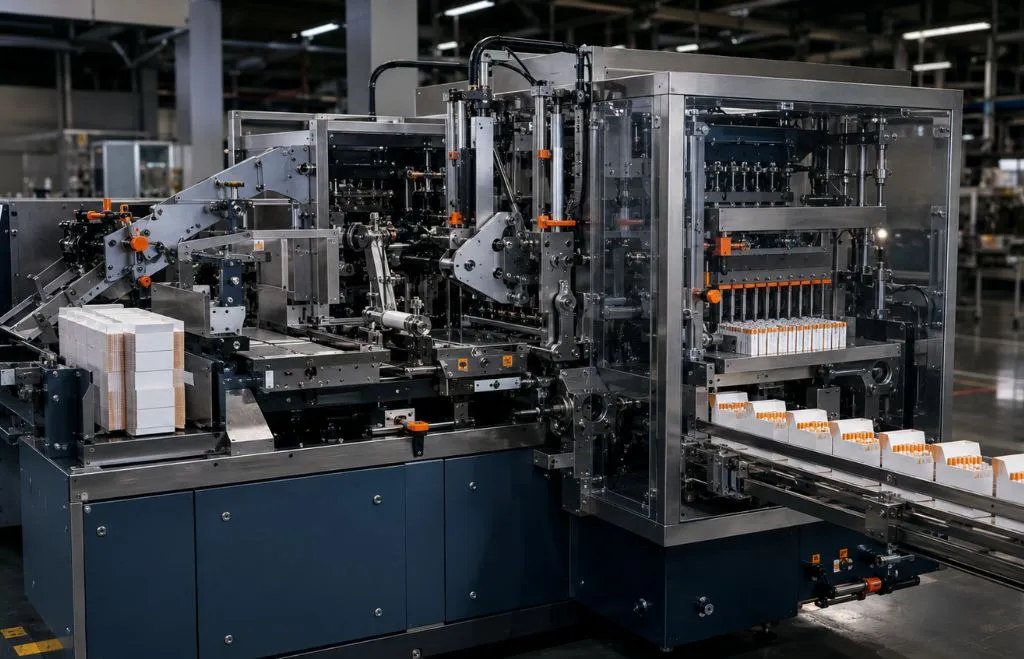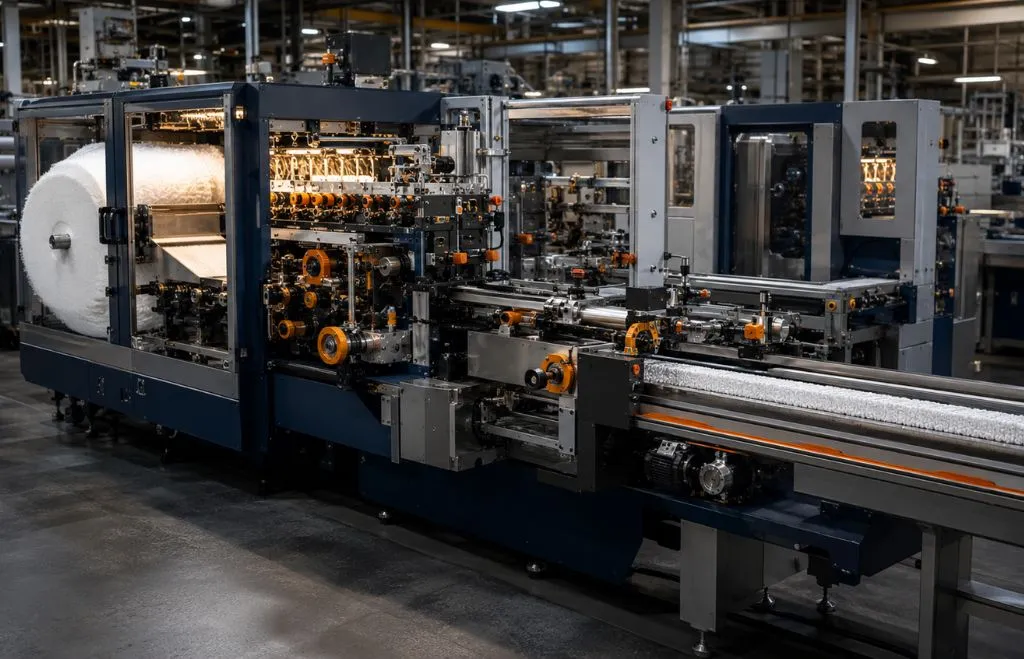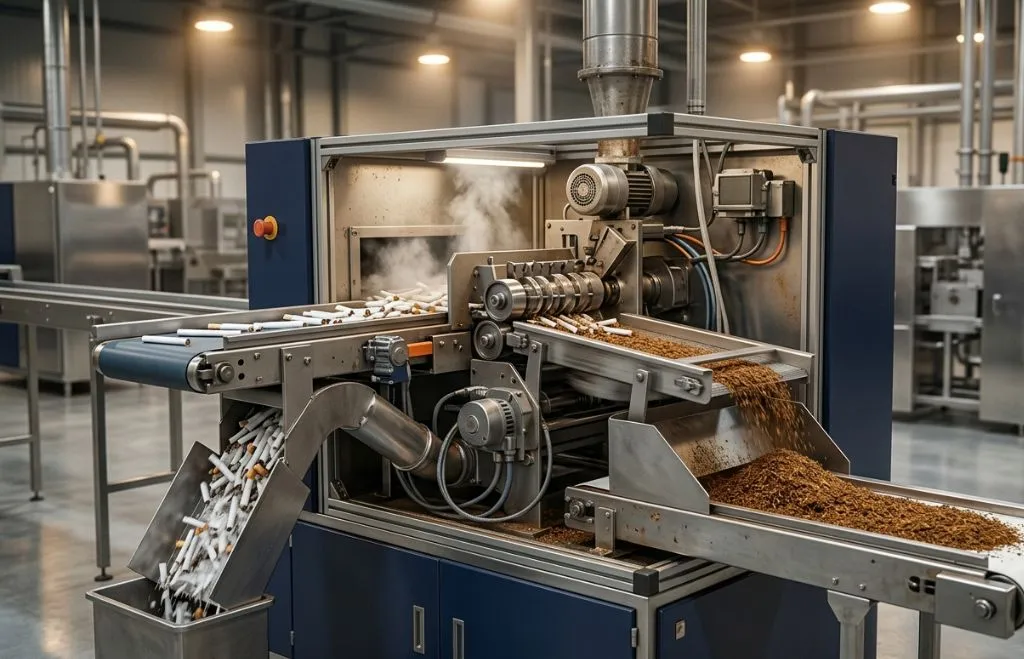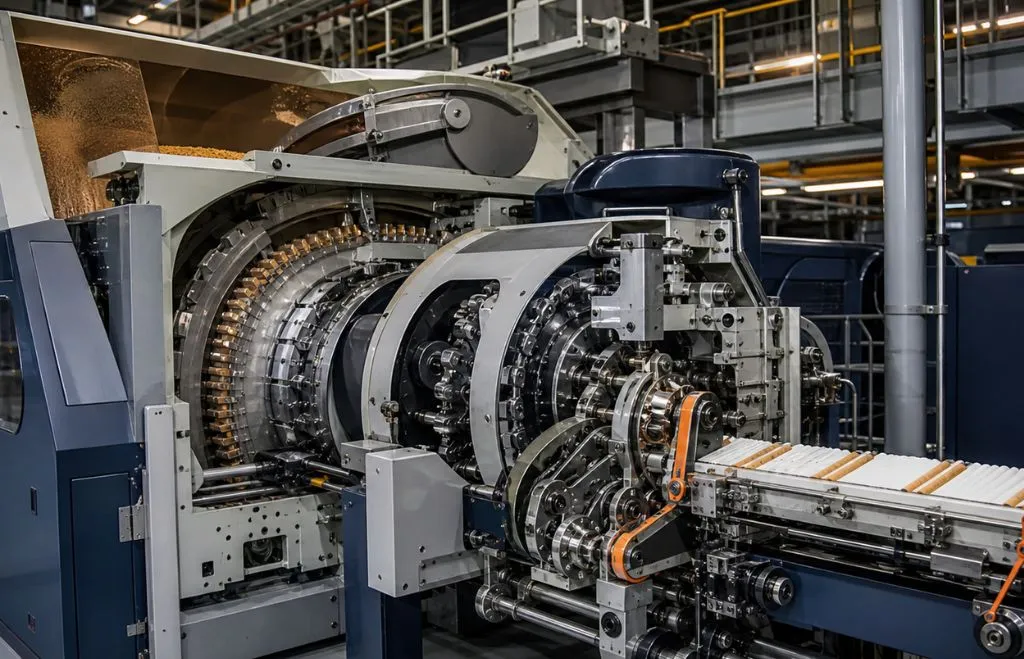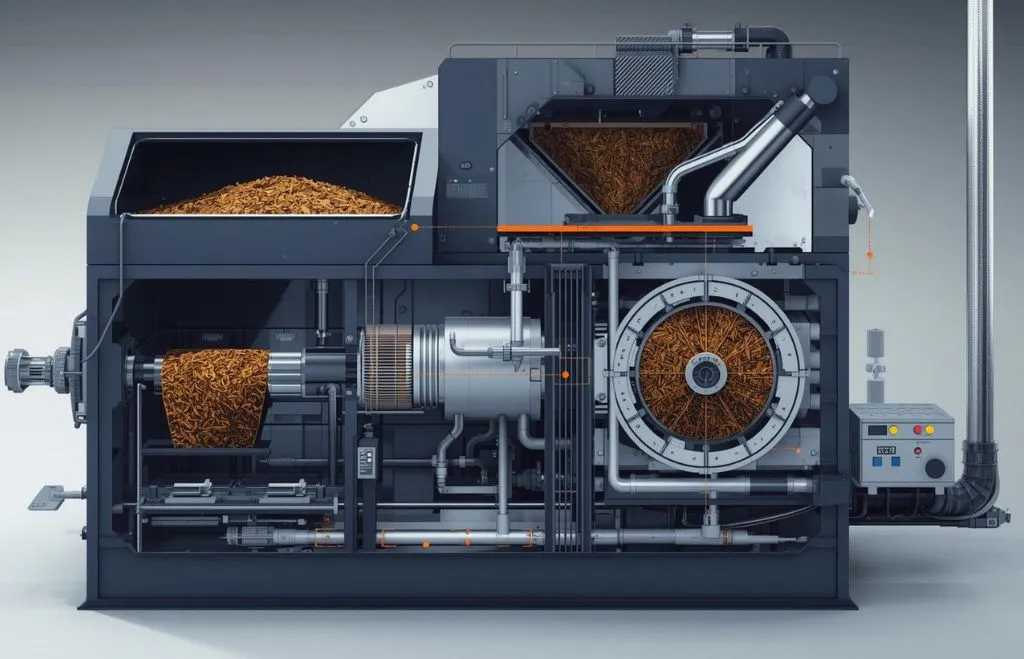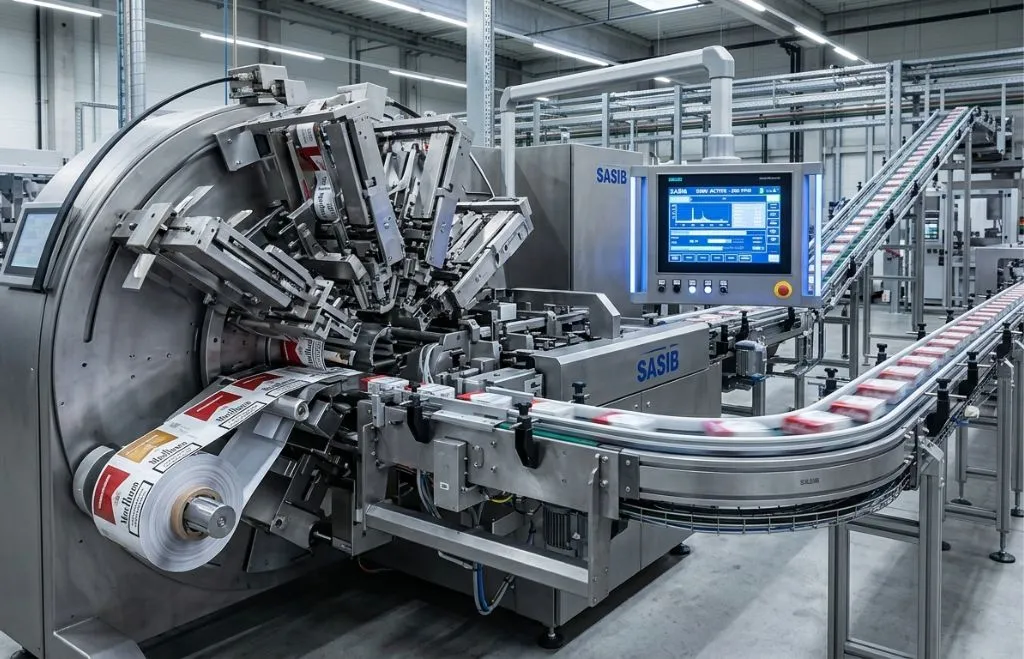
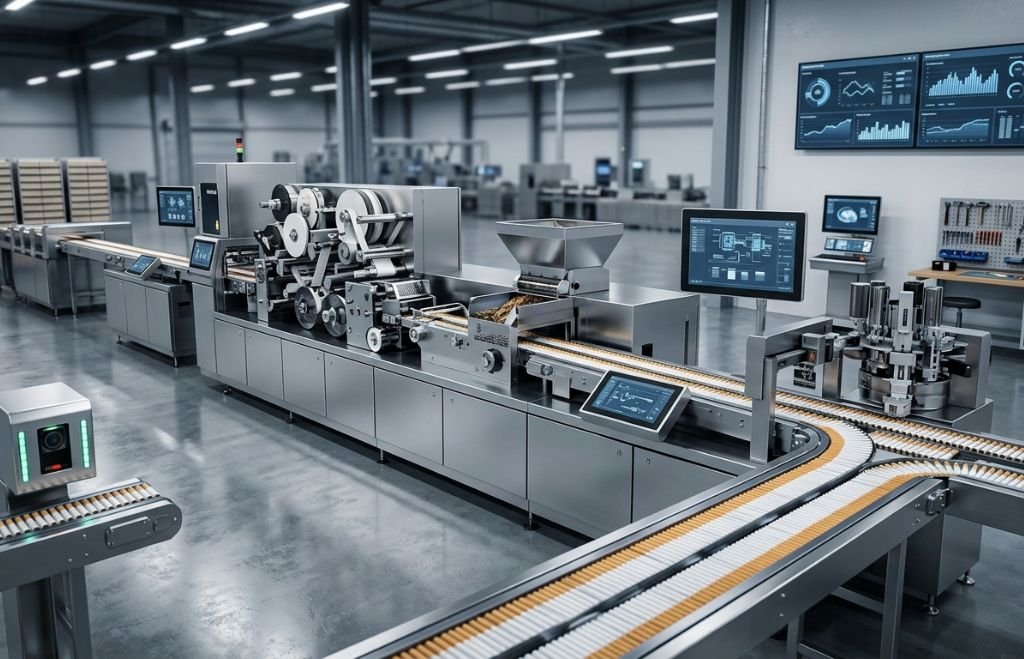
Understanding how the Körber Protos cigarette maker works starts with its three integrated units — the S7000 or S8000 rod maker, the M8000 filter tip assembler, and the F80 Auto Tray Filler — which together produce 7,000 to 12,000 filter cigarettes per minute depending on which Protos model is configured.
Körber Protos Cigarette Maker: Model Comparison Table
Körber Technologies was established in Hamburg, Germany in 1946 under the Hauni Maschinenbau name. Over the following eight decades, the company grew into the dominant global force in tobacco machinery — holding an estimated 70 to 80 percent of global high-speed cigarette maker installations. The company now operates as Körber Technologies, part of the broader Körber AG industrial group, holding more than 3,000 active patents and employing approximately 3,500 specialists dedicated to tobacco machinery and related technologies.
Körber’s product philosophy is built around a complete production ecosystem: cigarette makers, filter makers, primary processing equipment, buffer and reservoir systems, quality measurement instrumentation, and digitalization platforms — all designed to operate as a unified, optimized production line. Körber also leads in Tobacco Heating Product (THP) and HNB stick production machinery, having begun development on reduced-risk product platforms as early as the 1980s.
Protos 70: The Proven High-Volume Workhorse
The Protos 70 is among the most widely deployed cigarette makers in the world. It represents the accessible entry point into the Körber high-speed ecosystem — capable of serious production volumes, backed by an enormous aftermarket parts network, and available on the refurbished market at a fraction of new equipment cost.
Key Specifications — Protos 70
| Max speed (regular) | 7,000 cpm |
| Max speed (slim / super slim) | 6,000 cpm |
| Cigarette circumference range | 17mm – 28.3mm |
| Cigarette diameter range | 5.4mm – 8mm |
| Filter + tobacco rod length | 65mm – 110mm |
| Machine unit | S7000 Rod Maker + M8000 Filter Attachment + F80 Tray Filler |
| Power (S7000) | ~50 kW |
| Power (M8000) | ~20 kW |
| Power (F80) | ~15 kW |
| Total weight | ~10,800 kg |
| Control system | PLC (Siemens or equivalent) |
The Protos 70 Cigarette Machine is engineered for modular maintenance — components can be accessed and replaced with minimal production interruption, and its integrated digital controls and sensors reduce the need for manual intervention. With wide operational spread across North America, Europe, Asia, and South America, it has one of the strongest parts ecosystems of any cigarette maker platform globally. For refurbished Protos 70 options, see our guide to New vs Refurbished Cigarette Manufacturing Machines.
Best suited for: Medium to large factories targeting 7,000 cpm output; factories seeking entry into the Körber ecosystem at manageable capital cost; buyers of refurbished equipment who want maximum parts availability.
Protos 80 ER: Extended Range, Maximum Precision
The Protos 80 ER (Extended Range) is the step-up from the Protos 70 — designed for manufacturers who need higher output, more sophisticated quality control integration, and enhanced automation without committing to the capital investment of the M-generation platforms.
Key Specifications — Protos 80 ER
| Max speed (regular) | 8,000 cpm |
| Max speed (slim / super slim) | 7,000 cpm |
| Cigarette circumference range | 17mm – 28.3mm |
| Filter + tobacco rod length | 65mm – 110mm |
| Machine unit | S7000 Rod Maker + M8000 Filter Attachment + F80 Auto Tray Filler |
| Power (S7000) | ~50 kW |
| Power (M8000) | ~20 kW |
| Power (F80) | ~15 kW |
| Control system | Siemens IPC or Beckhoff IPC |
| Weight control | Built-in microwave weight control system |
The “Extended Range” designation reflects two meaningful upgrades over the Protos 70. First, the 80 ER integrates a built-in microwave weight control system that continuously monitors cigarette weight across every unit produced — minimizing product variation and ensuring compliance with quality standards without requiring manual sampling intervals. Second, the control platform is standardized on either Siemens IPC or Beckhoff IPC, providing industrial-grade automation and real-time monitoring responsiveness.
The Protos 80 ER is one of the most commercially successful cigarette maker configurations in the world. Hundreds of units are installed across global tobacco manufacturers, and this installed base creates an aftermarket parts ecosystem second only to the Protos 70 in depth and accessibility.
Best suited for: High-volume factories requiring consistent quality control automation, manufacturers producing across multiple formats including slim and super slim, and buyers scaling above 7,000 cpm who are not yet ready for M-generation investment.
Protos M5 / M5e: The World’s Most Advanced Commercial Cigarette Maker
The Protos M5 cigarette machine and its energy-optimized variant the M5e represent the pinnacle of commercial cigarette making technology. This is Körber’s current flagship — a machine that does not simply produce cigarettes faster than its predecessors, but fundamentally reimagines how a cigarette maker operates through sensor density, automation depth, and digital integration.
Key Specifications — Protos M5 / M5e
| Max speed — king size | 12,000 cpm (M5) / 14,000 cpm (M5 14k) |
| Max speed — slim / super slim | 10,000–12,000 cpm |
| Formats supported | King size, slim, super slim, light, high expanded tobacco (ET) |
| Cleaning cycle | Max. 20 minutes per 8-hour shift |
| Suction tape life | ~2 production shifts |
| Garniture tape life | Up to 3 production shifts |
| Annual tobacco savings | Up to 30 tonnes (3-shift operation) |
| Sensor count (M5e) | ~370 quality and process sensors |
| Waste rate | Less than 1% |
| Control system | Full Industry 4.0 data interfaces |
| Energy | Significantly lower than comparable class machines |
AI Quality Control and the 370-Sensor Architecture
The defining technical achievement of the Protos M5e is its sensor density. Inside the machine, more than 370 built-in quality and process sensors continuously measure and control speeds, pressures, and temperatures across every critical process point. The sensors address both product quality parameters (weight, diameter, visual characteristics) and process parameters: draw roller pressure, fan vibration, cover closure status, format heater temperature. These data points are captured continuously and used to optimize machine settings in real time.
This architecture has delivered measurable efficiency gains: Körber reports that machine efficiency increased from approximately 85 percent in earlier generations to 95 percent with the M5e, with the sensor technology directly responsible for reducing overall waste to less than one percent.
Digitalization and Industry 4.0 Capability
The Protos M5e carries all interfaces and electronic components required to collect large amounts of real-time data — enabling predictive maintenance, remote diagnostics, digital twin modeling, and factory management system integration. Step-by-step operator guidance handles much of what was previously managed manually. Automatic cleaning systems including the MAX jet-gluing unit and FILTROMAT-E clean themselves, reducing required operator cleaning time to approximately 20 minutes per 8-hour shift.
Tobacco Recovery and Sustainability
The Protos M5 incorporates the Short Tobacco Recovery (STR) system, filtering reusable tobacco shorts from exhaust air and returning them to the centre of the rod — maintaining total blend consistency without degradation. Combined with the DWR+ system, which can recycle up to 96 percent of tobacco waste back into production, the M5 documents annual tobacco savings of up to 30 tonnes on a 3-shift operation.
Best suited for: Large-scale factories targeting 10,000+ cpm, enterprise manufacturers requiring Industry 4.0 integration, factories producing slim formats at high volume, and manufacturers planning HNB/THP product diversification.
Protos Model Comparison Table
| Feature | Protos 70 | Protos 80 ER | Protos M5 / M5e |
| Max speed (regular) | 7,000 cpm | 8,000 cpm | 12,000–14,000 cpm |
| Max speed (slim) | 6,000 cpm | 7,000 cpm | 10,000–12,000 cpm |
| Circumference range | 17–28.3mm | 17–28.3mm | 17–28.3mm |
| Rod length range | 65–110mm | 65–110mm | 65–110mm |
| Weight control | Standard | Microwave (built-in) | Auto/sensor-controlled |
| Sensor architecture | Standard PLC | Siemens/Beckhoff IPC | 370+ sensors (M5e) |
| Industry 4.0 ready | ⚠️ Limited | ⚠️ Partial | ✅ Full |
| Cleaning time/shift | Standard | Standard | ~20 minutes |
| Waste rate | Standard | Low | <1% |
| Tobacco recovery | Standard | Standard | STR + DWR+ |
| Refurbished availability | ✅ Extensive | ✅ Strong | ⚠️ Limited |
| Capital cost | Lower | Mid | Premium |
| Best for | Mid-large factories | High-volume multi-format | Enterprise / flagship lines |
Maintenance Requirements
For the Protos 70 and 80 ER, maintenance follows a combination of operator-led daily cleaning and scheduled preventive maintenance by qualified technicians. Modular component design allows many wearing parts to be replaced without extended line downtime.
For the Protos M5, cleaning time is approximately 20 minutes per 8-hour shift. Suction tapes are rated for approximately two production shifts; garniture tapes can last up to three shifts. Maintenance can be performed on demand, at defined intervals, or predictively based on sensor data. Körber’s Training Centre in Hamburg offers formal mechanical and electrical training courses, including a 35-day mechanical training program for the M5 14k platform. Maintenance staff should have a background in mechanical engineering and knowledge of the cigarette production process.
Global Service Network and USA Availability
For Körber cigarette machine USA buyers, Körber Technologies maintains one of the largest dedicated service networks of any tobacco machinery manufacturer, with a North American service infrastructure specifically built to support USA-based factory operations. Both OEM spare parts and a mature third-party aftermarket have developed around the Protos platform — meaning critical components for the Protos 70 and 80 ER can often be sourced from multiple vendors and delivered domestically. New Protos machines are available through Körber’s authorized North American channels. For guidance on identifying and vetting Körber dealers and specialist suppliers in the USA, see our How to Source Cigarette Machinery Suppliers in the USA.
Who the Protos Range Is Best Suited For
Protos 70: Factories producing in the 5,000–7,000 cpm range that want proven Körber engineering and the deepest parts and service network in the industry. Also the most accessible platform for refurbished equipment buyers.
Protos 80 ER: High-volume factories producing across regular, slim, and super slim formats who need built-in microwave weight control and the more sophisticated Siemens/Beckhoff IPC automation platform.
Protos M5 / M5e: Large-scale enterprise manufacturers for whom maximum output, Industry 4.0 integration, and lowest possible waste rate are essential. Also the right platform for factories with HNB/THP product roadmap.
For buyers deciding between Körber and mid-speed alternatives, our comparison guide covers the full decision framework: High-Speed vs Mid-Speed Cigarette Manufacturing Machines.
Frequently Asked Questions
What is the Körber Protos cigarette maker?
The Körber Protos is a family of industrial cigarette making machines manufactured by Körber Technologies (HAUNI brand) in Hamburg, Germany. The Protos series is the global benchmark for high-speed cigarette production, covering output from 6,000 cpm on the Protos 70 slim format up to 14,000 cpm on the Protos M5 14k king size configuration.
What is the speed of the Hauni Protos 80 ER?
The Hauni Protos 80 ER produces up to 8,000 cigarettes per minute for regular diameter formats and up to 7,000 cigarettes per minute for slim and super slim formats. It accommodates cigarette circumferences from 17mm to 28.3mm and filter plus tobacco rod lengths from 65mm to 110mm.
What makes the Protos M5e different from earlier Protos models?
The Protos M5e incorporates approximately 370 quality and process sensors, enabling real-time monitoring and automated control of all critical process parameters. This reduces waste to below one percent and improves machine efficiency to approximately 95 percent. The M5e is fully Industry 4.0 ready with data interfaces for predictive maintenance, remote diagnostics, and factory management system integration.
Is the Körber Protos available in the USA?
Yes. New Protos machines are available through Körber’s authorized North American sales and service channels. Refurbished Protos 70 and Protos 80 ER machines are regularly available from specialist tobacco machinery dealers in the USA. Körber maintains a dedicated North American service infrastructure including spare parts inventory and technical support engineers.
What is the difference between the Protos 70 and Protos 80 ER?
The Protos 70 produces up to 7,000 cpm for regular formats; the Protos 80 ER produces up to 8,000 cpm. The 80 ER adds a built-in microwave weight control system for continuous quality monitoring and upgrades the control platform to Siemens IPC or Beckhoff IPC. Both machines share the same circumference range, rod length range, and basic machine unit configuration.
What maintenance is required on a Protos cigarette maker?
On the Protos M5, Körber has reduced operator cleaning time to approximately 20 minutes per 8-hour shift, with suction tapes rated for roughly two shifts and garniture tapes lasting up to three shifts. Maintenance can be scheduled on demand, at fixed intervals, or predictively based on sensor data. Körber offers formal maintenance training at its Hamburg Training Centre.
Can the Protos M5 produce HNB or tobacco heating product sticks?
Körber Technologies leads in Tobacco Heating Product (THP) and HNB machinery. The M-generation Protos platform, combined with Körber’s dedicated THP production equipment, supports conventional cigarettes and tobacco heating sticks within the same production ecosystem. Körber began developing reduced-risk product machinery in the 1980s and offers a complete THP production chain.