
Tobacco growers and manufacturers work hard throughout the farming and processing stages to protect leaf quality. Careful Tobacco Storage plays a major role in this effort. Farmers nurture plants in the field, workers handle harvesting, and processors guide curing and preparation. Every stage influences flavor, aroma, texture, and overall value. However, storage practices often determine whether those qualities remain intact or fade over time. Strong storage management helps producers preserve leaf character and maintain market standards.
The Importance of Proper Tobacco Handling
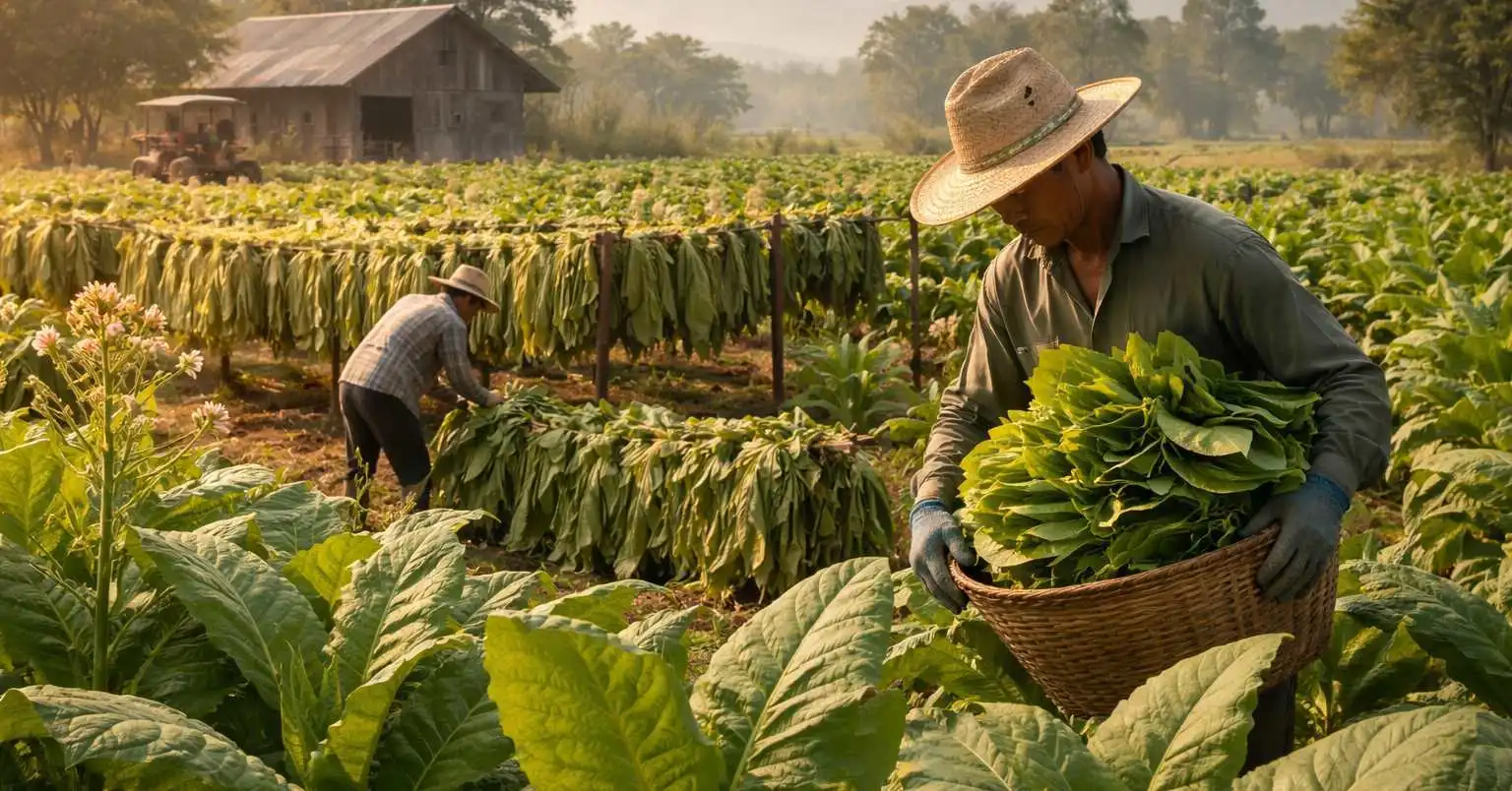
Producers treat tobacco leaves with care from the moment of harvest. After cutting and collecting the leaves, workers move them quickly toward curing facilities. During this period, the leaves still contain moisture and natural compounds that shape taste and aroma. Any careless handling can damage structure and reduce quality.
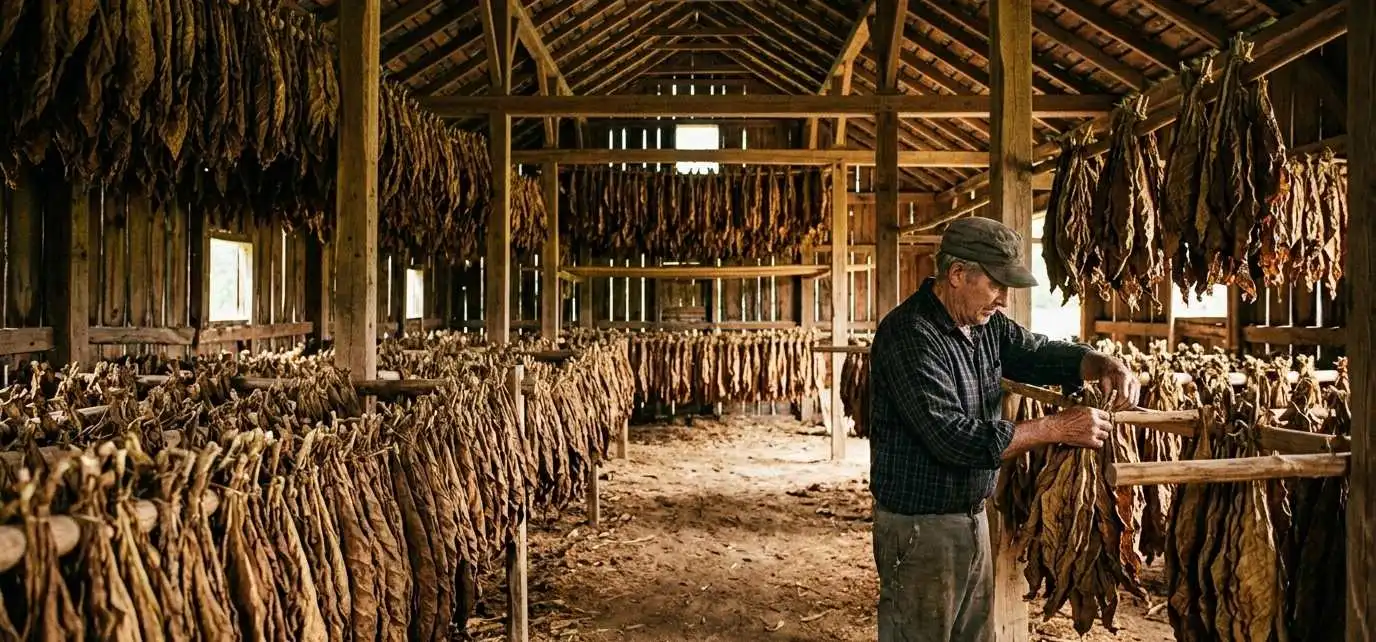
Good Tobacco Storage begins with proper preparation. Workers sort leaves according to size, color, and condition. Clean and organized handling areas support better results. Processors also avoid stacking leaves in ways that restrict airflow. Balanced airflow supports freshness and prevents unwanted mold or deterioration. Farmers and processors rely on discipline and attention during this early stage.
Environmental Control During Storage
Temperature, humidity, and airflow shape the success of storage facilities. Tobacco leaves react strongly to environmental changes. High humidity can encourage mold growth, while very dry air can cause brittle leaves. Storage managers therefore maintain balanced conditions inside warehouses.
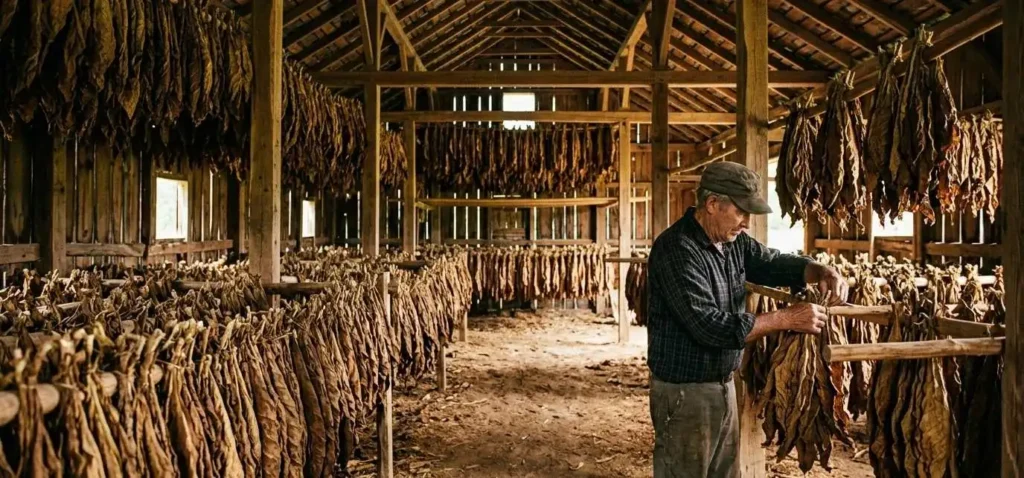
Proper Tobacco Storage depends on steady environmental control. Managers monitor storage rooms regularly and adjust ventilation when needed. Clean floors, organized stacking, and consistent inspection routines also protect the leaf. Workers often place tobacco in wooden cases, bundles, or bales that allow moderate airflow while protecting structure.
These efforts support stability throughout the storage period. With proper conditions, tobacco leaves retain flexibility and maintain the oils that support flavor and aroma.
The Role of Tobacco Curing Before Storage
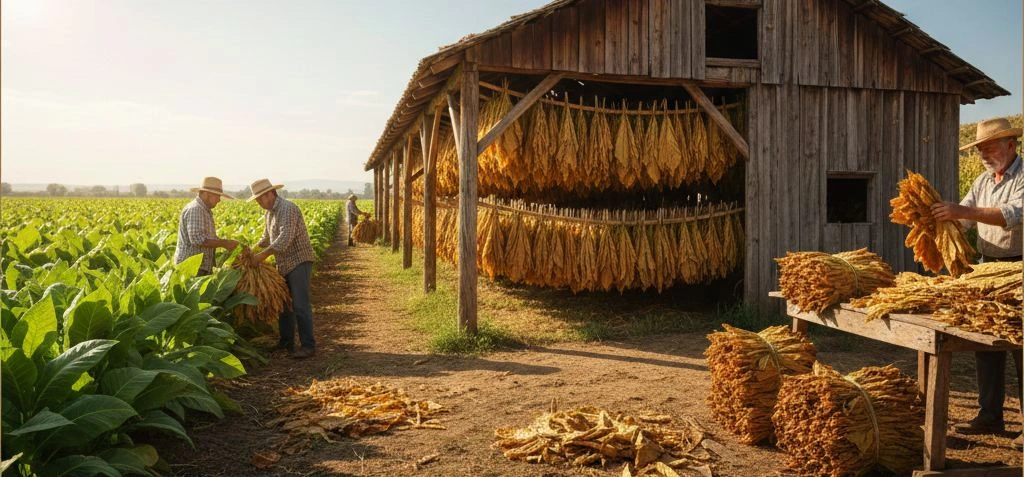
Before storage begins, growers must complete the curing stage. Tobacco Curing transforms raw green leaves into stable material suitable for processing and long-term holding. During curing, growers reduce moisture while encouraging chemical changes inside the leaf.
Farmers often use several curing styles such as air curing, flue curing, or sun curing. Each method influences color, aroma, and burning qualities. After curing, the leaves gain flexibility and develop the familiar tobacco scent. At this stage, workers begin sorting and grading.
Producers connect curing closely with Tobacco Storage. Poor curing can create unstable leaves that degrade during storage. Good curing, on the other hand, strengthens durability and improves shelf life. Growers therefore treat curing and storage as two connected parts of one quality system.
Equipment and Industry Support
Modern processing facilities rely on specialized tools and equipment that support safe handling. Conveyor systems, leaf graders, moisture control units, and baling machines all contribute to organized storage operations. Manufacturers who produce this equipment help the tobacco sector maintain efficiency and quality standards.
Many companies cooperate with Tobacco Machinery Suppliers in USA to access modern technology for processing and handling. These suppliers provide machines that support sorting, drying control, and packaging. Advanced equipment also helps companies organize warehouse layouts and improve Tobacco Storage practices.
Through reliable machinery, processors gain better control over airflow, packaging, and warehouse movement. These improvements reduce handling damage and help maintain leaf consistency during long storage periods.
Packaging and Organization Methods
Storage success also depends on how workers pack and arrange tobacco leaves. Careful packaging prevents crushing and protects leaf structure. Workers often tie leaves into hands or bundles before placing them into containers. Some processors also press tobacco into bales for easier transportation and warehouse organization.
Proper Tobacco Storage requires clear organization within the storage facility. Managers label batches according to harvest time, curing method, and leaf grade. Organized stacking allows workers to track inventory and maintain airflow between stacks.
Warehouse teams also perform routine inspections. During these checks, workers look for moisture changes, pest activity, or unusual odors. Early detection allows quick action before serious damage occurs. Through consistent attention, companies preserve the quality that growers worked hard to produce.
Storage and Its Connection to Tobacco Production
Every stage of Tobacco Production influences the storage process. Soil quality, climate conditions, fertilization methods, and harvesting techniques all affect leaf composition. Strong farming practices create durable leaves that tolerate longer storage periods.
Farmers who focus on balanced plant nutrition and proper harvest timing usually deliver stronger raw material. Processors then manage curing, sorting, and Tobacco Storage to protect those natural qualities. Cooperation between farms and factories ensures a steady supply of reliable tobacco for manufacturers.
Quality control teams often evaluate stored tobacco throughout the year. These evaluations include texture checks, aroma assessment, and moisture monitoring. Continuous supervision protects both producers and buyers from quality loss.
Long-Term Storage Considerations
Large tobacco companies often maintain reserves for extended periods. Aging tobacco can sometimes enhance flavor complexity when conditions remain stable. Skilled storage managers therefore guide the aging process with careful environmental control.
Successful Tobacco Storage for long periods requires patience and consistent monitoring. Managers adjust ventilation, rotate inventory, and review moisture levels to keep the leaves stable. Clean warehouses and pest prevention strategies also support long-term preservation.
Workers play an important role in these efforts. Routine inspections, careful handling, and disciplined storage practices help maintain quality even during extended holding periods.
Conclusion
Tobacco quality depends on careful management from field to warehouse. Farmers guide plant growth, processors complete curing, and storage teams protect the finished leaf. Every step contributes to flavor, aroma, and texture.
Effective Tobacco Storage supports the entire supply chain. Controlled environments, organized packaging, reliable machinery, and skilled workers all contribute to quality preservation. When growers and manufacturers follow these practices, tobacco retains its natural characteristics and meets the expectations of global markets.
Through strong cooperation between farming, curing, and storage operations, the tobacco industry continues to protect product quality and maintain consistent standards across every stage of production.