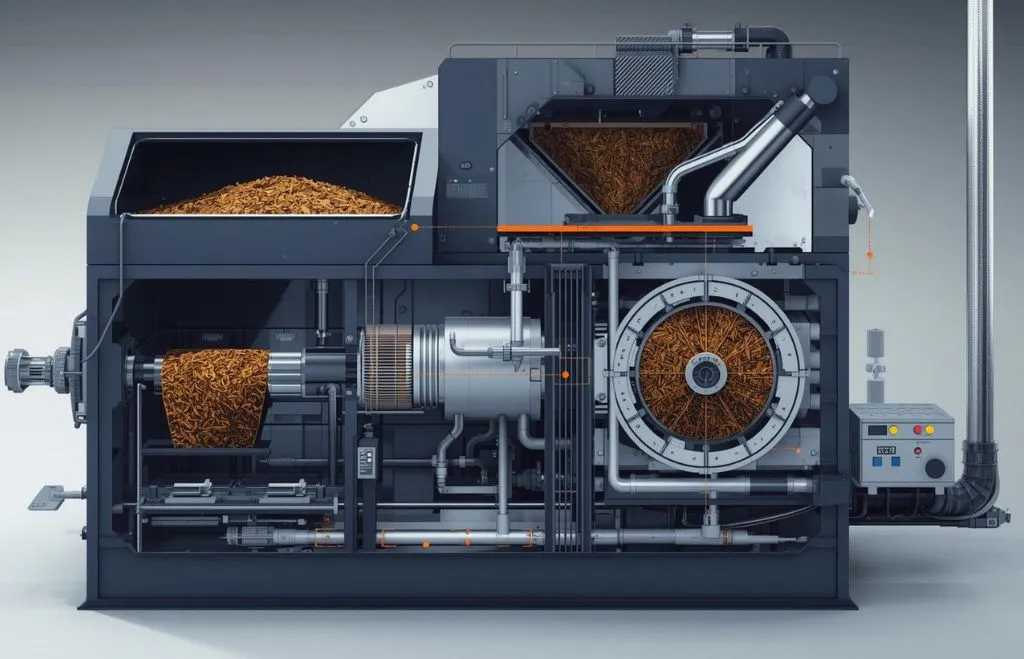

How tobacco wrapping influences burn quality is determined by three cigarette paper parameters — porosity, basis weight, and the burn additive specification. Each parameter affects a different aspect of how the cigarette burns — porosity controls the rate at which air enters the burning zone, basis weight determines the paper’s structural contribution to the coal, and burn additives regulate the rate at which the paper itself combusts relative to the tobacco. Understanding how each wrapping parameter works gives production engineers and blend developers the framework to diagnose burn quality problems and specify the correct paper for any tobacco blend and format.
What Is Tobacco Wrapping in Cigarette Production?
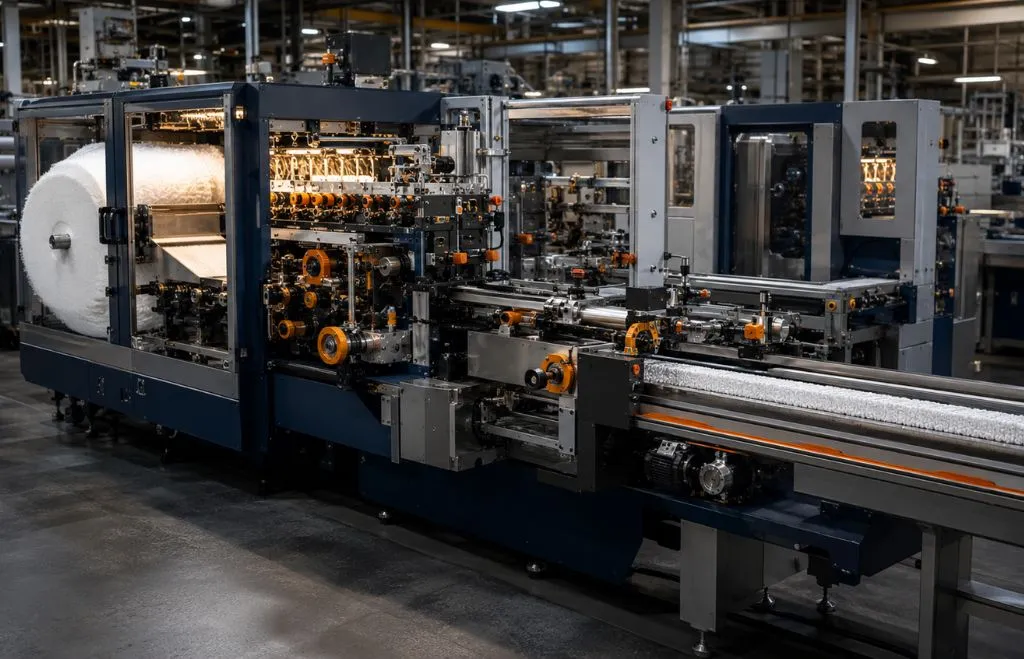
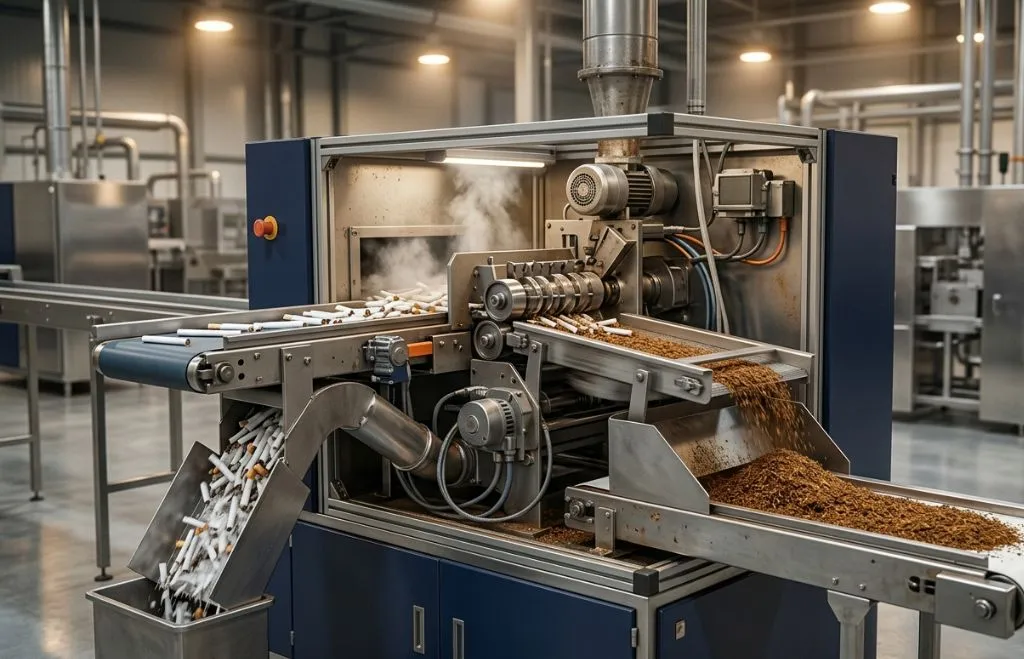
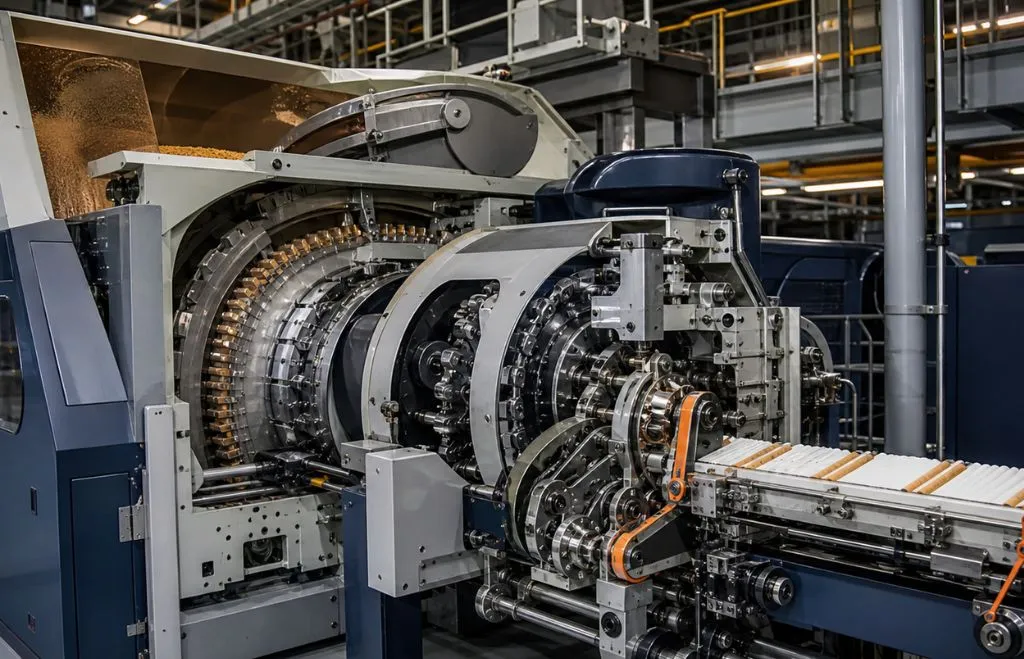
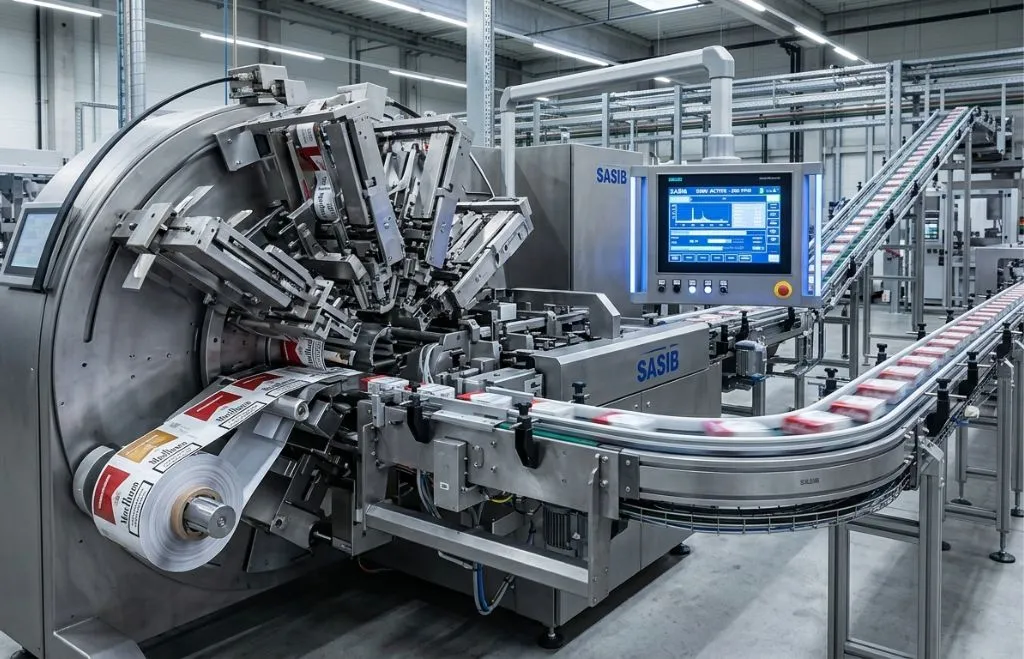
Tobacco wrapping in cigarette production refers to the cigarette paper — the thin, porous paper that wraps around the tobacco rod. It is applied in the garniture section of the cigarette making machine, where the paper is fed continuously from a reel beneath the tobacco stream and wrapped around the compressed tobacco rod as the garniture tape forms it. The seam is sealed with hot melt adhesive. The paper is not passive packaging — it is an active component of the cigarette’s burn system. For a complete guide to how cigarette paper is applied at the garniture section, see our Cigarette Rod Making Process guide.
The Five Tobacco Wrapping Parameters That Affect Burn Quality
Five cigarette paper parameters determine how tobacco wrapping influences burn quality. Each is specified independently and each must be matched to the tobacco blend and cigarette format.
| Paper Parameter | What It Controls | Too High | Too Low |
| Porosity (CU) | Air entry rate — burn rate and draw resistance | Fast burn — harsh draw — excess sidestream smoke | Slow burn — high draw resistance — coal extinction risk |
| Basis weight (gsm) | Paper strength — structural contribution to coal | Stiff rod — affects draw resistance — seam stress | Weak paper — rod break-outs — seam failures |
| Burn additive (citrate) | Paper burn rate relative to tobacco | Faster paper burn — coal advances ahead of tobacco | Slower paper burn — tobacco burns past paper — coal irregularity |
| Opacity (%) | Visual appearance — printing quality | Overly white — may affect consumer perception | Translucent — tobacco visible through paper |
| Seam strength | Seam integrity during making and handling | Over-glued — blocked nozzle risk | Weak seam — rod break-outs at garniture exit |
Parameter 1 — Porosity: The Primary Burn Rate Control
What it is: Porosity is the measure of how freely air passes through the cigarette paper — expressed in Coresta Units (CU). A high porosity paper allows more air to pass through the paper wall of the burning cigarette. A low porosity paper restricts air flow through the paper.
How it influences burn quality: Air supply to the burning coal determines how fast the tobacco burns. Higher porosity — more air through the paper — produces a faster burn rate and a lighter, less dense smoke. Lower porosity — less air through the paper — produces a slower burn rate and a denser, more concentrated smoke. The balance between porosity and the tobacco blend’s natural burn rate determines the cigarette’s total combustion behavior.
Draw resistance connection: Porosity also affects draw resistance. Higher porosity paper allows more air to dilute the smoke stream — reducing draw resistance. Lower porosity paper restricts air dilution — increasing draw resistance. This is why cigarette paper porosity must be matched to both the blend’s burn characteristics and the target draw resistance specification.
Typical ranges: Commercial cigarette papers typically range from 20 CU to 80 CU porosity. Standard full-flavor cigarettes typically use lower porosity papers. Lighter cigarettes use higher porosity papers to deliver more air dilution and faster burn.
Parameter 2 — Basis Weight: Structural Contribution to the Coal
What it is: Basis weight is the weight of the paper per square meter — expressed in grams per square meter (gsm). Commercial cigarette papers typically range from 18 gsm to 28 gsm. Thicker, heavier papers have higher gsm values. Thinner papers have lower gsm values.
How it influences burn quality: The paper contributes structurally to the burning coal — the glowing combustion zone at the lit end of the cigarette. A heavier paper burns more slowly relative to the tobacco — which can cause the coal to advance irregularly if the tobacco burns faster than the paper. A lighter paper burns more quickly — which can cause paper char to advance ahead of the tobacco coal.
Seam integrity: Basis weight also affects seam integrity at the garniture section. Very low basis weight papers are prone to tearing during the garniture compression and seam sealing process — particularly at high production speeds. The paper must be strong enough to withstand garniture tape pressure and hot melt adhesive application without tearing or wrinkling.
Parameter 3 — Burn Additives: Controlling the Paper Combustion Rate
What they are: Burn additives — typically potassium citrate or sodium citrate — are applied to the cigarette paper during manufacture to control the rate at which the paper itself burns. Without burn additives, cigarette paper tends to burn significantly faster than the tobacco — causing the coal to advance unevenly and the cigarette to burn past the tobacco if left unattended.
How they influence burn quality: Higher citrate content slows paper combustion rate — bringing the paper burn rate closer to the tobacco burn rate. This produces a more even, consistent coal progression. Lower citrate content allows the paper to burn faster — which in combination with a slow-burning tobacco blend can produce irregular coal behavior and self-extinguishing risk.
Regulatory role: Burn additive specification has become increasingly important in markets that have adopted fire-safe cigarette regulations — where cigarettes are required to self-extinguish when left unattended. Fire-safe cigarettes use specific citrate band patterns applied across the paper to create controlled slow-combustion zones that interrupt the coal’s progression when the draw stops.
How Tobacco Wrapping Interacts With the Tobacco Blend
The cigarette paper specification cannot be determined independently of the tobacco blend — the two interact to produce the final burn behavior.
Virginia blends: Virginia flue-cured tobacco has a naturally fast burn rate due to its high sugar content. Virginia blends typically require lower porosity papers and higher citrate content to slow both air entry and paper combustion rate — bringing the overall system into balance with the blend’s fast-burning characteristics.
Burley blends: Burley air-cured tobacco burns more slowly than Virginia due to its lower sugar content and different physical structure. Burley-heavy blends typically require higher porosity papers — more air supply — and lower citrate content to maintain adequate burn rate and prevent self-extinction.
Blended cigarettes: Most commercial cigarettes use a Virginia-Burley-Oriental blend. The paper specification is matched to the blend’s composite burn rate — which changes whenever the blend ratio changes. Any blend reformulation requires a review of the paper specification to ensure burn quality is maintained.
How Cigarette Paper Affects Making Machine Performance
Garniture compatibility: The paper must be compatible with the garniture section’s operating speed and pressure. At 7,000 cpm on a Protos 70, the paper feed runs at 490 meters per minute. Papers that are too thin — low basis weight — risk tearing at the garniture. Papers with incorrect surface characteristics can cause adhesion problems with the seam glue system.
Reel tension: Paper reel tension must be consistent throughout the reel’s life. Tension variation causes cigarette paper wrinkling at the garniture — which produces seam defects and rod diameter variation. Paper reels must be stored correctly to prevent deformation that causes tension variation during unwinding.
Seam glue compatibility: The paper’s surface must be compatible with the hot melt adhesive used in the seam glue system. Papers with certain coatings or surface treatments can reduce adhesive bond strength — causing seam failures at the cutter. Always verify paper-adhesive compatibility when changing paper specifications.
For a complete guide to how the paper feed system works within the full rod making process, see our How the Garniture Section Works guide.
Common Burn Quality Problems Traced to Tobacco Wrapping
Fast burn — cigarette burns too quickly: Check paper porosity — too high. Check burn additive — citrate content too low. Check tobacco blend burn rate — if blend is also fast-burning the combination amplifies the problem.
Slow burn — coal extinction risk: Check paper porosity — too low. Check burn additive — citrate content too high. Check tobacco blend — if a heavy Burley blend is combined with low porosity paper and high citrate, extinction risk increases significantly.
Uneven coal — irregular burn progression: Most commonly caused by burn additive application inconsistency during paper manufacture — uneven citrate distribution across the paper width. Also caused by uneven tobacco distribution in the rod — check garniture tongue alignment.
Seam failures at making machine: Check paper basis weight — too low. Check seam glue temperature and application rate. Check paper-adhesive compatibility if paper specification was recently changed.
Frequently Asked Questions
How does tobacco wrapping influence burn quality?
Tobacco wrapping influences burn quality through three paper parameters: porosity controls air entry rate which determines burn rate and draw resistance; basis weight determines the paper’s structural contribution to the coal; and burn additives (citrate) regulate the rate at which the paper itself combusts relative to the tobacco. All three must be matched to the tobacco blend specification for consistent burn quality.
What is cigarette paper porosity and why does it matter?
Porosity is the measure of how freely air passes through the cigarette paper — expressed in Coresta Units (CU). Higher porosity allows more air to reach the burning coal — producing a faster burn rate and lighter draw resistance. Lower porosity restricts air — producing a slower burn and higher draw resistance. Porosity must be matched to the tobacco blend’s natural burn rate and the target draw resistance specification.
What are burn additives in cigarette paper?
Burn additives — typically potassium or sodium citrate — are applied to cigarette paper during manufacture to control the rate at which the paper itself burns. Without burn additives, cigarette paper burns significantly faster than tobacco. Higher citrate content slows paper combustion — bringing it closer to the tobacco’s burn rate. In fire-safe cigarette markets, specific citrate band patterns create controlled slow-combustion zones that cause self-extinction when the draw stops.
How does cigarette paper basis weight affect the rod?
Basis weight — the paper’s weight in grams per square meter — affects both burn quality and making machine compatibility. Too low a basis weight produces paper that is prone to tearing in the garniture section at high production speeds. Too high a basis weight produces a stiffer rod that can affect draw resistance. The basis weight must balance structural integrity at production speed with the correct contribution to the cigarette’s combustion behavior.
Why must cigarette paper be matched to the tobacco blend?
The cigarette paper and tobacco blend interact to produce the final burn behavior — neither can be specified independently. Virginia flue-cured blends with high natural burn rates need lower porosity papers and higher citrate content to slow the combined system. Burley-heavy blends with slower burn rates need higher porosity papers to supply adequate air. Any blend reformulation requires a review of the paper specification to ensure burn quality is maintained.
Conclusion
How tobacco wrapping influences burn quality is a function of three paper parameters — porosity, basis weight, and burn additives — each controlling a different aspect of the cigarette’s combustion behavior. Understanding how each parameter interacts with the tobacco blend and the making machine’s mechanical requirements is the foundation for consistent burn quality specification and production troubleshooting. For a complete guide to how tobacco blending affects the primary processing inputs to the making line, see our What Is Tobacco Filler guide. For tobacco machinery suppliers in USA who supply cigarette paper and making machine consumables, see our dedicated suppliers page.