
What Is Cigarette Overwrapping: Types, Film and Production Line Position
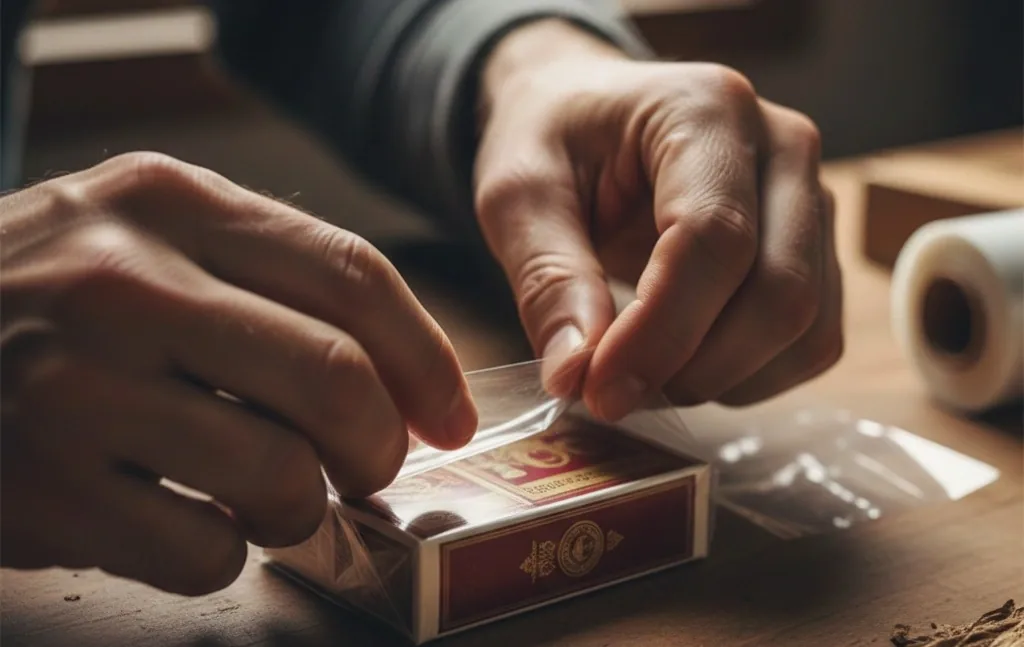
Cigarette overwrapping is the process of applying a transparent film wrapper to finished cigarette packs or cartons — sealing them against moisture, providing tamper evidence via a tear tape, and giving the product its finished retail appearance. It is not a single machine or process — four distinct types of overwrapping machines are used at different stages of the cigarette production line, each applying film to a different packaging unit at a different point in the sequence. Understanding what cigarette overwrapping is, what types are used, and where each fits in the line is essential for any factory buyer specifying or sourcing downstream packaging equipment.
What Cigarette Overwrapping Does
Cigarette overwrapping serves four functions on every pack or carton it is applied to:
- Moisture protection — the transparent film creates a barrier that prevents moisture uptake or loss from the cigarettes inside the pack during storage and distribution
- Tamper evidence — the tear tape applied across the film means any pack that has been opened is visibly identifiable
- Brand integrity — the film keeps the printed pack surface clean and undamaged through the distribution chain
- Regulatory compliance — many markets require that cigarette packs carry a sealed transparent outer wrapper as a regulatory requirement
Overwrapping is applied downstream of the cigarette packing machine — after the pack is formed but before the carton boxing stage. For a complete overview of how overwrapping connects to every other stage in the production line, see our guide to Cigarette Production Line Equipment.
The Four Types of Cigarette Overwrapping Machines
| Type | What It Wraps | Line Position | Key Brands |
|---|---|---|---|
| Pack cellophaner | Individual cigarette packs | Integrated with packer — Stage 4 | SASIB, HLP, GD, Focke |
| Naked over wrapper | Individual packs — full brand visibility | After packer — Stage 5 | SASIB, Molins, Focke, GD |
| Carton overwrapper | Cartons of 10 or 20 packs | After SASIB Boxer — Stage 7 | Focke, GD C600, SASIB |
| Bundle overwrapper | Multi-carton bundles | Distribution stage — Stage 8 | Focke FX Series, GD |
Type 1 — Pack Cellophaner
What it does: The pack cellophaner wraps individual cigarette packs in transparent cellulose or oriented polypropylene (OPP) film immediately after the pack is formed by the cigarette packing machine. On most cigarette packing lines the cellophaner is either integrated directly into the packing machine or positioned immediately downstream of it.
How it works: A reel of transparent film feeds continuously through the cellophaner. Individual packs from the packing machine are fed in, the film is cut to length, folded around each pack on all six faces, a tear tape is applied, and the film edges are heat sealed. The completed overwrapped pack discharges to the downstream conveyor.
Key brands: SASIB, HLP, GD, and Focke all produce cellophaner configurations integrated with their respective packing machines. The cellophaner specification is typically matched to the packing machine it is paired with.
Type 2 — Naked Over Wrapper
What it does: The naked over wrapper applies transparent film so cleanly that the pack’s entire printed surface remains fully visible through the wrapper — the pack appears naked through the film. This is distinct from a standard cellophaner where the film may partially obscure fine print details.
How it differs from a cellophaner: The key difference is pack visibility. A standard cellophaner applies film adequately but is not designed to maximize brand visibility. A naked over wrapper applies film with precision engineering that keeps all printing, health warnings, and tax stamps fully legible through the film — a requirement in markets where tax stamp visibility is legally mandated.
Position in line: The naked over wrapper is a standalone unit positioned after the packing machine’s integrated cellophaner — not instead of it. For a complete guide to the naked over wrapper specifically, see our How a Naked Over Wrapper Works guide.
Pack Cellophaner vs Naked Over Wrapper
The practical decision between specifying a standard cellophaner and a naked over wrapper depends on market requirements and brand visibility standards.
| Feature | Pack Cellophaner | Naked Over Wrapper |
|---|---|---|
| Position in line | Integrated with or immediately after packer | Standalone unit after cellophaner |
| Pack visibility through film | Standard | Maximum — full brand visibility |
| Tax stamp visibility | Standard | Fully visible through film |
| Speed | Matched to packing machine | 25 ppm standalone |
| Film type | Cellulose or OPP | Transparent OPP or cellulose |
| Best for | Standard production lines | Brand-focused or regulated markets |
Type 3 — Carton Overwrapper
What it does: The carton overwrapper applies transparent film to finished cartons of 10 or 20 cigarette packs — after the SASIB Boxer or equivalent carton boxing machine has assembled the carton. The film wrapper on the carton serves the same protective and tamper-evidence functions as the pack overwrap but at the carton level.
How it works: Finished cartons from the SASIB Boxer arrive at the carton overwrapper’s infeed. Film is fed from a reel, cut to carton size, wrapped around all faces of the carton, a tear tape is applied across the top face, and the film edges are heat sealed. The sealed carton discharges to the downstream conveyor for case packing.
Key brands: Focke, GD C600 PACK, and SASIB all produce carton overwrapper configurations. The GD C600 PACK integrates wrapping, cartoning, and overwrapping into a complete downstream line. For full SASIB Boxer specifications — the carton boxing stage that feeds the carton overwrapper — see our What Is the SASIB Boxer guide.
Type 4 — Bundle Overwrapper
What it does: The bundle overwrapper applies shrink film to groups of cartons — typically 10 or 20 cartons — forming a retail or distribution bundle. This is the final overwrapping stage in the production line, downstream of the case packer.
How it works: Groups of cartons are assembled into a bundle configuration, wrapped in shrink film, and passed through a heat tunnel where the shrink film contracts tightly around the carton bundle. The shrink-wrapped bundle provides physical protection and visual identification at the retail or distribution level.
Key brands: Focke FX Series integrates bundle overwrapping alongside packing and cartoning in a fully automated modular line. GD also produces bundle overwrapping configurations downstream of their C600 PACK line.
Film Types Used in Cigarette Overwrapping
Cellulose film: The traditional cigarette overwrapping film — breathable, biodegradable, with good clarity. Cellulose film is still used in some markets and configurations but is increasingly being replaced by OPP film in modern production.
Oriented polypropylene (OPP) film: The dominant cigarette overwrapping film in modern production — stronger than cellulose, higher clarity, better moisture barrier properties, and more dimensionally stable at production speeds. OPP film is the standard specification for most cellophaner and naked over wrapper configurations.
Shrink film: Used specifically in bundle overwrapping — a different film category from the cellophane and OPP films used on pack and carton overwrappers. Shrink film contracts when heat is applied to conform tightly around the carton bundle.
Cigarette Overwrapping Maintenance Essentials
- Heat sealing bars — check sealing bar surface condition and temperature calibration at each maintenance interval — worn or contaminated surfaces produce weak seals
- Film tension control — verify reel brake condition and tension roller alignment — incorrect tension produces film wrinkle and tearing
- Folding mechanism — inspect folder plates, cams, and guide rails at each maintenance interval — highest wear section on any overwrapping machine
- Tear tape applicator — check tear tape feed mechanism and positioning accuracy — misaligned tear tape is a visible quality defect
- Cutting system — inspect cutting blade condition at each maintenance interval — worn blades produce ragged film edges that affect seal quality
Frequently Asked Questions
What is cigarette overwrapping?+
Cigarette overwrapping is the process of applying a transparent film wrapper to finished cigarette packs or cartons to provide moisture protection, tamper evidence via a tear tape, brand integrity, and regulatory compliance. Four distinct machine types perform cigarette overwrapping at different stages of the production line: pack cellophaners, naked over wrappers, carton overwrappers, and bundle overwrappers.
What are the four types of cigarette overwrapping machines?+
The four types are: pack cellophaners which wrap individual packs integrated with or immediately after the packing machine; naked over wrappers which apply film with maximum pack visibility as standalone units after the packer; carton overwrappers which wrap cartons of 10 or 20 packs after the carton boxer; and bundle overwrappers which apply shrink film to multi-carton distribution bundles.
What is the difference between a cellophaner and a naked over wrapper?+
A cellophaner wraps cigarette packs in film as part of or immediately after the packing process — adequate for standard production but not engineered to maximize brand visibility. A naked over wrapper is a standalone machine that applies film with such precision that the pack’s entire printed surface remains fully visible through the film — required in markets where health warning and tax stamp visibility are legally mandated.
What film is used in cigarette overwrapping?+
Pack cellophaners and naked over wrappers use either cellulose film or oriented polypropylene (OPP) film. OPP is now the dominant choice — stronger, higher clarity, and better moisture barrier than cellulose. Bundle overwrappers use shrink film — a different category that contracts when heat is applied to conform tightly around carton bundles.
Where does cigarette overwrapping fit in the production line?+
Pack cellophaners sit at Stage 4 — integrated with or immediately after the packing machine. Naked over wrappers sit at Stage 5 — after the cellophaner, before the carton boxer. Carton overwrappers sit at Stage 7 — after the SASIB Boxer or equivalent. Bundle overwrappers sit at Stage 8 — the final packaging stage before distribution.
Conclusion
Cigarette overwrapping is an essential downstream function in every commercial cigarette factory — applied at four distinct stages from individual pack level through to distribution bundle level. Understanding what each overwrapping machine type does, where it sits in the production line, and what film it uses is the foundation for specifying and sourcing correct downstream packaging equipment. For a complete overview of all cigarette line equipment across every production stage, see our Cigarette Production Line Equipment guide. For tobacco machinery suppliers in USA who supply cigarette overwrapping equipment, see our dedicated suppliers page.


Looking for Cigarette Machinery?
Browse our current inventory of manufacturing, filter making, packing, and wrapping equipment, or send us your target speed and format for a fast quote.