Protos vs Molins Mark: Which Cigarette Making Machine Platform Fits Your Line
If you're standardizing your production line on one manufacturer, or you're just trying to figure out which used maker to buy first, the Protos versus Molins Mark question comes up constantly. Both platforms have been running in factories for decades, both have strong reputations, and both show up regularly on the used equipment market. The right answer isn't which one is "better" in the abstract. It's which one fits how you actually plan to run and maintain your line.
Two Different Approaches to Feeding Tobacco Into the Machine
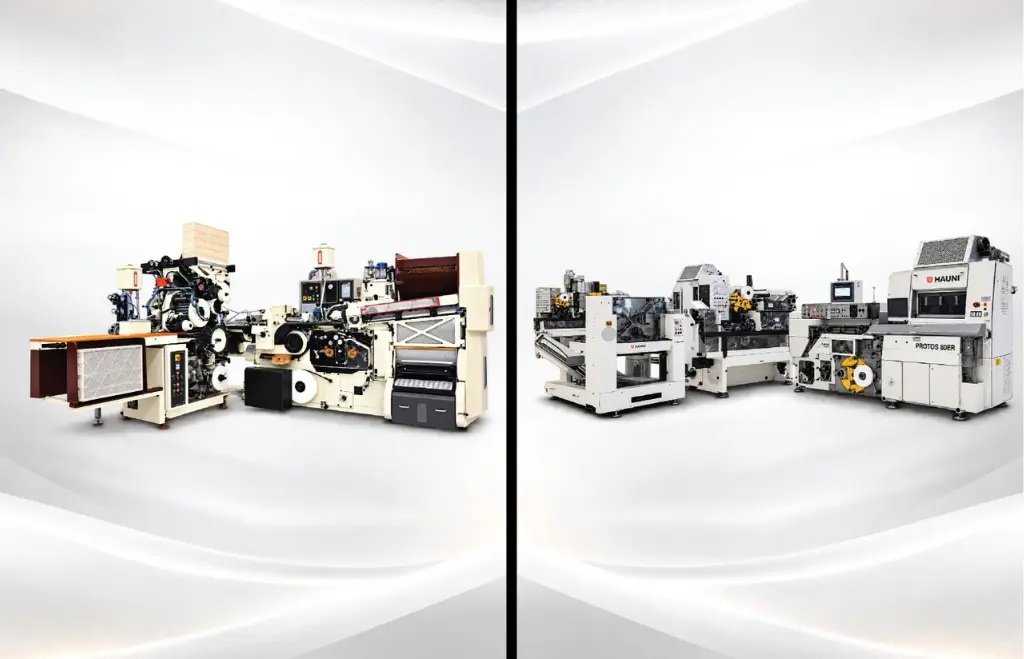
The core mechanical difference between these platforms starts at the feed stage, before a single cigarette has even taken shape. Hauni's Protos design pulls tobacco through a lifting conveyor into a refiner and carding drum arrangement, a system built around continuous, high-speed throughput. Molins built its Mark series around an independent hopper and elevator drive instead, a design choice that gives the tobacco feed its own dedicated drive rather than tying it directly to the machine's main mechanism.
That difference sounds abstract until you think about what it means for consistency. An independently driven hopper and elevator can be tuned and adjusted without disturbing the rest of the machine's timing, which is part of why the Mark platform has a reputation for steady tobacco handling across a long run. The Protos design, in exchange, is built around sustained high-speed output as the priority, and Hauni has spent decades refining that specific mechanism for exactly that purpose. Neither approach is objectively superior. They're solving the same problem, consistent tobacco feed at speed, with genuinely different engineering philosophies.
Comparing the Speed Tiers
On the Hauni side, we carry the Protos 70 and Protos 80 ER, rated at 7,000 and 8,000 cpm respectively on regular diameter, both running the same S7000, M8000, and F80 unit design. The difference between the two is purely rated speed, which makes the choice between them mostly a question of matching output to what your line actually needs rather than a mechanical tradeoff.
The Molins side spans a wider range on one underlying platform. The Mark 8 Post-64 sits at the lower end around 1,800 to 2,000 cpm, mechanically simple and inexpensive to run. The Mark 8D Max 15 steps up to 3,000 cpm with meaningfully wider format flexibility. At the top, the Mark 9 Max S and Mark 9.5 Max S run in the 4,500 to 5,000 cpm range. So while a single Protos machine gives you a narrower speed band to choose from, the Mark line lets you pick a speed tier and a price point across a much wider spread without leaving the platform.
Clearing Up the Mark 9 Naming Confusion
This is worth explaining directly, because it trips up a lot of buyers. Molins' current production model is officially called the MK9 Classic, rated at 5,500 cpm with an independent hopper and elevator drive and PLC operating system. But in the resale and refurbished market, you'll far more often see machines listed as "MK9.5 with Max S," which typically run closer to 4,500 to 5,000 cpm. These aren't the same listing dressed up two ways. They reflect how dealers commonly describe the configuration most often traded secondhand, versus the official current model name Molins uses for new production. If you're comparing quoted speeds between listings and they don't match what you expected, this naming gap is usually why.
What Wears Out, and Who Can Fix It
Both platforms share some common wear-part vocabulary, since garniture tapes and suction components do similar jobs on both machines. On the Protos side, the parts you'll most commonly need to replace are garniture tapes, suction bands or rollers, cut-off knives, and glue nozzles. Suction tapes on Protos machines typically wear faster than garniture tapes, often needing replacement within a couple of production shifts, while garniture tapes tend to last somewhat longer before they need swapping out.
On the Mark platform, the equivalent wear items are garniture tapes, suction bands, cut-off knives, and tipping drums, with the Max S filter unit specifically adding cam assemblies to that list. The overlap in terminology reflects how similar the underlying mechanical problem is across both brands, even though the actual parts aren't interchangeable between platforms.
Where the two diverge more is service infrastructure. Hauni, now under Körber, runs one of the more extensive dedicated service networks in the industry, including formal technical training programs and service infrastructure specifically built out for North America. That matters if you're buying in the US and want confidence that support and parts won't be a struggle to find later. Molins parts and service are also well established through both OEM and third-party channels, but it's worth confirming what specific support network applies to the exact unit and region you're buying into before assuming either platform gives you an identical experience.
Which Platform Actually Fits Your Situation
If your priority is running one consistent format at the highest sustainable speed, and you want a platform with a narrower but very well-refined speed range, Protos is the more straightforward choice. The Protos 70 and Protos 80 ER both sit near the top of what's commercially available, and Hauni's service infrastructure in North America is a real advantage if long-term support matters more to you than upfront flexibility.
If you need to cover a wider range of production scales, from a lower-cost entry point through to genuine high-speed output, or you value the format flexibility that comes with platforms like the Mark 8D Max 15, the Mark series gives you room to grow within one mechanical family instead of switching platforms entirely as your needs change. That's a real advantage if you're building out a line in stages rather than buying everything at once.
Neither platform is the "correct" answer across the board. A factory scaling from a Mark 8 Post-64 up to a Mark 9.5 Max S as production grows is making a completely reasonable choice. So is a factory that standardizes entirely on Protos for consistency and sticks with Hauni's parts and service ecosystem. What matters is picking the one that matches your actual production plan, not the one with the more impressive top-line speed figure.
Comparing Both Platforms Side by Side
If you're ready to look at real units rather than the general comparison, our cigarette manufacturing machines range lists rated speed, format range, and control system for every Protos and Mark machine we carry, so you can compare them directly against your own production numbers.
Frequently Asked Questions
Is Protos or Molins Mark faster?
Why do I see different speeds listed for the "Mark 9.5"?
Are Protos and Mark spare parts interchangeable?
Which platform has better parts and service availability in the US?



Looking for Cigarette Machinery?
Browse our current inventory of manufacturing, filter making, packing, and wrapping equipment, or send us your target speed and format for a fast quote.