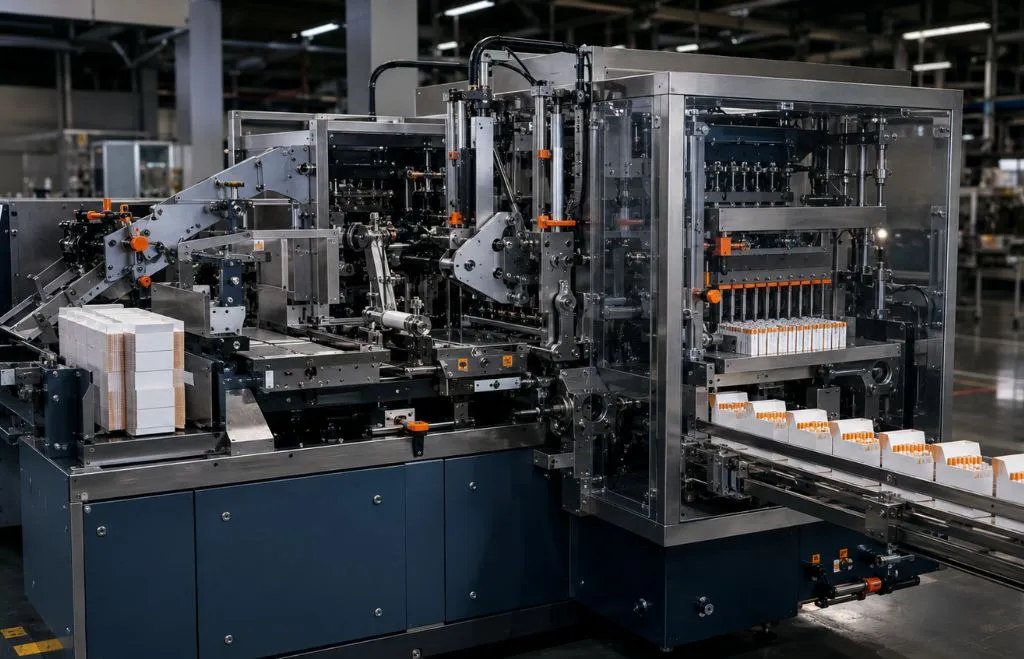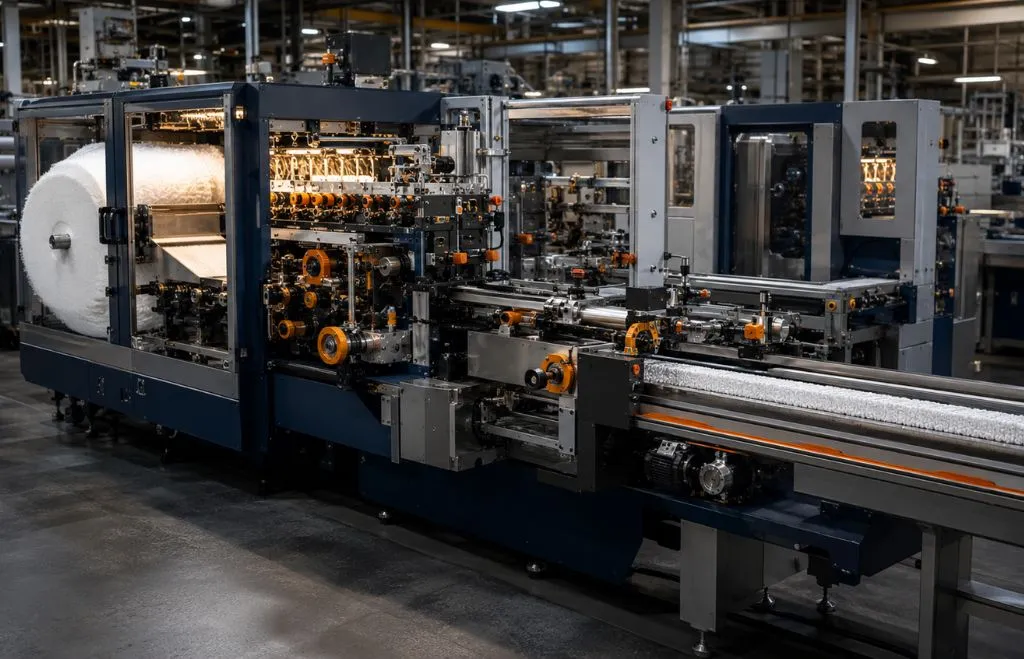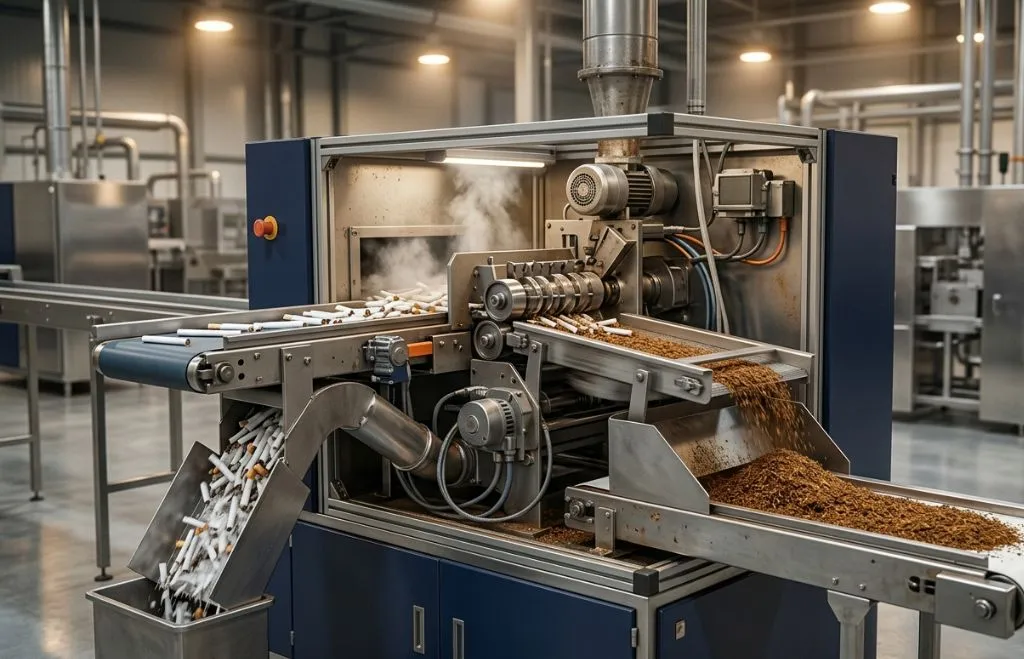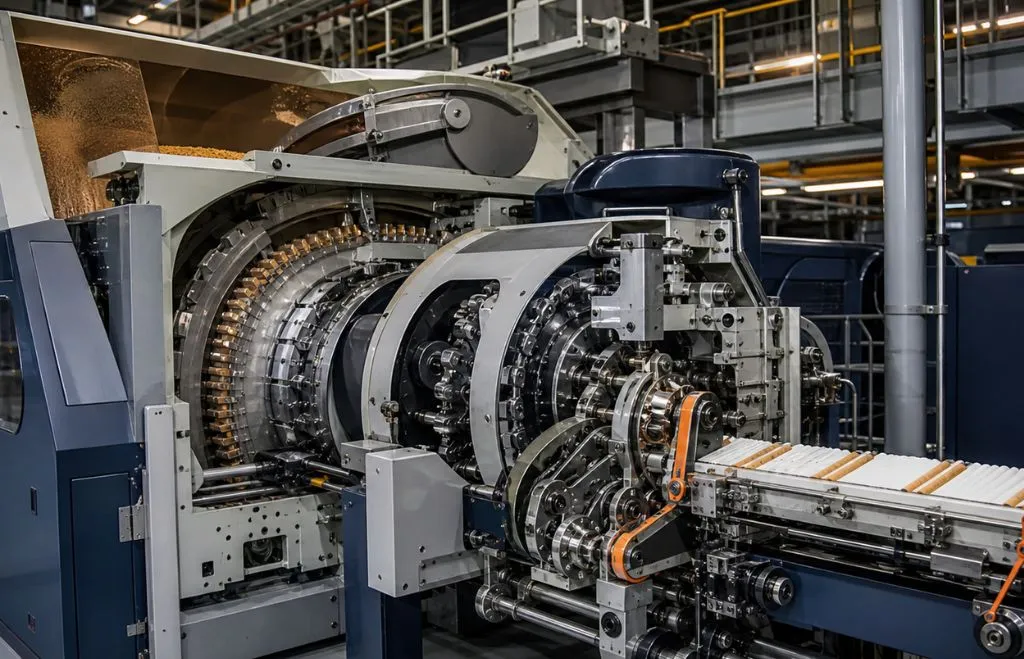
Beckhoff IPC is an industrial PC-based control system used in cigarette making machines — particularly in some configurations of the Körber Protos 80 ER — as an alternative to Siemens IPC. IPC stands for Industrial PC — a ruggedized computing platform that replaces traditional PLC relay-based and early digital control systems with a PC-based architecture running real-time control software. Understanding what Beckhoff IPC is, what it does in tobacco machinery, and how it differs from Siemens IPC helps factory engineers and buyers evaluate machine control system specifications when sourcing or upgrading cigarette making equipment.
What Is Beckhoff IPC?
The company: Beckhoff Automation GmbH and Co. KG is a German automation technology company founded in 1980 and headquartered in Verl, Germany. It specializes in PC-based control technology — industrial PCs, I/O components, drive technology, and automation software. Beckhoff reported revenue of approximately 1.17 billion euros in 2024 and employs over 5,300 people globally.
The product: Beckhoff IPC refers to Beckhoff’s range of industrial PC hardware platforms — the C6000 series — combined with TwinCAT software. The industrial PC is a ruggedized computing platform designed for factory environments — capable of running real-time control software continuously in conditions of vibration, dust, and temperature variation that standard office or consumer PCs cannot tolerate.
TwinCAT software: TwinCAT is Beckhoff’s proprietary automation software platform that runs on the IPC hardware. It turns the industrial PC into a real-time programmable logic controller — handling motion control, sequence control, fault detection, and data logging simultaneously. TwinCAT is programmed using IEC 61131-3 standard languages — the same programming standard used in traditional PLCs — which means engineers familiar with PLC programming can work with Beckhoff IPC without learning an entirely new programming environment.
EtherCAT: EtherCAT is Beckhoff’s proprietary industrial Ethernet protocol used to connect the IPC to servo drives, I/O modules, and other field devices on the machine. EtherCAT is designed for ultra-low communication latency — microsecond-level timing between the IPC and connected drives. This low latency is what enables precise multi-axis synchronization in high-speed machinery like cigarette making machines.
Where Beckhoff IPC Is Used in Tobacco Machinery
Protos 80 ER configurations: The Körber Protos 80 ER — the 8,000 cpm Extended Range cigarette making platform — is available in both Siemens IPC and Beckhoff IPC configurations. Beckhoff IPC is used in some Protos 80 ER installations as an alternative control platform to Siemens. The specific configuration — Siemens or Beckhoff — depends on the build specification at the time of manufacture and the customer’s preference or regional service availability.
What it controls on the Protos 80 ER: On the Protos 80 ER the Beckhoff IPC controls all servo drive axes through EtherCAT — the garniture tape drive, cutting drum drive, paper feed, filter assembler synchronization, weight control feedback loop, and tray filler. It runs the fault detection system, logs production data, manages format change recipes, and provides the operator interface on the machine’s touchscreen panel. For full Protos 80 ER specifications, see our What the Protos 80 ER Brings to Tobacco Production guide.
Other tobacco machinery: Beckhoff IPC is also used in some non-Körber tobacco machinery — ancillary equipment, handling systems, and specialist configurations where the machine builder specified Beckhoff as their control platform. It is not exclusive to Körber equipment.
How Beckhoff IPC Controls the Cigarette Making Machine
Real-time motion control: TwinCAT’s real-time kernel manages all servo drive axes simultaneously with microsecond synchronization via EtherCAT. At 8,000 cpm on the Protos 80 ER the garniture tape, cutting drum, and paper feed must all operate in precise synchronization — any timing deviation between axes causes rod length variation, seam defects, or cut errors. Beckhoff IPC’s EtherCAT communication delivers the sub-millisecond timing accuracy this synchronization requires.
Weight control feedback loop: The microwave weight control sensor on the Protos 80 ER sends continuous rod weight data to the Beckhoff IPC. TwinCAT processes this data in real time and adjusts the tobacco feeder drive setpoint to correct weight deviations before significant numbers of out-of-specification cigarettes are produced. This closed-loop weight control runs continuously at full production speed.
Fault detection and logging: TwinCAT monitors all machine axes, sensors, and safety systems continuously. When a fault occurs — drive overload, sensor failure, safety circuit activation — the IPC detects it, stops the relevant machine section, displays the fault code on the operator panel, and logs the fault with a timestamp. The fault log builds a production history that allows engineers to identify recurring fault patterns.
Format change management: Recipe-based format changes are stored in the Beckhoff IPC. When the operator selects a new cigarette format, TwinCAT loads the stored parameter set for that format and applies it to all relevant axes simultaneously — reducing format change time compared to manual parameter adjustment.
Beckhoff IPC vs Siemens IPC in Tobacco Machinery
Both Beckhoff IPC and Siemens IPC are used in Protos 80 ER installations. The choice between them is typically determined by the build specification and the factory’s existing service capabilities.
| Feature | Beckhoff IPC | Siemens IPC |
| Control software | TwinCAT 3 — PC-based real-time | Siemens TIA Portal — PLC-based |
| Motion protocol | EtherCAT — ultra-low latency | PROFINET or PROFIBUS |
| Hardware platform | Industrial PC — C6000 series | Simatic IPC or S7 series |
| Programming standard | IEC 61131-3 via TwinCAT | IEC 61131-3 via STEP 7 / TIA |
| Remote diagnostics | TwinCAT remote access | Siemens remote service tools |
| Tobacco machine use | Some Protos 80 ER configurations | Most Protos 80 ER configurations |
| Parts availability | Good — Beckhoff global network | Very good — Siemens global network |
| Service in USA | Beckhoff USA — Savage MN | Siemens USA — multiple locations |
For a complete guide to Siemens IPC in tobacco machinery and how it compares to Beckhoff, see our Why Siemens IPC Is Used in Cigarette Machinery guide.
Beckhoff IPC Maintenance in Tobacco Machinery
- Check IPC cooling system at each maintenance interval — industrial PC cooling fans accumulate dust in factory environments — blocked fans cause thermal faults
- Verify EtherCAT network connections at each maintenance interval — loose connectors cause communication errors between IPC and servo drives
- Check TwinCAT software version — update to current version at manufacturer’s recommended intervals
- Back up TwinCAT project files — machine parameters and format recipes — at each scheduled maintenance interval and after any parameter changes
- Check UPS (uninterruptible power supply) battery condition — Beckhoff IPC systems typically include UPS to protect against unexpected power loss — replace battery per manufacturer schedule
- Log all TwinCAT fault codes with timestamps — fault history analysis identifies recurring problems
Sourcing Beckhoff IPC Components for Tobacco Machinery
Beckhoff IPC hardware components — C6000 series industrial PCs, EtherCAT I/O modules, and drive components — are available through Beckhoff’s global distribution network. Beckhoff USA is headquartered in Savage, Minnesota, with additional offices and distributors covering major USA manufacturing regions. For refurbished Beckhoff IPC components from tobacco machinery, specialist tobacco machinery dealers occasionally have components available from machine upgrades. For a complete list of tobacco machinery suppliers in USA who supply control system components, see our dedicated suppliers page.
Frequently Asked Questions
What is Beckhoff IPC?
Beckhoff IPC is an industrial PC-based control system from Beckhoff Automation GmbH, a German automation technology company founded in 1980. It consists of ruggedized industrial PC hardware from the C6000 series running TwinCAT automation software. TwinCAT turns the industrial PC into a real-time programmable controller for motion control, fault detection, and data logging. In tobacco machinery it is used in some Körber Protos 80 ER configurations as an alternative to Siemens IPC.
How is Beckhoff IPC used in cigarette making machines?
On the Körber Protos 80 ER, Beckhoff IPC controls all servo drive axes via EtherCAT — including the garniture tape drive, cutting drum, paper feed, and filter assembler synchronization. It manages the microwave weight control feedback loop, runs the fault detection system, logs production data, and manages recipe-based format changes. TwinCAT’s real-time kernel provides the microsecond-level timing accuracy required for multi-axis synchronization at 8,000 cpm.
What is the difference between Beckhoff IPC and Siemens IPC in tobacco machinery?
Both are industrial PC-based control platforms used in Protos 80 ER configurations. Beckhoff IPC uses TwinCAT software and EtherCAT motion protocol. Siemens IPC uses TIA Portal software and PROFINET or PROFIBUS protocol. Both deliver equivalent performance for cigarette making machine control. The choice between them is typically determined by build specification and the factory’s existing service infrastructure — a factory with established Siemens engineering capability should specify Siemens IPC; a factory with Beckhoff experience should specify Beckhoff.
What is EtherCAT and why is it used in tobacco machinery?
EtherCAT is Beckhoff’s proprietary industrial Ethernet protocol designed for ultra-low communication latency — sub-millisecond timing between the IPC and connected servo drives. In tobacco machinery running at 7,000 to 8,000 cpm, the garniture tape, cutting drum, and paper feed must operate in precise microsecond-level synchronization. EtherCAT’s low latency delivers this synchronization accuracy — conventional industrial Ethernet protocols do not have sufficient timing precision for high-speed cigarette making machine requirements.
What is TwinCAT software?
TwinCAT is Beckhoff’s proprietary automation software platform that runs on Beckhoff IPC hardware. It provides real-time PLC functionality, motion control, and data logging simultaneously on the industrial PC. TwinCAT is programmed using IEC 61131-3 standard languages — the same standard used in traditional PLCs — which means engineers familiar with PLC programming can work with TwinCAT without learning an entirely new environment.
Conclusion
Beckhoff IPC is a capable industrial PC-based control platform used in some Körber Protos 80 ER configurations — delivering real-time motion control via TwinCAT software and EtherCAT servo drive communication with the precision required for 8,000 cpm cigarette production. For factories evaluating Protos 80 ER machines, identifying whether the specific unit has Beckhoff or Siemens IPC and confirming local service capability for that platform is an important part of the pre-purchase specification check. For a complete guide to PLC control systems across all tobacco machinery platforms, see our PLC Control Systems in Tobacco Manufacturing guide.